

Let's be honest: your competitors are typing "commercial cleaning Chicago" into Google right now. So are property managers looking for a new vendor. And facility directors who just fired their last janitorial company.
The question is simple, are they finding you?
If your site isn't on page one for "commercial cleaning [your city]," you're invisible. And if you think pumping out blog posts or buying ads will fix it, you're only halfway there. The real battle happens behind the scenes, in the code and infrastructure most janitorial operators never think about.
That's technical SEO. And if you're running a multi-location janitorial operation pulling in seven figures or more, this is the unlock you've been missing.
Why Technical SEO Actually Matters (Especially for Janitorial)
You've probably heard the term "SEO" thrown around like confetti. Content marketing. Keywords. Backlinks. All important. But none of it matters if Google's bots can't even read your website properly.
Think of technical SEO as the foundation of your house. You can have the prettiest landscaping and the best furniture inside, but if the foundation is cracked, the whole thing's unstable.
For janitorial businesses specifically, the stakes are higher. Your customers aren't browsing, they're hunting. They need someone now, and they're typing hyper-local queries like "office cleaning downtown Denver" or "janitorial services near O'Hare." If your site is slow, broken on mobile, or buried under messy code, you're out before the race even starts.

The Four Pillars of Technical SEO for Janitorial Companies
1. Speed Wins the Click (or Loses It in 3 Seconds)
Here's a stat that should terrify you: over 60% of cleaning service searches happen on mobile. And if your site takes longer than three seconds to load, most people bounce.
Three. Seconds.
That means if someone's searching "commercial cleaning service Dallas" on their phone between meetings, and your competitor's site loads faster, they're getting the call. Not you.
What slows sites down:
- Giant image files that weren't optimized for web
- Bloated code from DIY website builders
- Too many plugins or scripts running in the background
- Cheap hosting that can't handle traffic spikes
The fix: Compress your images. Use modern formats like WebP. Clean up unnecessary plugins. And if you're still on shared hosting from 2018, it's time to upgrade. Your site should load faster than it takes to swipe to the next search result.
2. Mobile-First or Mobile-Last?
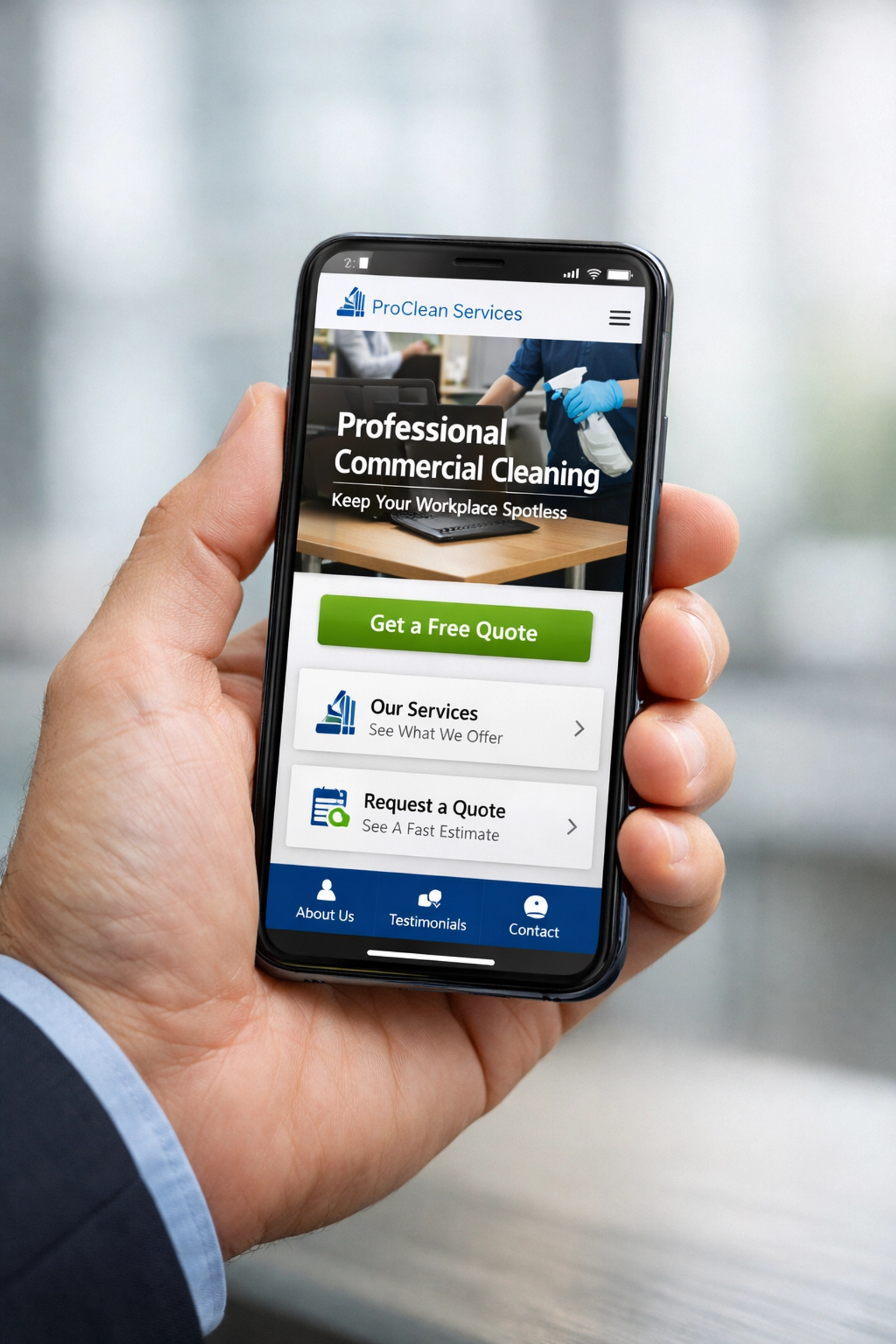
Google doesn't care about your desktop site anymore. They rank you based on your mobile experience first. That's because most local searches, like the ones bringing in your next $50K contract, happen on phones.
If your site looks great on desktop but breaks on mobile, you're toast. Buttons that don't work. Text you have to zoom into. Forms that won't submit. All of that sends people straight to your competitor.
The mobile checklist:
- Does your site resize perfectly on any screen size?
- Can someone tap your phone number to call immediately?
- Are your service pages readable without zooming in?
- Do forms work smoothly on touch screens?
If you answered "I think so" to any of these, you need to test it. Right now. Open your site on your phone and pretend you're a property manager trying to book a quote. If anything feels clunky, fix it.
3. HTTPS Isn't Optional Anymore
Remember when having "https://" in your URL was a nice-to-have? Those days are dead.
Google outright penalizes sites without HTTPS encryption. And more importantly, potential clients see that "Not Secure" warning in their browser and bail. Would you trust a website that says it's not secure? Neither will the facility manager about to hand you a $100K annual contract.
Getting HTTPS is usually simple: Contact your web developer or hosting provider. Most can enable an SSL certificate in under an hour. If they can't, find someone who can. This is table stakes in 2026.
4. Site Architecture: Make It Easy for Google to Love You
Google's bots are crawling your site right now, trying to figure out what you do and where you do it. If your site structure is a mess, they'll give up and rank your competitor instead.
What good architecture looks like:
- Clean, logical URLs:
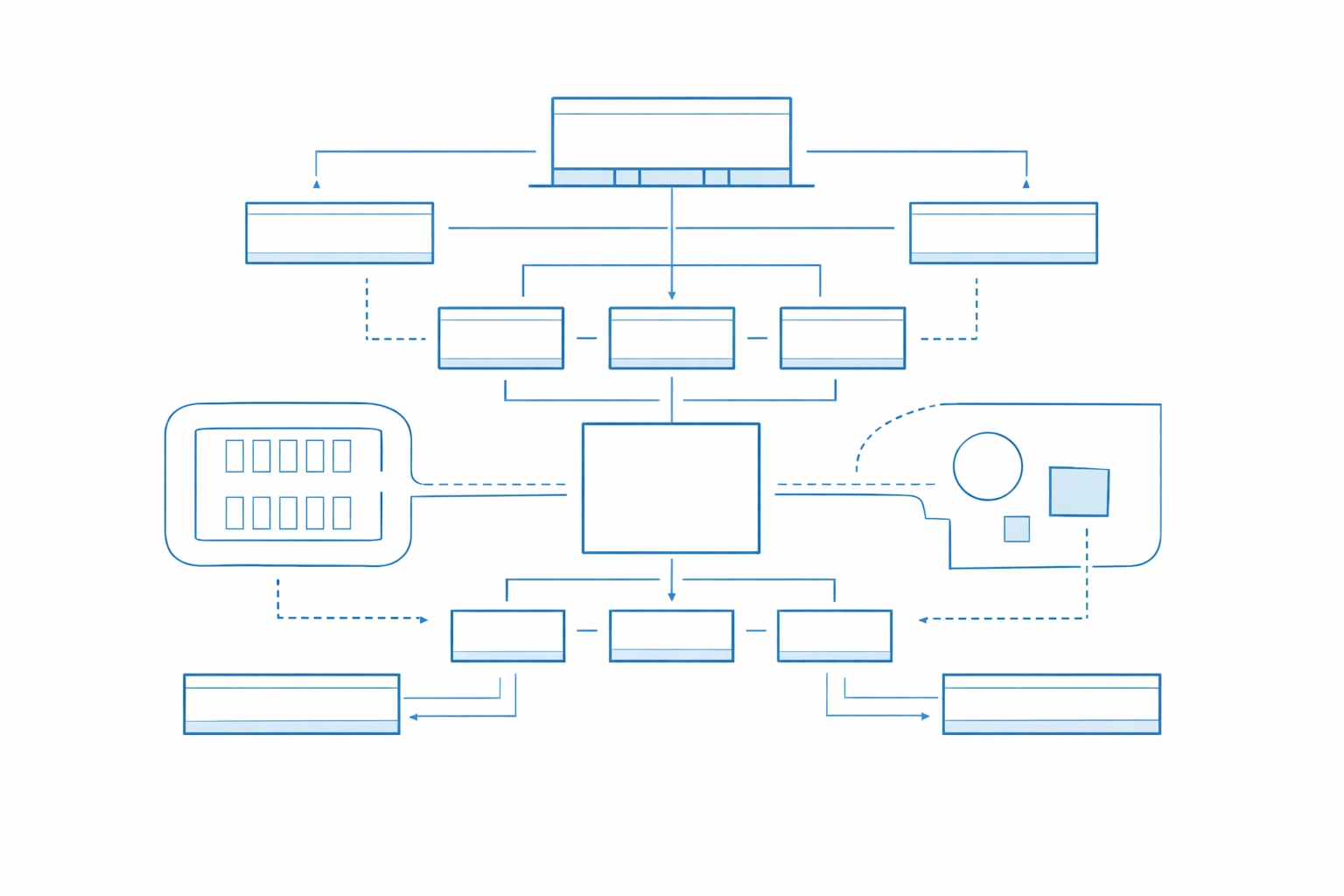
/commercial-cleaning-atlantainstead of/page?id=4782 - A clear hierarchy: Homepage → Service Pages → Location Pages
- An XML sitemap that tells Google exactly which pages matter
- Internal linking that connects related pages naturally
Here's the thing most janitorial companies get wrong: they build one generic "Services" page and expect Google to figure out they serve 12 different cities. That's not how this works.
You need dedicated location pages for every city or metro you serve. Each one should have:
- A unique title tag like "Commercial Cleaning in Phoenix | [Your Company]"
- A meta description that speaks directly to that market
- Content specific to that location (not copy-pasted fluff)
- Clear CTAs for that area
Local SEO and Technical SEO: The Power Couple
Here's where it gets interesting. Technical SEO and local SEO aren't separate strategies, they're teammates.
Your technical foundation supports everything your local SEO does. Fast loading speeds make your Google Business Profile clicks convert better. Mobile-friendly design ensures your "near me" traffic doesn't bounce. Clean site architecture helps Google understand that yes, you do serve office buildings in downtown Minneapolis.
But there's one technical detail that kills local rankings faster than anything else: NAP inconsistency.
NAP = Name, Address, Phone Number.
If your website says "123 Main St" but your Google Business Profile says "123 Main Street" and your Yelp listing says "123 Main St., Suite 5," Google sees that as three different businesses. And they penalize you for it.
The fix is tedious but mandatory: Audit every single directory, citation, and listing where your business appears. Make sure your NAP is identical everywhere. Letter for letter. Comma for comma.
This is boring work. It's also the difference between ranking #1 and ranking #8.
Schema Markup: The Secret Weapon Nobody Uses
If you want to get technical for a second: and you should: there's one thing that separates the pros from everyone else: structured data markup.
Schema markup is code that tells Google exactly what your business is, what you do, and where you do it. It's like giving search engines a cheat sheet.
For janitorial companies, you want schema for:
- Local business information
- Service areas
- Reviews and ratings
- Business hours
- Contact info
When implemented correctly, this can get you rich snippets in search results: those enhanced listings with star ratings, phone numbers, and service details right in the search results. That's prime real estate, and it crushes click-through rates.

Crawlability: Let Google Do Its Job
Your sitemap and robots.txt file are the roadmap Google uses to explore your site. If these are broken or misconfigured, entire sections of your site might be invisible to search engines.
Quick audit:
- Does your site have an XML sitemap at
yoursite.com/sitemap.xml? - Is it submitted to Google Search Console?
- Is your robots.txt file blocking important pages by accident?
Most janitorial sites we audit have at least one of these issues. And fixing them can instantly make dozens of pages suddenly rank.
The Implementation Roadmap (No Fluff, Just Steps)
If you're serious about owning "commercial cleaning [city]" in your market, here's your 30-day roadmap:
Week 1: Audit
- Run a speed test (use Google PageSpeed Insights)
- Test mobile usability (Google's Mobile-Friendly Test)
- Check for HTTPS
- Review site structure and URLs
Week 2: Foundation Fixes
- Enable HTTPS if you haven't
- Compress and optimize all images
- Fix mobile usability issues
- Clean up any broken links
Week 3: Architecture & Content
- Build or optimize location-specific pages
- Implement schema markup
- Audit and fix NAP consistency across all directories
Week 4: Crawlability & Monitoring
- Submit/update XML sitemap
- Configure robots.txt properly
- Set up Google Search Console tracking
- Monitor rankings and traffic

The Bottom Line
Technical SEO isn't sexy. It's not going to give you instant results. But it's the difference between ranking #1 and ranking nowhere.
Your competitors in the janitorial space? Most of them are ignoring this completely. They're focused on Facebook ads and cold calling. Which is fine: it leaves the first page of Google wide open for you.
If you're running a serious janitorial operation and you're ready to own your local market, technical SEO is the foundation. Everything else: content, ads, social: works better when you get this right first.
So here's the question: are you going to keep hoping your site magically ranks higher? Or are you going to build a technical foundation that makes it inevitable?
The property managers and facility directors are searching right now. Make sure they find you.