

Every day your unit sits empty between tenants is money out of your pocket. The average property manager loses $50-150 per day during vacancy periods. If you're managing multiple units, those losses compound fast.
Here's the thing: most vacancy delays aren't caused by major repairs or renovations. They're caused by disorganized, inefficient turnover cleaning processes. The good news? You can fix this.
Property managers using a systematic turnover cleaning framework consistently reduce their vacancy periods by 40-50%. Let's break down exactly how they do it.
Why Your Current Turnover Process Is Costing You Money
Most property managers handle apartment make ready services with a patchwork approach: calling different cleaners, checking items manually, and hoping everything gets done right. This creates three major problems:
Inconsistent results mean you're doing re-cleans, which doubles your downtime. Poor communication leads to missed tasks that delay move-in inspections. No standardization means each turnover takes longer than it should.
The solution isn't working harder. It's implementing a repeatable framework.
The Five-Part Framework That Actually Works
This framework comes from property managers handling hundreds of turnovers annually. It's not theory: it's what's working right now in the field.
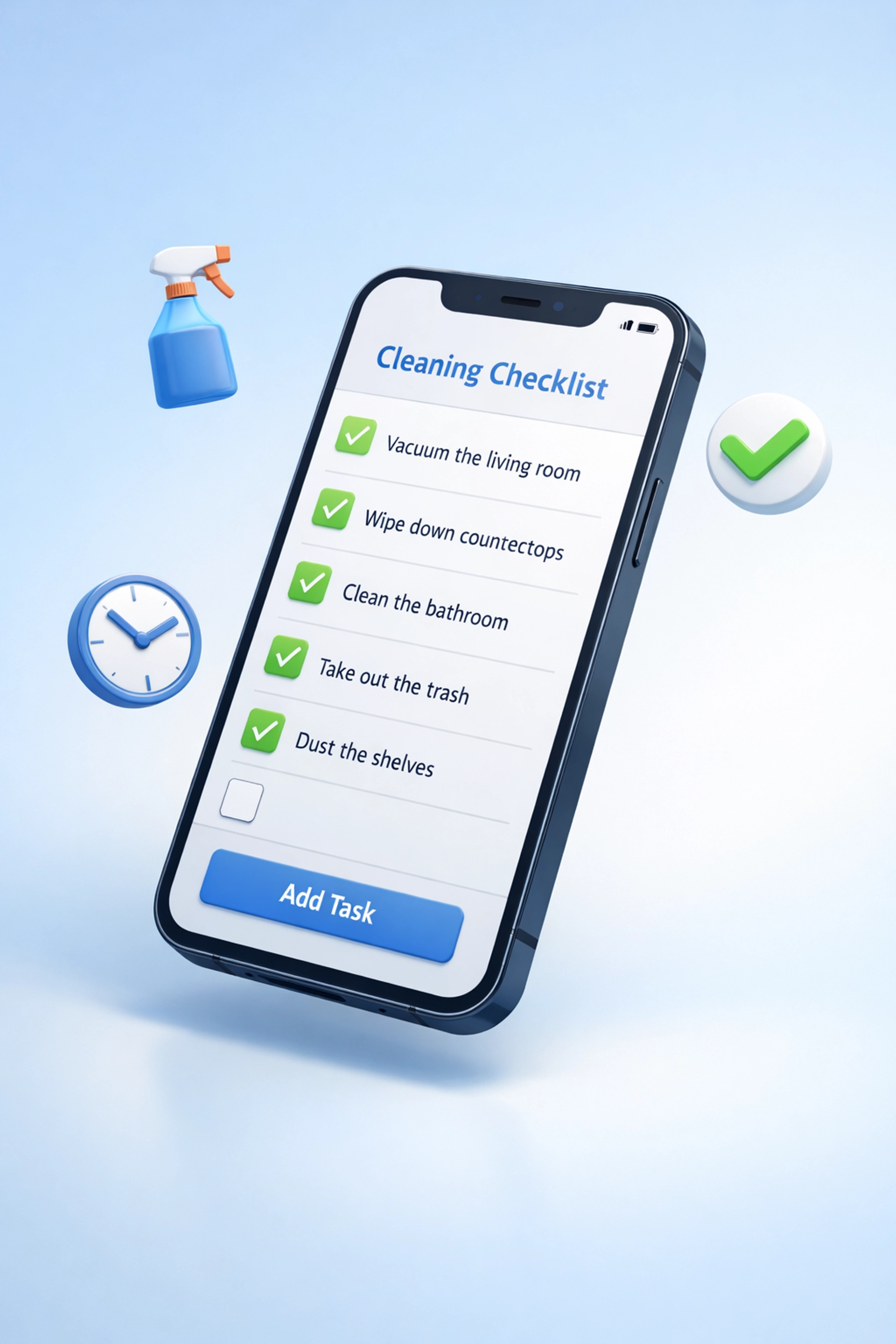
1. Build Your Master Turnover Checklist
Vague cleaning instructions like "clean the kitchen" don't work. Your cleaners need specific, room-by-room tasks that leave nothing to interpretation.
Kitchen Deep-Clean Checklist:
- Wipe inside microwave and remove turntable for cleaning
- Pull out refrigerator and clean behind/underneath
- Sanitize all cabinet interiors and check for pest evidence
- Empty and clean oven drip pans and crumb trays
- Clean range hood filters (replace if beyond cleaning)
- Sanitize all handles, knobs, and high-touch surfaces
- Check garbage disposal and drain for odors
- Inspect and clean dishwasher filter
Bathroom Reset Checklist:
- Remove hard water stains from fixtures and showerheads
- Scrub grout lines and recaulk if needed
- Clean inside toilet tank (not just bowl)
- Check for mold behind shower curtain areas
- Clear all drains and check water pressure
- Replace worn bath mats or shower curtains
- Sanitize all towel bars and toilet paper holders
Living Areas & Bedrooms:
- Vacuum inside closets and wipe shelves
- Check smoke detectors and replace batteries
- Clean baseboards, window sills, and ceiling fan blades
- Inspect walls for marks and touch up paint
- Steam clean carpets or mop hard floors thoroughly
- Check all light bulbs and replace burnt ones
- Clean inside all drawers and cabinets
The difference between good and great make ready cleaning is in these details. Create a digital version of this checklist that cleaners can access from their phones.
2. Automate Your Scheduling System
Manual scheduling is where most vacancy time gets wasted. Your cleaning process should automatically trigger the moment you receive move-out notice.
Here's what automated turnover cleaning services scheduling looks like:
Day of Move-Out Notice: System automatically schedules pre-inspection for move-out day
Move-Out Day: Cleaner receives automated notification with property address, access codes, and specific checklist
During Cleaning: Real-time updates on task completion
Post-Cleaning: Automatic notification for your final walkthrough
This eliminates the back-and-forth texts, missed appointments, and scheduling confusion that adds 2-3 days to every turnover.

3. Work With Professional Turnover Specialists
DIY cleaning might work for a single property, but it doesn't scale. Professional turnover cleaning services understand the difference between regular residential cleaning and make-ready work.
A trained professional handles a standard two-bedroom apartment turnover in 25-45 minutes. They know to check details regular cleaners miss: appliance crumb trays, AC filter replacement, grout condition, and maintenance red flags.
What to Look for in Turnover Cleaning Partners:
- Experience specifically with apartment make ready services
- Availability for same-day or next-day scheduling
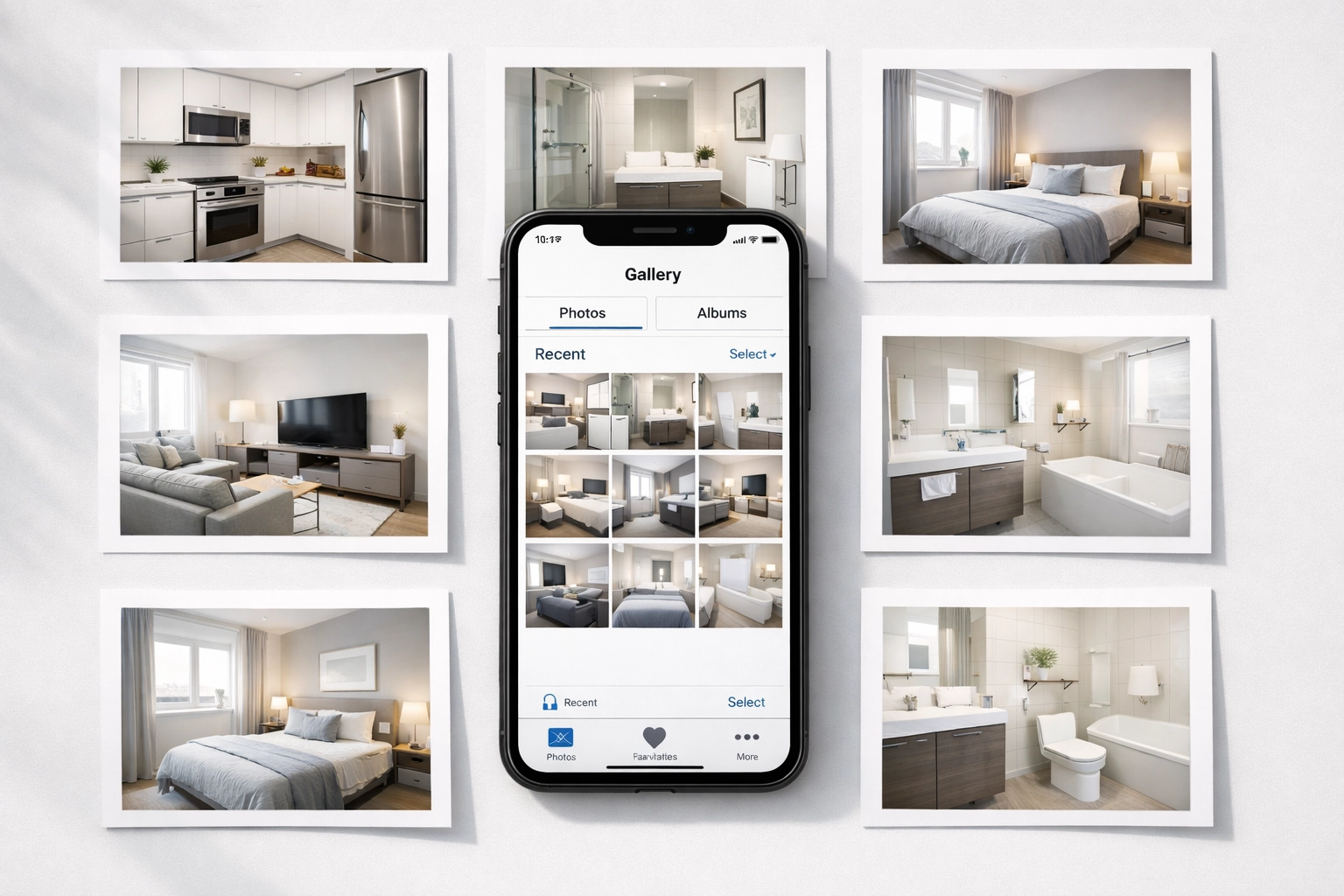
- Photo documentation of completed work
- Standardized pricing (not per-hour estimates)
- Understanding of property management timelines
The right cleaning partner becomes an extension of your team, not just a vendor you coordinate with.
4. Implement Photo Documentation Standards
"Clean" means different things to different people. Photo documentation removes that ambiguity.
Before cleaners leave the unit, they should submit photos of:
- Each room from multiple angles
- Inside appliances (fridge, oven, microwave)
- Bathroom fixtures and floors
- Closet interiors
- Any maintenance issues discovered
This creates accountability and gives you remote visibility into turnover progress. You can approve move-in readiness from your desk instead of driving to each property.
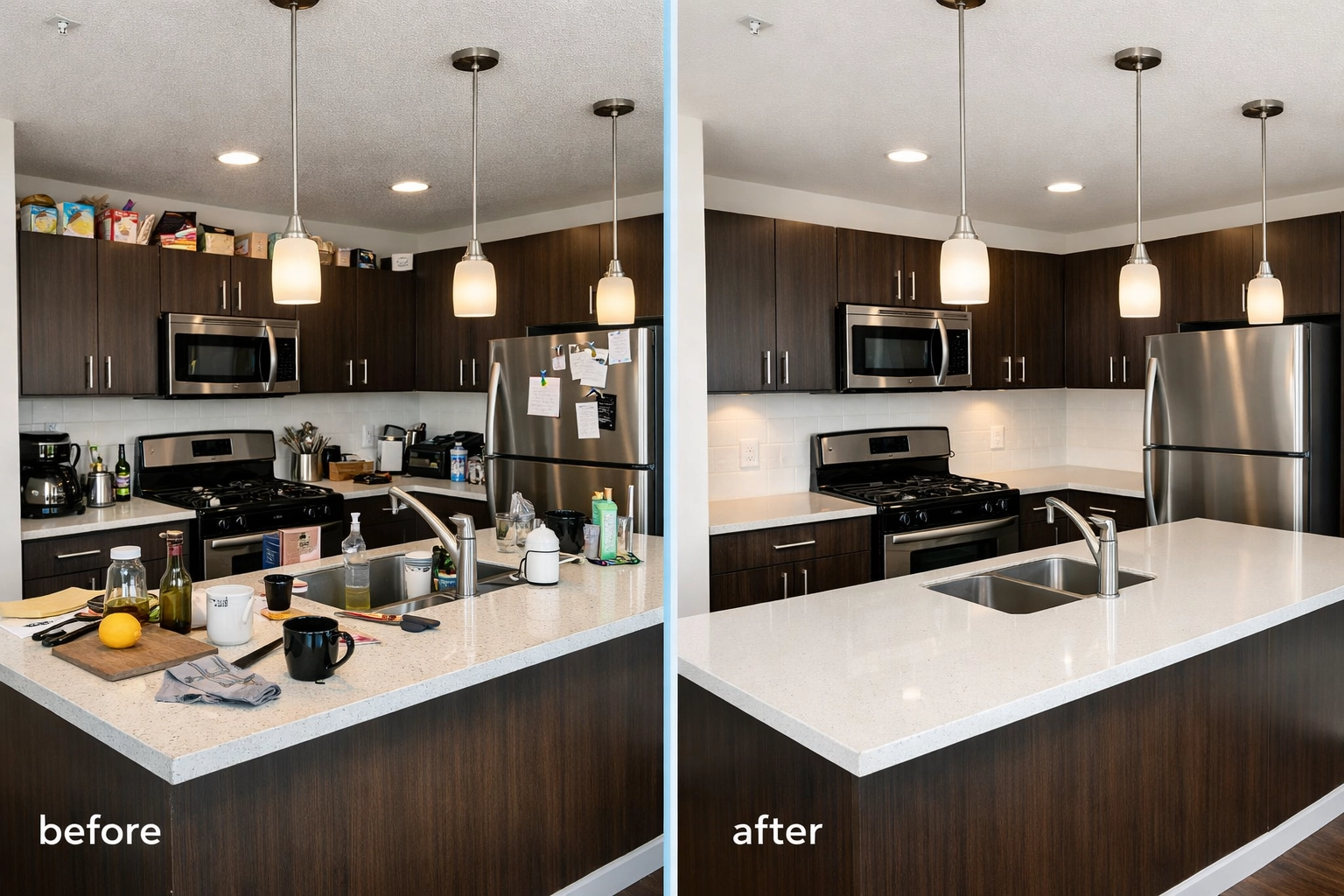
5. Create a Quality Control Loop
Your framework needs a feedback system that catches problems before they delay move-ins.
Two-Stage Inspection Process:
- Cleaner self-inspection using digital checklist (catches 80% of issues)
- Your final walkthrough or video inspection (catches remaining 20%)
When you find recurring issues, update your master checklist. This continuous improvement approach means your process gets tighter with every turnover.
The Real-World Timeline
Here's what this framework looks like in practice:
Day 1 (Move-Out Day): Tenant moves out by noon. Cleaner arrives at 2 PM with automated schedule and property-specific checklist. Completes turnover and uploads documentation by 5 PM.
Day 2: You review photos remotely, approve quality, and notify maintenance of any repairs needed. If repairs are needed, they can start immediately because the unit is already clean.
Day 3: Final walkthrough, unit listed as available, showings begin.
Compare this to the traditional approach where scheduling takes 2-3 days, cleaning happens without documentation, re-cleans add another 2 days, and you're looking at 7-10 days minimum.
Post-Construction Cleaning: The Extended Framework
If your turnover includes renovation work, you need an additional layer. Post construction cleaning requires specialized equipment and techniques that standard turnover cleaning doesn't cover.
Construction dust penetrates everywhere: inside cabinets, behind appliances, in HVAC systems. A regular cleaning won't cut it. Schedule post construction cleaning as a separate step before your standard make-ready process.
Making This Work for Multi-Property Operations
Managing turnover cleaning across multiple properties requires janitorial services for commercial buildings-level coordination. You need:
Centralized Communication Dashboard: One place where all turnover tasks, schedules, and updates live. No more searching through text messages.
Standardized Pricing: Know exactly what each turnover costs before it starts. Surprises kill your budgets.
Backup Coverage: Primary cleaner unavailable? Your system should automatically route to backup professionals.
Performance Metrics: Track average turnover time, re-clean rates, and costs per property type.
This level of organization turns turnover cleaning from your biggest headache into a predictable, manageable process.
Common Framework Mistakes to Avoid
Using general house cleaners for make-ready work. Different skill sets. Different standards. Different results.
Skipping the documentation step to save time. This creates disputes about what was or wasn't completed and leads to re-cleans.
Not updating your checklist based on recurring issues. Your framework should evolve as you identify patterns.
Trying to manage everything manually once you have more than 3-4 properties. Automation isn't optional at scale: it's essential.
Your First Steps
Start implementing this framework with your next turnover:
- Create your detailed, room-by-room master checklist today
- Set up photo documentation requirements (even if it's just text messages for now)
- Research professional apartment make ready services in your area
- Time your current turnover process to establish a baseline
You don't need to implement everything at once. Even adding standardized checklists and photo documentation will cut 2-3 days off your current timeline.
The property managers cutting vacancy days in half aren't doing anything complicated. They're just following a proven system consistently. Your next turnover is the perfect time to start.