

Managing properties across Chicago, Indianapolis, and Detroit means dealing with a unique set of cleaning challenges. Between lake-effect moisture, freeze-thaw cycles, and year-round tenant turnover, Midwest property managers need a cleaning strategy that works as hard as they do.
Here's the thing: reliable cleaning isn't just about keeping units looking good. It's about protecting your property value, maintaining tenant satisfaction, and avoiding the costly surprises that come from inconsistent maintenance. Let's break down what actually works.
Why Midwest Properties Demand a Different Approach
Properties in the Midwest face challenges that buildings in other regions simply don't encounter. Winter salt gets tracked through lobbies and hallways in Chicago for five months straight. Spring rains in Indianapolis create mud and moisture issues that persist well into May. Detroit properties deal with temperature swings that can range 40 degrees in a single week.
These conditions create specific cleaning bottlenecks that generic maintenance schedules miss. Carpets wear faster. Grout deteriorates quicker. Hard floors show salt residue within hours of cleaning. A reliable cleaning partner understands these regional realities and adjusts accordingly.
High-Priority Areas That Make or Break Your Property
Entryways and Common Corridors
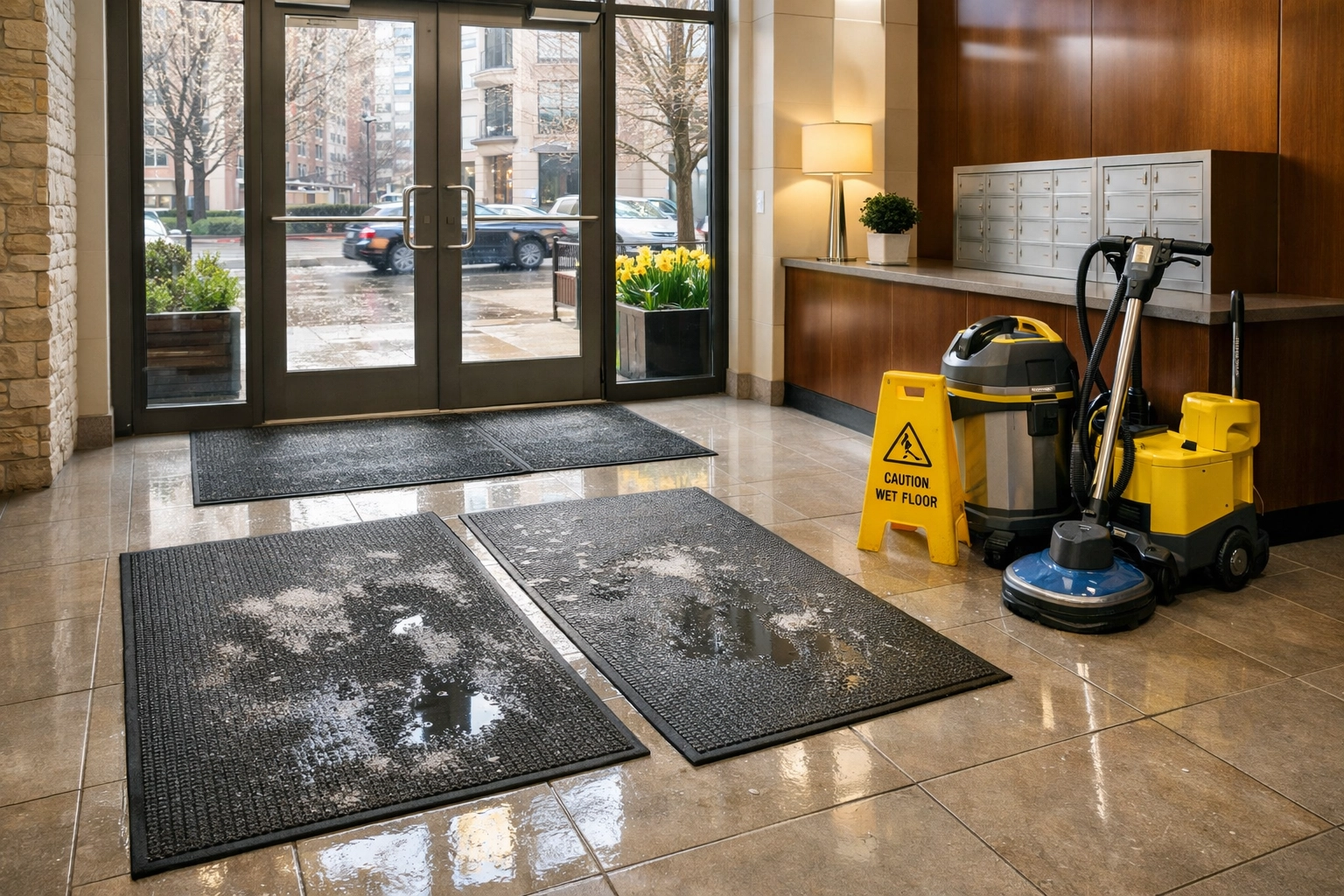
First impressions happen in seconds. When prospective tenants walk into your building, they're assessing cleanliness before they even reach the leasing office. Entryways in Midwest properties take a beating: especially during wet seasons: and need daily attention.
Daily sweeping, mopping, and spot-cleaning of high-traffic areas keeps floors from becoming safety hazards. Glass doors and windows require regular cleaning to remove fingerprints and weather residue. Trash receptacles should be emptied before they overflow, and mats need regular replacement during peak salt season.
Bathrooms and Kitchens in Common Areas
These spaces see heavy use and require weekly deep cleaning at minimum. Bathrooms demand attention to frequently touched surfaces: door handles, toilet seats, faucets, and sink areas where germs concentrate.
Kitchen areas in common spaces: particularly in multifamily buildings with shared amenities: need sanitizing of appliances, countertops, and sinks. Food residue and bacteria don't wait for monthly cleaning schedules. Weekly deep cleaning prevents buildup that becomes harder to address over time.
Flooring and Carpet Maintenance
Midwest weather is brutal on flooring. Salt, sand, and moisture create a grinding paste that deteriorates carpet fibers and dulls hard surfaces. Regular vacuuming isn't enough: you need a schedule that includes professional deep cleaning.
For carpeted areas, vacuum high-traffic zones at least three times per week. Schedule professional carpet cleaning quarterly in lobbies and common areas, and immediately after tenant turnover in units. Hard floors benefit from daily dust mopping and weekly deep mopping with appropriate cleaning solutions.
Seasonal Cleaning Challenges Unique to the Midwest
Spring Transition: The Dust and Allergen Problem
Spring in the Midwest means dealing with accumulated dust, mites, and allergens from months of closed windows and heating systems running full blast. This isn't a cosmetic issue: it affects air quality and tenant comfort.
Deep cleaning during spring transitions should include dusting chair rails, window casings, tops of wall-mounted cabinets, and ceiling fans. Vacuum upholstered furniture in common areas and consider professional cleaning for major pieces. Check kitchens for grease buildup on cabinets, backsplashes, and walls, using warm water and mild detergent.
Winter Salt and Moisture Management
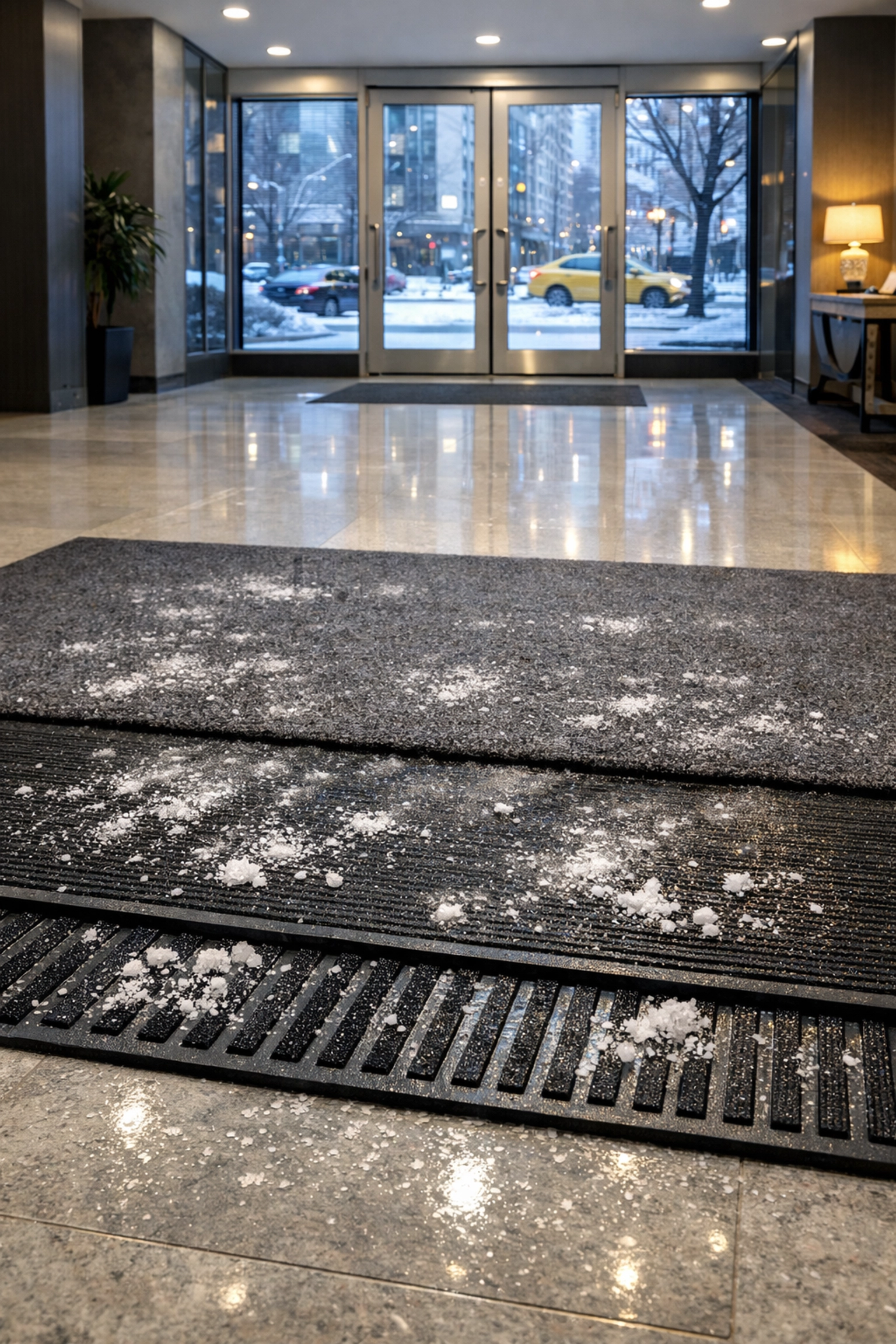
From November through March, salt tracking is inevitable. Properties in Chicago see the worst of it, but Indianapolis and Detroit aren't far behind. Salt damages floors, creates slip hazards, and leaves white residue that looks unprofessional.
Effective winter cleaning requires multiple daily passes in entryways, upgraded mat systems that trap salt before it spreads, and cleaning solutions specifically designed to dissolve salt without damaging floor finishes. Wait until spring to address this issue, and you're looking at expensive floor restoration.

Building a Cleaning Schedule That Actually Works
Reliable cleaning requires a systematic approach, not sporadic attention when things look dirty. Property managers who operate multiple buildings in Chicago, Indianapolis, or Detroit need schedules that account for varying usage patterns across their portfolio.
Create Task-Specific Deadlines
Break cleaning tasks into daily, weekly, monthly, and seasonal categories. Daily tasks include trash removal, entryway maintenance, and high-touch surface disinfection. Weekly tasks cover deep cleaning of bathrooms, kitchens, and common area floors. Monthly tasks address less-visible areas: baseboards, light fixtures, and equipment rooms.
Use digital calendars or property management software to track completion. When cleaning gets missed, problems compound quickly. A systematic schedule with clear accountability prevents gaps.
Develop Comprehensive Checklists
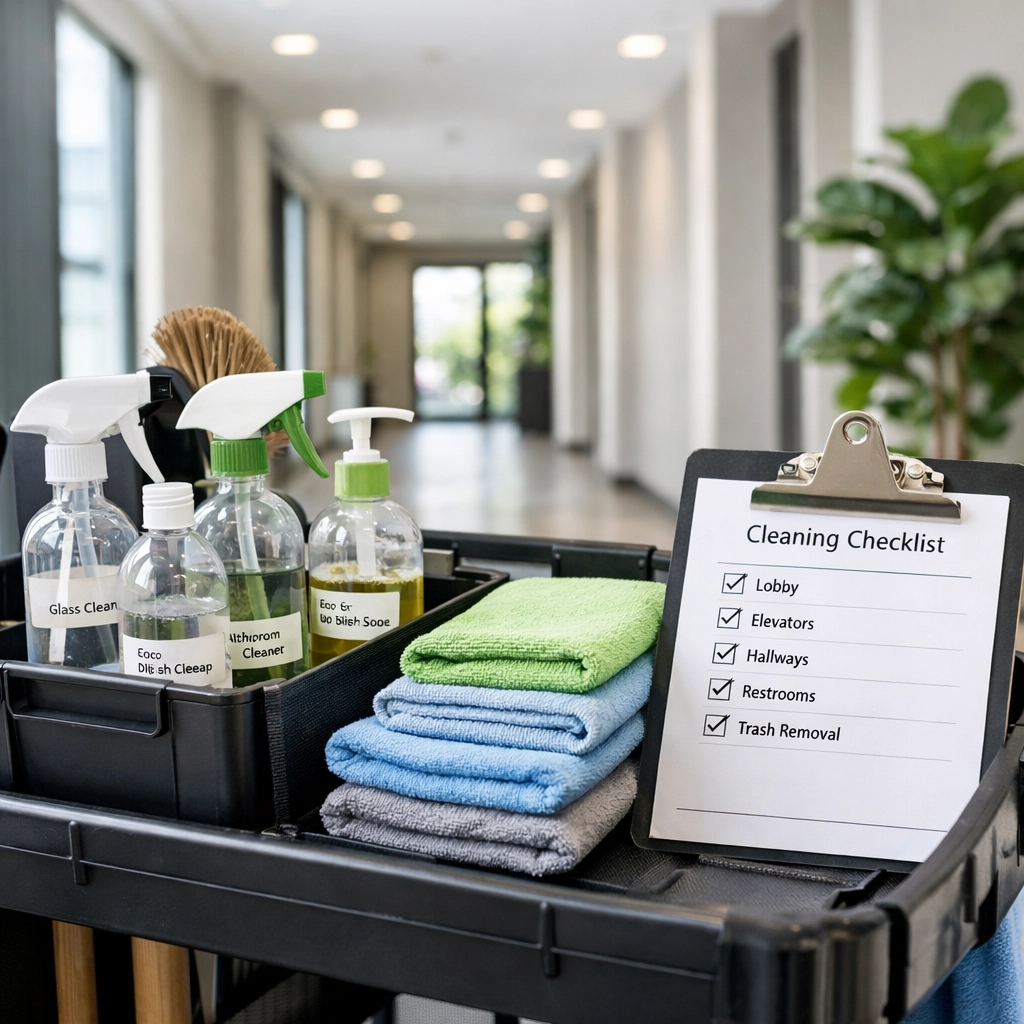
Generic cleaning checklists don't account for your specific buildings. Work with your cleaning service provider to create checklists tailored to each property. Include specific areas that need attention: the gym equipment in your Indianapolis property, the rooftop deck in your Chicago building, the package room in your Detroit complex.
Detailed checklists ensure consistency regardless of which team member performs the work. They also create documentation that protects you when tenant complaints arise.
The Top-to-Bottom Cleaning Methodology
Professional cleaning follows a systematic pattern that prevents re-contaminating already-cleaned surfaces. Always work from top to bottom, starting with high surfaces and working down to floors.
Start with ceiling fans and light fixtures, then move to window treatments and wall-mounted items. Clean furniture and countertops next, saving floors for last. This prevents dust and debris from falling onto surfaces you've already cleaned.
Create imaginary sections using furniture, counters, or floor borders to ensure you don't miss central areas. In kitchens with islands or large common rooms with central seating, it's easy to clean the perimeter and overlook the middle.
What Reliable Cleaning Service Providers Bring to the Table
Property managers in major Midwest metros don't have time to supervise every cleaning task. That's why partnering with professional cleaning service providers who understand operational reliability makes sense.
Look for providers who show up on schedule, follow detailed protocols, and communicate proactively when issues arise. If something isn't right, the best providers return within 24 hours to address it. This kind of responsiveness protects your property's reputation and your tenant relationships.
Professional providers also bring regional expertise. They know which cleaning products work best on the materials common in Midwest buildings. They understand seasonal challenges and adjust their approach accordingly. They carry appropriate insurance and operate with the consistency that multi-property portfolios require.
Choosing Eco-Friendly Without Sacrificing Results
Tenants increasingly expect environmentally responsible practices, and property managers who deliver have a competitive advantage. Eco-friendly cleaning products reduce tenant exposure to harsh chemicals while maintaining cleaning efficacy.
Modern green cleaning solutions work as well as traditional chemicals for most applications. They're particularly effective for regular maintenance cleaning. For deep cleaning and disinfection, work with your cleaning service provider to identify products that balance environmental responsibility with performance requirements.
Continuous Improvement Through Tenant Feedback
The best cleaning programs evolve based on actual building performance and tenant input. Create simple feedback mechanisms: email surveys, comment cards in common areas, or check-in questions during lease renewals.
When tenants raise cleaning concerns, address them immediately. Fast response shows you take their comfort seriously and often prevents negative reviews. Track feedback patterns to identify recurring issues that might indicate gaps in your cleaning schedule or service provider performance.
Regular evaluation of your cleaning program isn't optional: it's how you maintain the property standards that protect occupancy rates and justify premium rents.

The Bottom Line for Midwest Property Managers
Reliable cleaning in Chicago, Indianapolis, and Detroit requires understanding regional challenges, maintaining systematic schedules, and partnering with service providers who deliver consistent results. Generic approaches don't account for Midwest weather, seasonal transitions, or the specific demands of multi-property management.
Property managers who treat cleaning as an operational priority: not an afterthought: protect property values, maintain tenant satisfaction, and avoid the expensive surprises that come from deferred maintenance. In competitive Midwest rental markets, that reliability makes all the difference.
For property managers looking to upgrade their cleaning operations, MH Janitorial provides professional cleaning services designed around the operational demands of Midwest property management.