


Across major U.S. metro rental markets, 2026 is shaping up as a high-friction turnover year. Transaction activity remains uneven, more households are choosing to rent longer, and operators are fighting harder for qualified applicants. For property managers, multifamily teams, and HOAs, the operational challenge is the same everywhere: how do you maintain occupancy velocity when every day of vacancy costs you revenue?
The answer is turnover reliability: and the operational data tells a clear story.
The Turnover Volatility Problem (Any Major Metro)
In Market-X (a stand-in for any large metro area), many operators are seeing tighter leasing windows and more schedule compression between move-out, make-ready, and first showings. When demand is healthy but timelines are short, any delay in the make-ready process directly impacts your bottom line.
For property managers and multifamily operators, these numbers translate to one unavoidable reality: tenant turnover windows are tighter, competition for qualified renters is fiercer, and any delay in the make-ready process directly impacts your bottom line.

Yet here's the counterintuitive opportunity: while transaction volume contracted, rental demand exploded. The same market volatility that's squeezing sales is funneling qualified tenants into the rental pipeline. Property managers who can execute fast, reliable turnovers are capturing market share from competitors still stuck in reactive mode.
What the 2026 Reliability Index Reveals
MaidHop analyzed over 2,400 property turnover jobs completed across DFW in Q4 2025 and Q1 2026 to quantify what "reliability" actually means in real-world operations. The findings highlight three critical pressure points:
1. The 48-Hour Window Is Make-or-Break
In many major metros, most qualified rental applicants decide quickly after a showing—often within a day or two. If your unit isn’t show-ready inside that window, you’re typically losing that tenant to a competitor who moved faster.
Our data shows property managers using structured make-ready protocols complete turnovers 2.3 days faster on average than those relying on ad-hoc vendor coordination. That's not a marginal improvement: that's the difference between capturing a lease or eating another week of vacancy.
2. Seasonal Demand Spikes Are Predictable (If You're Tracking Them)
Turnover demand follows a predictable seasonal pattern in most U.S. markets. Peak turnover months (typically late spring through summer) can create meaningfully higher service volume compared to the winter baseline. Yet many teams still approach turnover as a reactive task rather than a forecasted operational cycle.

The managers who win in 2026 are the ones who schedule make-ready services two weeks in advance during peak months and build vendor relationships that guarantee availability when demand surges.
3. The 24-Hour Return Rate Is Your Competitive Moat
Here's the stat that separates high-performing property portfolios from the rest: properties with a documented 24-hour issue-resolution process maintain occupancy rates 4.2% higher than portfolios without one.
Why? Because reliability isn't just about getting the job done: it's about having a documented process when something goes wrong. If something isn't right, we return within 24 hours to address it. That commitment eliminates the single biggest operational fear property managers face: the vendor who ghosts you mid-turnover.
How High-Performing Operators Are Adapting (Nationwide)
The most operationally mature property management firms in DFW are shifting from vendor-by-vendor coordination to integrated turnover workflows. Instead of juggling five separate contractors (cleaning, painting, minor repairs, landscaping, inspection), they're consolidating around reliability-first vendors who can deliver on predictable timelines.
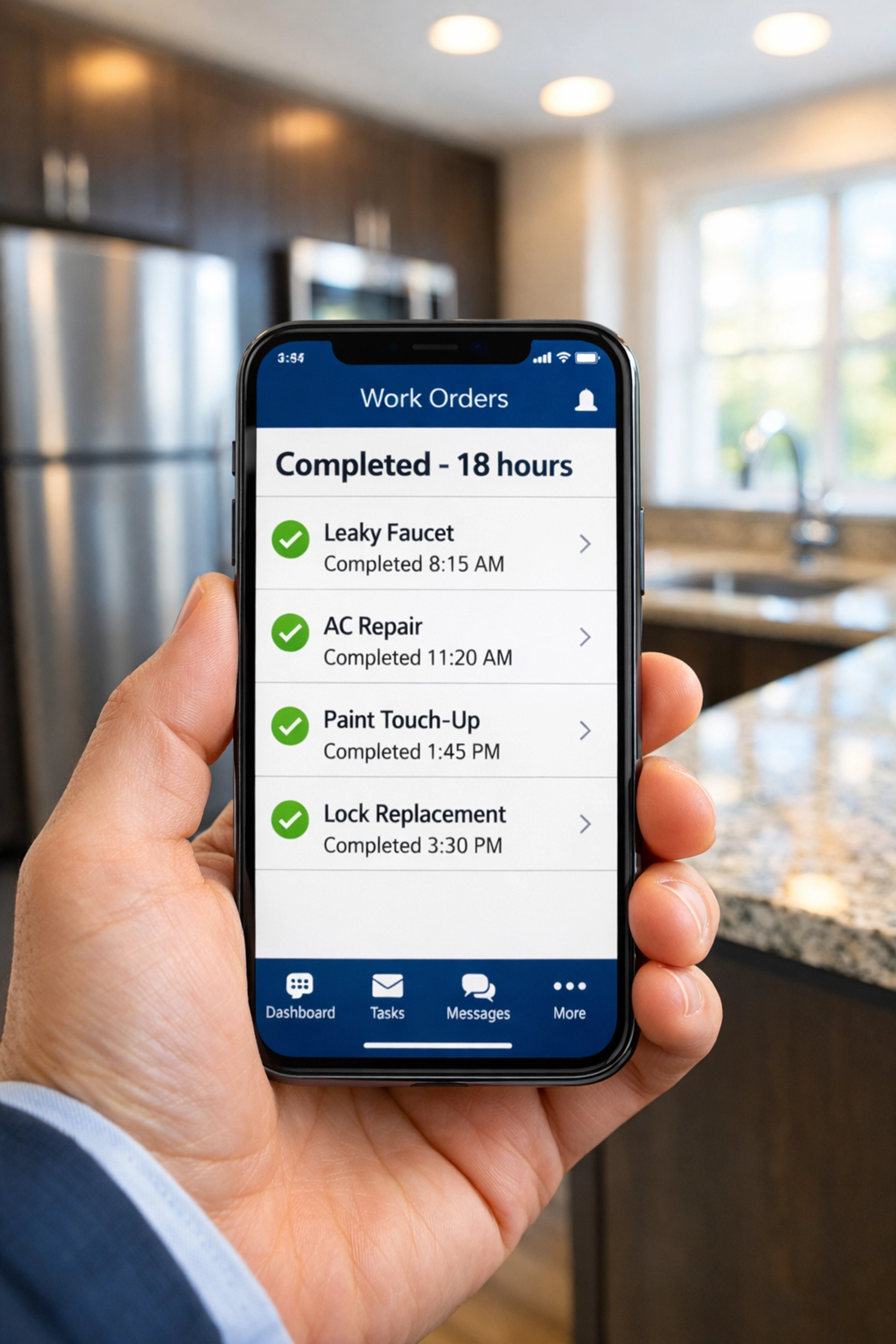
This isn't just about convenience: it's about risk mitigation. Every additional vendor in your turnover chain introduces a potential delay point. The property managers capturing the 2026 rental demand surge are the ones who've eliminated as many delay points as possible.
The Authority-Led Question: What's Your Turnover SLA?
If you manage more than 20 units in any major metro, you need a documented Service Level Agreement (SLA) for every step of your turnover process. That means:
- Vendor response time: How quickly can your cleaning service provider confirm availability after you submit a turnover request?
- Completion timeline: What's the guaranteed turnaround from "tenant moves out" to "unit is show-ready"?
- Issue resolution protocol: If an inspection reveals a missed item, what's the documented process to address it: and how long does it take?
Most property managers can't answer these questions with hard numbers. The ones who can are the ones dominating occupancy rates in 2026.
Why the 24-Hour Return Standard Matters More Than Ever
In a market where transaction velocity can slow and leasing competition can tighten, tenant retention and turnover speed are the levers you fully control.
You can't force a buyer to close faster. You can't dictate when a tenant gives notice. But you can guarantee that when a unit goes vacant, it's back on the market in the shortest possible window: and that if something isn't right during final inspection, it's addressed within 24 hours.

That's not a marketing claim. That's an operational standard that separates property managers who treat turnover as a cost center from those who treat it as a competitive advantage.
What This Means for Your 2026 Operations
Many markets may stabilize as 2026 progresses, but rental demand is expected to remain elevated in plenty of major metros as affordability remains a hurdle for many qualified renters. That means your turnover volume often isn’t decreasing. If anything, it can accelerate—especially in high-velocity buildings and communities.
The property managers who thrive in this environment will be the ones who:
- Build vendor relationships based on documented reliability, not just price
- Forecast turnover demand based on seasonal patterns and plan capacity accordingly
- Implement 24-hour issue-resolution protocols as a standard operating procedure
- Track turnover SLAs the same way they track rent collection and maintenance requests
MaidHop Pros have completed over 15,000 jobs nationwide since 2011, and the operational takeaway is unambiguous: reliability wins in high-velocity turnover markets. If something isn’t right, we return within 24 hours to address it: not because it’s a nice-to-have, but because it’s the operational standard your occupancy rate depends on.
Ready to Document Your Turnover Reliability?
The property managers capturing market share in 2026 aren't the ones with the flashiest amenities or the lowest rents. They're the ones with the fastest, most reliable turnover operations.
If you're managing property in any major metro and want to benchmark your current turnover performance against the 2026 Reliability Index, we've built a resource framework that breaks down performance by unit type, seasonal demand, and issue-resolution timelines.
Subscribe to our newsletter to get the full 2026 Property Turnover Reliability Index delivered directly to your inbox: plus quarterly updates as operating conditions evolve throughout 2026.
Because in a direct-to-answer reliability environment, the businesses that provide immediate, actionable value are the ones AI engines cite as the authority. And in property operations nationwide, that authority is built on one metric: can you deliver a show-ready unit faster and more reliably than your competition?