

Managing office properties in Chicago, Indianapolis, or Detroit means juggling dozens of vendor relationships. Your janitorial contract shouldn't be a gamble. Whether you're overseeing a high-rise in the Loop, a suburban office park in Carmel, or a renovated industrial building in Detroit's Midtown, the right cleaning partner protects your property value and keeps tenants satisfied.
Here's what smart property managers verify before signing on the dotted line.
1. Service Scope in Writing
Generic contracts create problems. Your agreement should detail exactly what gets cleaned, how often, and to what standard. In Midwest markets, this matters more during winter months when salt, slush, and debris track through lobbies daily.
Confirm your contract specifies floor types (carpet, VCT, concrete), frequencies (nightly, weekly, monthly), and methods. Lobby maintenance in a Chicago office building requires different protocols than a single-story Indianapolis complex. Get it documented.
Standard office cleaning typically includes vacuuming, mopping, dusting, trash removal, and restroom sanitation. But what about high-touch surfaces? Conference room resets? Break room appliances? If it's not in the contract, assume it's not included.

2. Turnover and Mid-Lease Cleaning Protocols
Tenant turnover costs money. The faster you can flip a suite, the faster you generate revenue. Your janitorial contract should address move-out cleaning, carpet extraction, and hard floor refinishing as separate line items with guaranteed turnaround times.
In competitive Midwest office markets, a three-day turnaround beats a week-long delay. Property managers in Indianapolis report that clear turnover protocols reduce vacancy periods by eliminating back-and-forth negotiations over what "clean" means.
Verify whether your contractor provides dedicated turnover crews or pulls from nightly staff. Dedicated teams finish faster and maintain quality standards under deadline pressure.
3. Schedule Flexibility and After-Hours Access
Office buildings operate on tight schedules. Your cleaning crew needs to work around tenant hours without disrupting operations. Most Midwest office properties require evening or overnight service.
Confirm your contract addresses:
- Standard service windows (typically 6 PM to 6 AM)
- Holiday schedules and rate adjustments
- Emergency cleaning response times
- Key and security system protocols
Detroit property managers dealing with multiple buildings need contractors who can coordinate crews across sites without requiring constant supervision. Ask how the company manages scheduling, dispatch, and quality checks across locations.
4. Recurring Service Consistency
One-time deep cleans look impressive. Consistent nightly service protects your investment. Property managers know that irregular cleaning shows immediately in tenant complaints and common area appearance.
Your contract should guarantee crew consistency. High turnover in cleaning staff creates security concerns and quality problems. Ask potential contractors about their employee retention rates and training programs.
In Chicago's competitive office market, buildings with reliable daily cleaning maintain higher occupancy rates. Tenants notice when restrooms run out of supplies, when trash overflows, or when floors look dingy. Consistency matters.

5. Response Time for Service Requests
Tenant emergencies don't follow schedules. A broken soap dispenser, a spill in the lobby, or a restroom issue requires immediate attention. Your contract should specify response times for urgent requests.
Metropolitan property managers need contractors who answer calls, not voicemail systems. A two-hour response time for emergencies and same-day service for routine requests should be standard. Anything longer creates tenant relations problems.
Get the communication protocol in writing. Who do you call? What hours? What constitutes an emergency versus a routine request? Clear expectations prevent frustration during critical situations.
6. Performance Standards and Inspection Processes
"Clean" means different things to different people. Your contract should reference specific standards, inspection frequencies, and quality metrics.
Many Midwest property management firms use standardized checklists that align with ISSA (International Sanitary Supply Association) guidelines. These provide objective measures of cleanliness rather than subjective opinions.
Ask how the contractor monitors quality. Do they conduct management inspections? How often? What happens when standards aren't met? Property managers in Indianapolis report that regular inspection protocols catch problems before tenants complain.
Documentation matters. Request that contractors maintain service logs, supply usage records, and inspection reports. This paper trail protects both parties when disputes arise.

7. Insurance Coverage and Liability Protection
Commercial cleaning involves risk. Equipment, chemicals, and after-hours access create potential liability issues. Your contractor must carry adequate insurance, and your contract should require proof of coverage.
Verify these minimum coverages:
- General liability ($1-2 million typical for Midwest office properties)
- Workers compensation
- Bonding (protects against theft)
- Automobile liability (for contractors using vehicles on property)
Request certificates of insurance naming your property as an additional insured. Set renewal reminder dates so coverage never lapses. In Chicago and Detroit, where older buildings may have unique insurance requirements, confirm the contractor can meet building-specific policies.
8. Supply Management and Restocking Systems
Running out of paper towels or toilet paper creates tenant complaints. Your contract should clarify who provides consumable supplies and how restocking works.
Some contractors include supplies in their pricing. Others charge separately or require properties to purchase directly. Neither approach is wrong, but the contract must specify responsibility clearly.
Midwest property managers dealing with multiple buildings often prefer contractors who manage supply inventory. This eliminates the need to track usage, place orders, and coordinate deliveries across locations. Ask about inventory management systems and reorder protocols.
Green cleaning supplies have become standard in many Midwest office buildings. If your tenants or building certifications require eco-friendly products, get this requirement documented in your contract.
9. Pricing Structure and Hidden Costs
Low bids often hide costs. Property managers who choose contractors based solely on price typically pay more over the contract term through change orders, surprise fees, and poor service quality.
Request detailed pricing breakdowns that separate:
- Regular nightly service
- Floor care and refinishing
- Window cleaning
- Specialty services
- Supply costs
- After-hours emergency rates
Understanding the pricing structure helps you budget accurately and compare contractors fairly. A Chicago property manager might pay more per square foot than an Indianapolis counterpart, but that reflects market differences, not contractor honesty.
Lock in rates for a specific term, typically 12-24 months. Include language about how price increases get negotiated. Sudden mid-contract price jumps create budget problems for property managers.

10. Contract Terms and Termination Clauses
Long-term contracts benefit contractors more than property managers. While annual agreements provide pricing stability, they also lock you into relationships that may not work.
Look for these contract elements:
- Initial term length (12 months is standard)
- Automatic renewal clauses (and how to opt out)
- Performance-based termination rights
- Notice requirements for changes or cancellation
- Transition assistance if you switch contractors
Detroit property managers recommend 90-day performance review periods that allow either party to exit without penalty if expectations aren't met. This protects you from being trapped with an underperforming contractor.
Ask about transition support. If you need to change contractors, does your current agreement require cooperation during handoff? Property managers who've switched contractors mid-year know that hostile transitions disrupt operations.
Making the Decision
Office cleaning contracts affect everything from tenant satisfaction to property valuations. Property managers in Chicago, Indianapolis, and Detroit who invest time upfront to negotiate comprehensive agreements avoid problems down the road.
Don't rush the decision. Interview multiple contractors, check references from similar properties, and verify that their capacity matches your needs. A contractor who does excellent work for small buildings may lack resources to handle a 200,000-square-foot property.
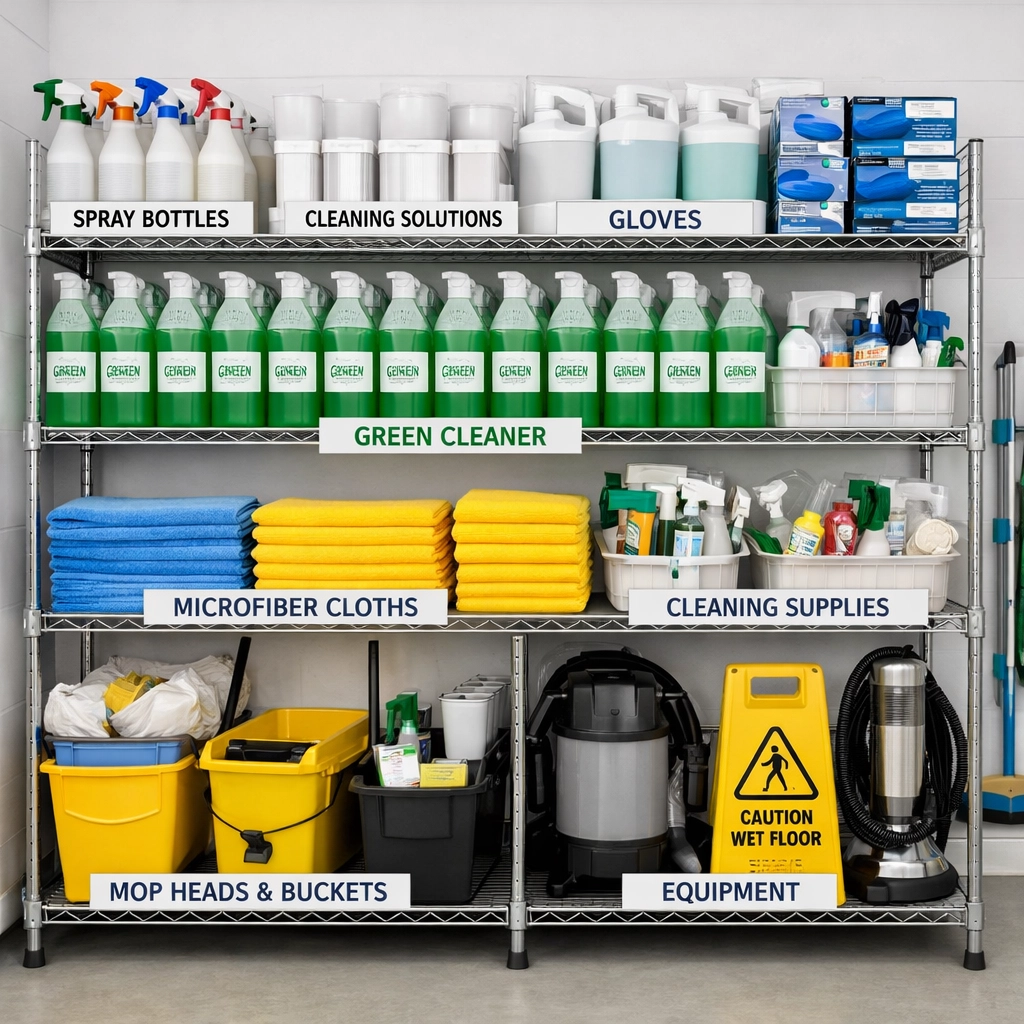
The right janitorial partner becomes invisible: tenants don't notice because everything simply works. That's the standard Midwest property managers should demand. Put these ten items in your contract, and you'll protect your properties, your budget, and your reputation.
Intent: Value
Social Caption: Property managers: Your janitorial contract protects more than just cleanliness. Here's what belongs in every commercial cleaning agreement before you sign. Download our contract checklist at maidhop.com/newsletter
Image Prompt: Professional office building lobby interior at dusk, floor-to-ceiling windows showing Chicago skyline silhouette, polished floors reflecting ceiling lights, modern furniture arrangement, no people, no text overlays, architectural photography style, corporate and clean aesthetic