

Property managers across Chicago, Indianapolis, and Detroit face mounting pressure to maintain office buildings that meet tenant expectations while controlling costs. Commercial cleaning services represent one of the largest line items in your operating budget: and one of the most visible when something goes wrong.
After working with hundreds of office properties throughout the Midwest, we've identified seven recurring mistakes that cost property managers time, money, and tenant satisfaction. Here's what to watch for and how to fix each issue.
Mistake 1: No Documentation of Baseline Conditions
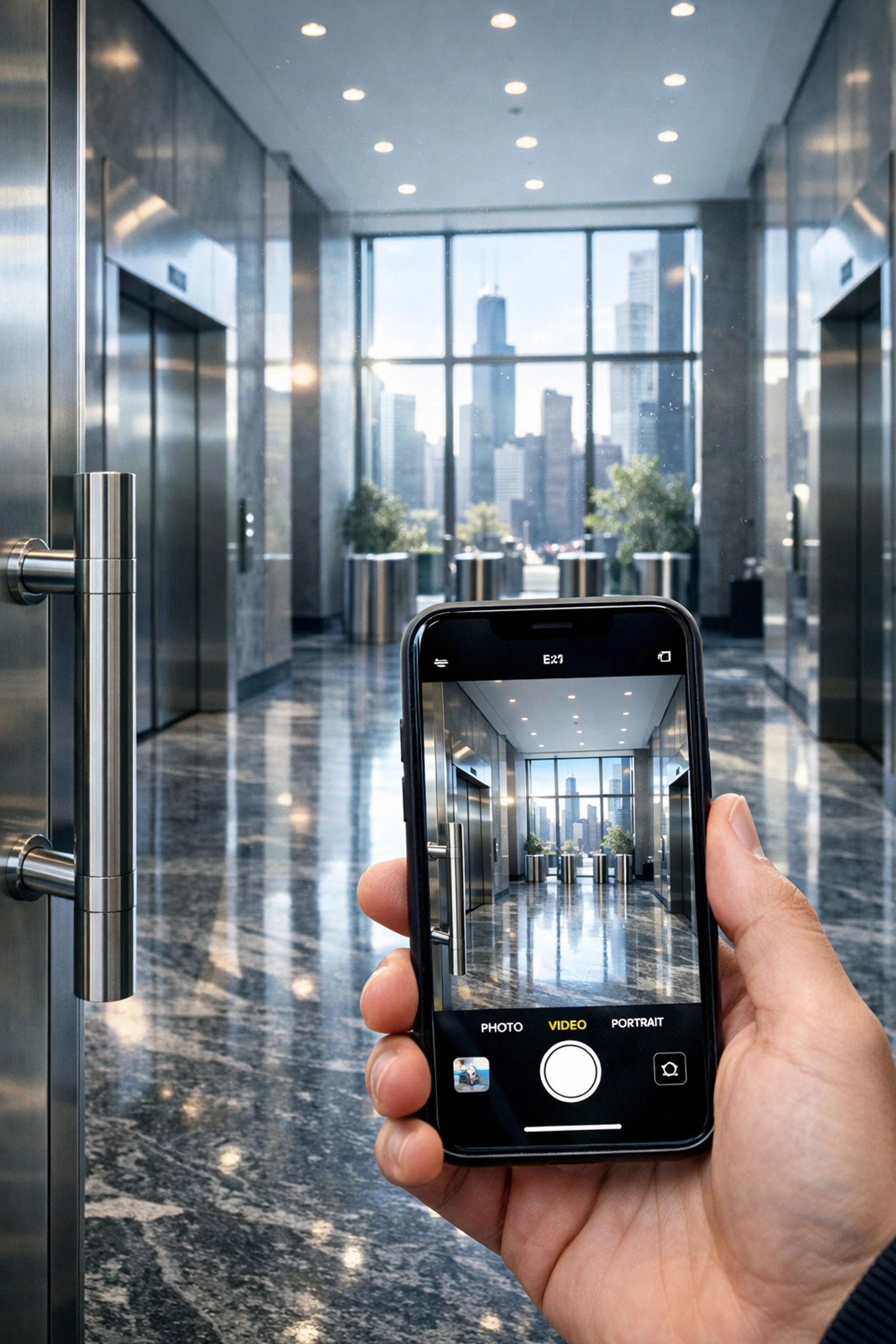
Property managers often skip photographing office spaces before a new cleaning contract begins. When disputes arise about pre-existing damage or cleanliness standards, you have no evidence to reference.
The Fix: Before your cleaning service starts, photograph high-traffic lobbies, elevator banks, restrooms, and tenant common areas. Document stains, scuffs, and wear patterns. Store these images with your contract files. When a tenant complains about a "new" stain or your cleaning company disputes responsibility for damage, you'll have dated proof of the space's initial condition.
For office buildings in downtown Chicago or the Loop district where turnover runs high, this documentation becomes essential during tenant move-outs and new lease signings.
Mistake 2: Ignoring High-Touch Surfaces in Common Areas
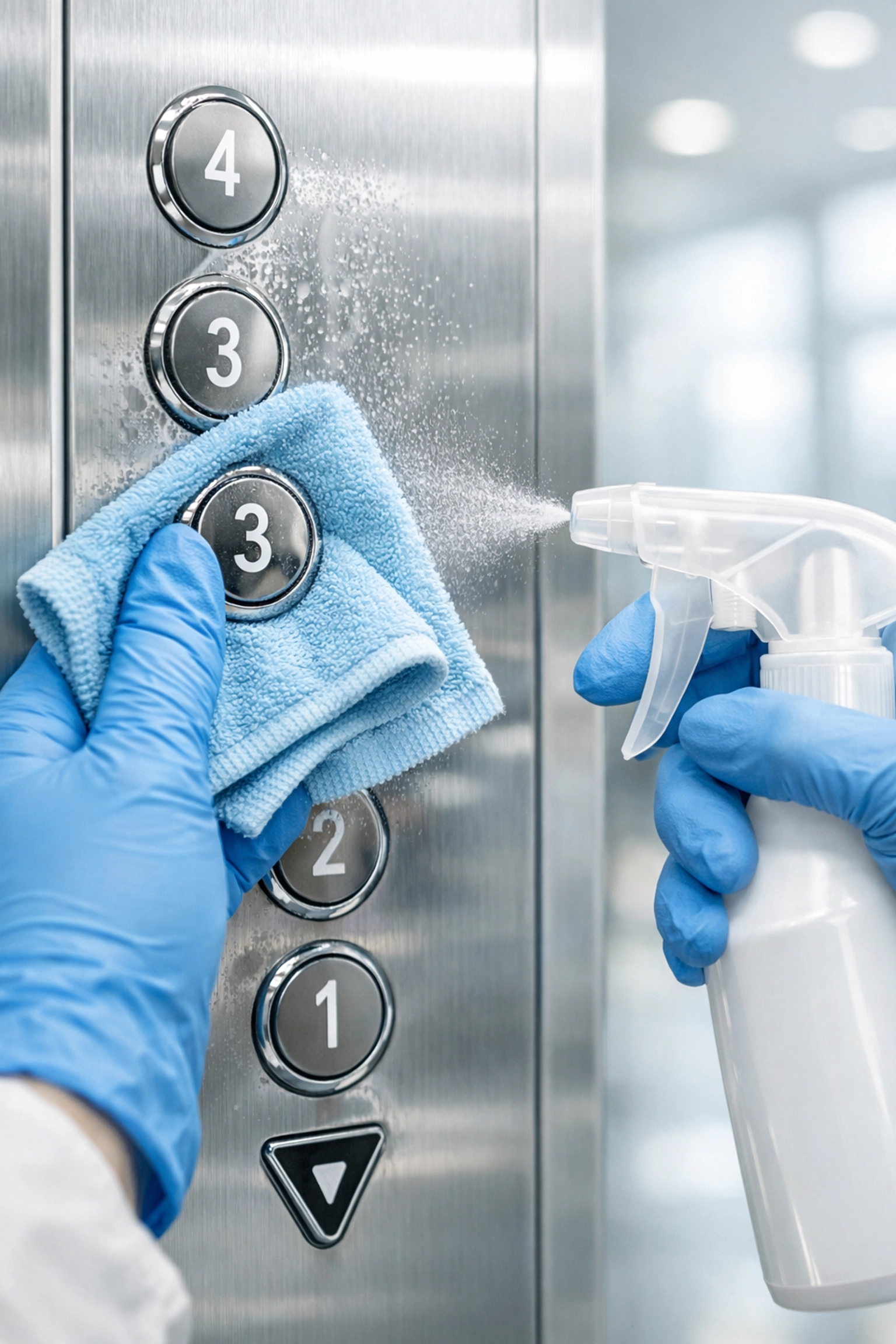
Visible floors get cleaned. Door handles, elevator buttons, light switches, and conference room table edges get missed. These high-touch surfaces harbor bacteria and create negative first impressions during tenant tours or client visits.
The Fix: Require your cleaning service to provide a detailed checklist that explicitly lists high-touch surfaces by location. For office properties, this includes:
- Lobby door handles and push bars
- Elevator call buttons and interior panels
- Mailroom counters and package shelves
- Conference room door handles and light switches
- Breakroom appliance handles and water dispensers
- Stairwell handrails
Schedule random spot-checks using ATP testing swabs in Indianapolis or Detroit properties where you manage multiple buildings. Test results provide objective data about cleaning effectiveness and give you leverage during contract renewals.
Mistake 3: Treating Carpet Maintenance as "Vacuum Only"
Office carpets in Chicago buildings take a beating from foot traffic, winter salt, and spills. Property managers often assume regular vacuuming maintains carpet appearance and longevity. It doesn't.
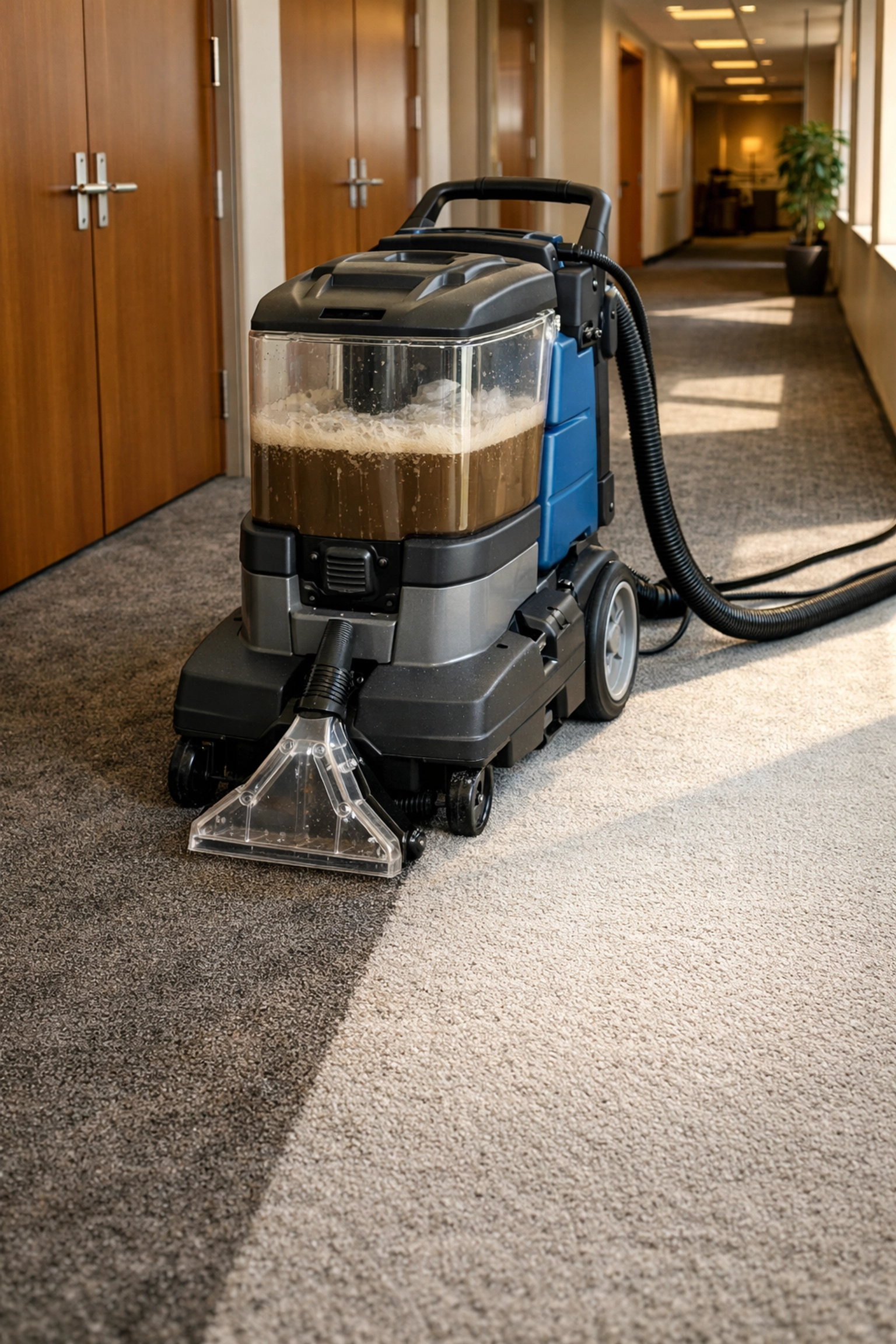
The Fix: Build professional deep cleaning into your annual maintenance schedule. Require hot water extraction cleaning every 6–12 months depending on traffic levels. High-traffic areas like reception lobbies and elevator landings need quarterly attention.
Request dated receipts from your cleaning service documenting when deep cleaning occurred. This protects you during tenant disputes and provides documentation for capital planning when carpet replacement becomes necessary.
Mistake 4: Inefficient Scheduling Creates Service Gaps
Coordination failures between cleaning contractors and property management teams result in missed appointments, inadequate coverage during staff call-outs, and service lapses during holidays.
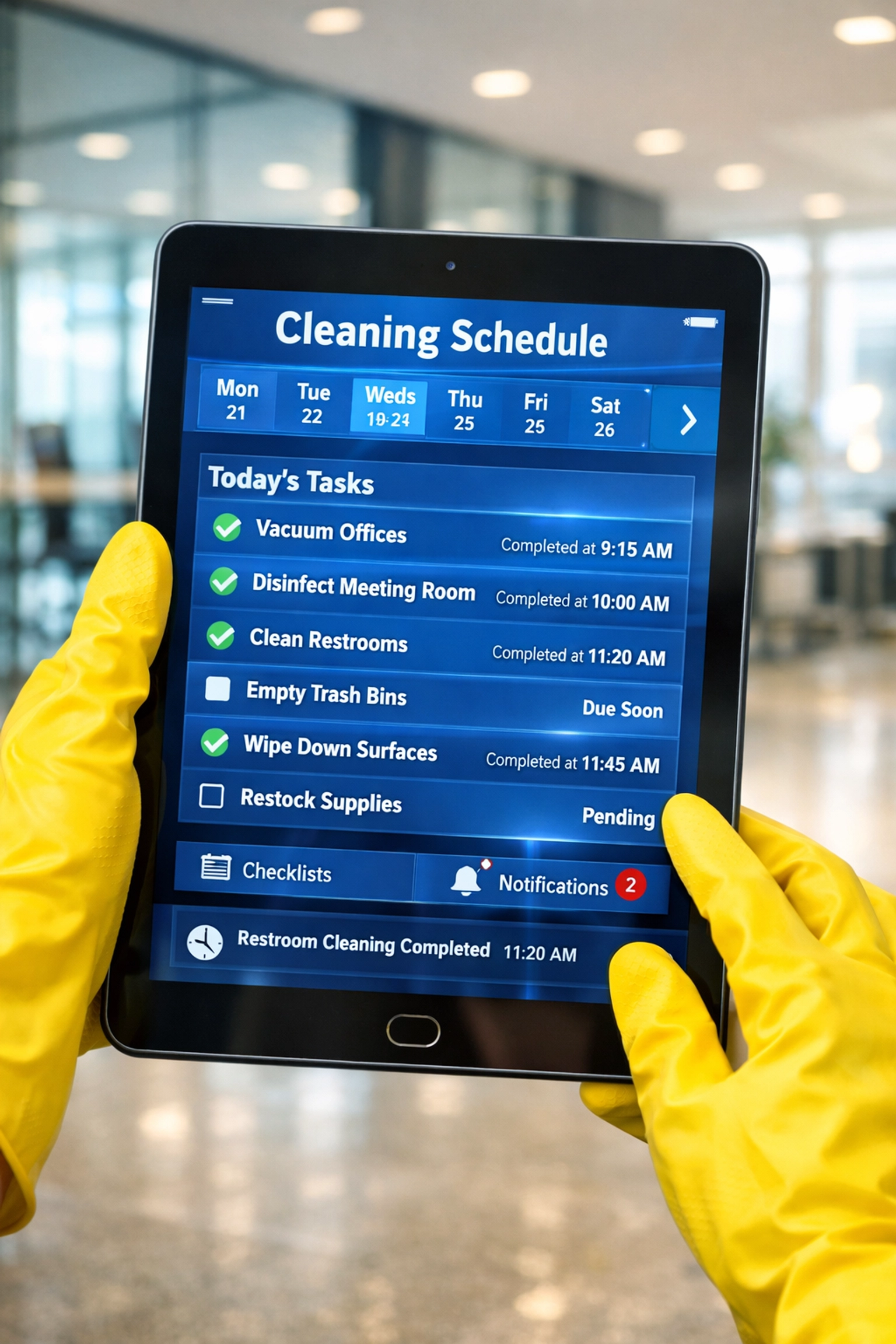
The Fix: Implement shared scheduling software that both your team and your cleaning service can access. Require your contractor to designate backup staff for every regular cleaner assigned to your properties.
For office buildings spanning multiple Midwest metros, establish a written protocol for same-day communication when a scheduled cleaner cannot arrive. Your cleaning service should notify you by 8 AM if coverage issues exist and provide a solution: not an excuse: by 10 AM.
Properties in Chicago's West Loop or Detroit's downtown district compete for top-tier tenants who expect consistent service. Scheduling gaps damage your reputation faster than almost any other operational failure.
Mistake 5: No Quality Control System Beyond Your Own Eyes
Property managers who rely solely on personal walk-throughs for quality control create bottlenecks and miss problems. When you're managing multiple office buildings across Indianapolis, Detroit, and Chicago, you can't inspect every space daily.
The Fix: Require your cleaning service to provide digital reporting that documents completed tasks by location and date. Modern cleaning companies use mobile apps that capture timestamped photos and task completion data.
Review these reports weekly rather than relying on tenant complaints to alert you to problems. Establish quarterly quality audits where you or a designated team member inspects 20% of your portfolio's square footage using a standardized checklist. Share results with your cleaning contractor and require written corrective action plans for any scores below 85%.
Mistake 6: Missing Mold and Moisture Issues in Mechanical Rooms
Office property managers focus on visible tenant spaces and overlook mechanical rooms, storage areas, and basement levels. Mold growth in these hidden areas creates air quality problems that migrate into occupied spaces and generate expensive remediation costs.
The Fix: Include mechanical rooms, storage areas, and basement spaces in your cleaning service's monthly inspection route. They don't need daily cleaning, but they need regular visual checks for moisture, mold, and debris buildup.
Midwest properties face unique challenges from freeze-thaw cycles that cause concrete sweating and HVAC condensation issues. Schedule quarterly inspections of below-grade spaces where humidity accumulates. Early detection of moisture problems costs hundreds; ignored mold remediation costs tens of thousands.
Mistake 7: Vague Standards Lead to Constant Disputes
"Clean the office building" means different things to property managers, cleaning services, and tenants. Without explicit standards, you'll cycle through contractors while tenant complaints continue.
The Fix: Create a written cleaning specification document that defines standards for every space type in your portfolio. Include:
- Frequency requirements (daily, weekly, monthly) by task and location
- Product specifications for different surfaces
- Response time requirements for urgent requests
- Quality standards with measurable outcomes
- Photographic examples of acceptable vs. unacceptable results
For office properties in Chicago, Indianapolis, and Detroit, consider adopting ISSA (International Sanitary Supply Association) Clean Standards. These provide objective, measurable criteria that both you and your cleaning service understand.
Share this document with every new tenant during lease signing. When expectations are clear from day one, disputes decrease and tenant satisfaction scores improve.
Building Operational Reliability Into Your Cleaning Program
Office property management success depends on systems that work without your constant attention. Commercial cleaning services either support your operational efficiency or drain your time with constant firefighting.
The seven mistakes outlined above share a common thread: they reflect gaps in process rather than gaps in effort. Property managers who implement documentation systems, clear standards, and regular quality audits spend less time managing cleaning problems and more time focusing on tenant retention and property performance.
For office properties across the Midwest, where competition for quality tenants remains intense and operating margins stay tight, reliable cleaning services separate well-run buildings from properties that struggle with tenant turnover.
Review your current cleaning contracts against these seven common mistakes. Identify which gaps exist in your operations and implement fixes systematically over the next 90 days. Your tenants may not comment when cleaning meets standards, but they'll definitely notice: and leave: when it doesn't.
About MH Janitorial: We provide commercial cleaning services for office properties throughout the Midwest. Visit mhjanitorial.com to learn more about our recurring cleaning schedules and property management solutions.