

Managing office properties across Chicago, Indianapolis, and Detroit means dealing with a unique set of cleaning challenges. From harsh winters tracking in salt and slush to high tenant turnover expectations, Midwest property managers need cleaning partners who understand regional realities. Here are ten essential things you should know when evaluating office cleaning services for your portfolio.
1. High-Touch Surface Cleaning Isn't Optional: It's Critical
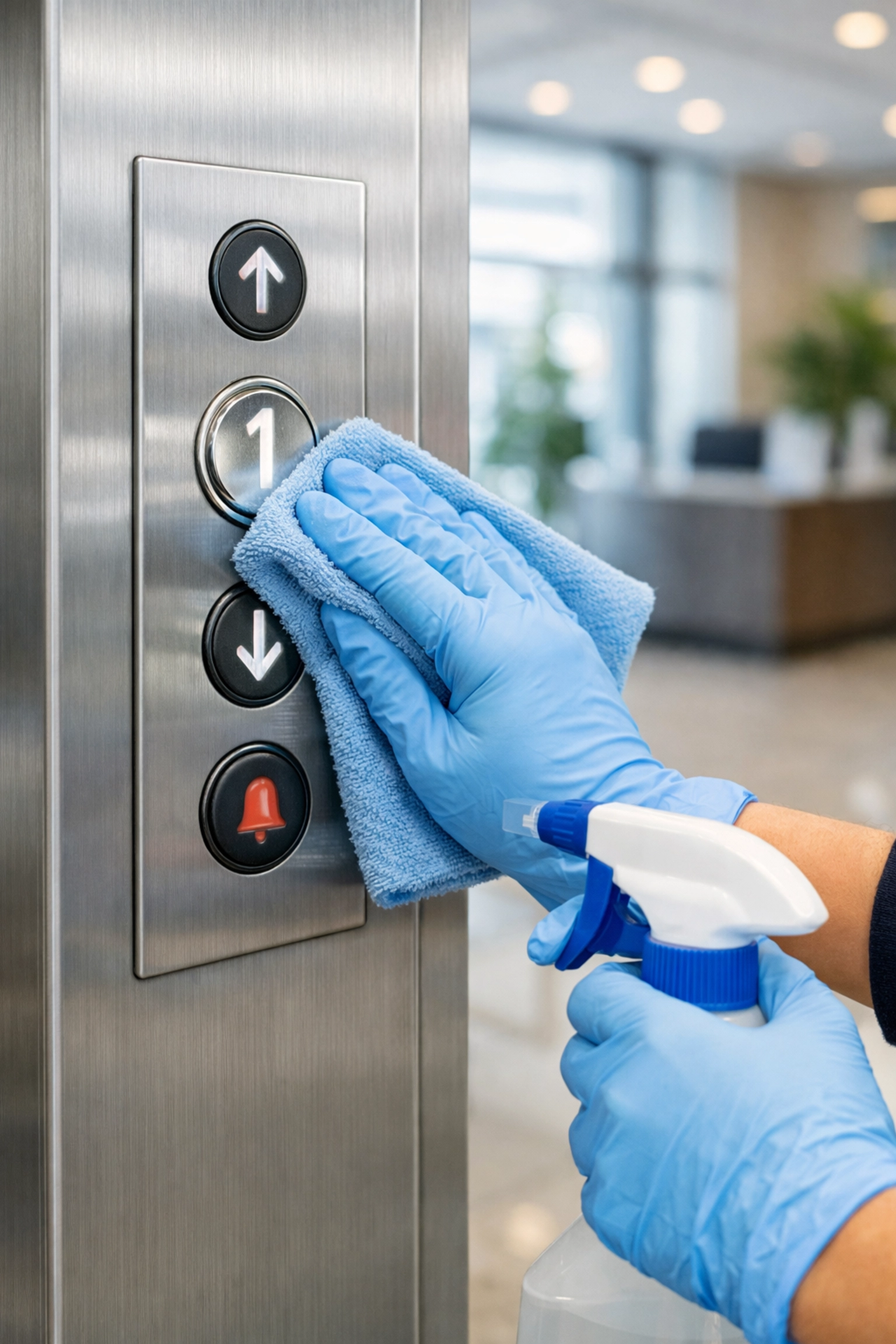
Studies show that viruses can spread to over 50% of office surfaces within just four hours of initial contamination. In shared office environments, that's a serious liability risk. Doorknobs, elevator buttons, light switches, copier panels, and breakroom faucets need daily sanitization: not weekly, not "when we get to it."
Your cleaning partner should have a documented protocol for high-touch areas that happens every single day, regardless of building size or tenant complaints. This isn't about going above and beyond; it's baseline operational reliability in 2026.
2. EPA-Approved Disinfectants Are Non-Negotiable
Not all cleaning products are created equal, and using the wrong chemicals can create serious problems. Every disinfectant should be listed on the EPA's "List N" and proven effective against bacteria, viruses, and fungi.
Mixing products or using incorrect dilution ratios can permanently damage office surfaces or create toxic fumes that put your tenants at risk. Professional cleaning crews should be trained on proper chemical handling: not just handed a spray bottle and told to "clean everything."
3. Midwest Weather Creates Year-Round Bottlenecks
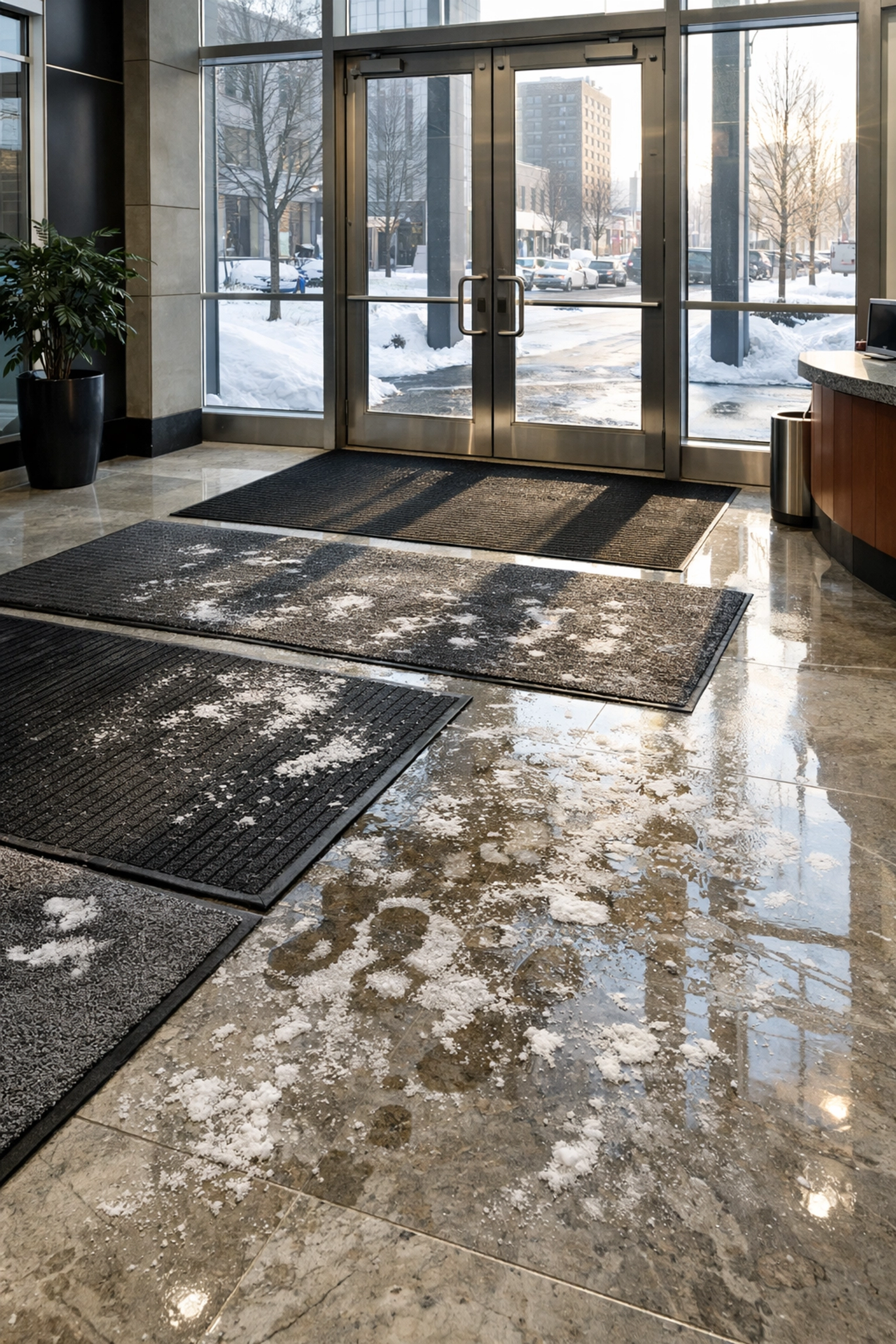
Chicago's lakefront winds, Indianapolis ice storms, and Detroit's heavy snow mean your lobbies take a beating from November through March. Salt residue etches marble floors. Slush creates slip hazards within minutes of foot traffic. Matting systems overflow faster than you can swap them out.
A reliable cleaning partner understands these regional pain points and adjusts staffing and frequency during winter months without you needing to request it. Look for services that proactively address seasonal bottlenecks rather than waiting for tenant complaints to roll in.
4. Structured Cleaning Plans Beat "Wing It" Approaches Every Time
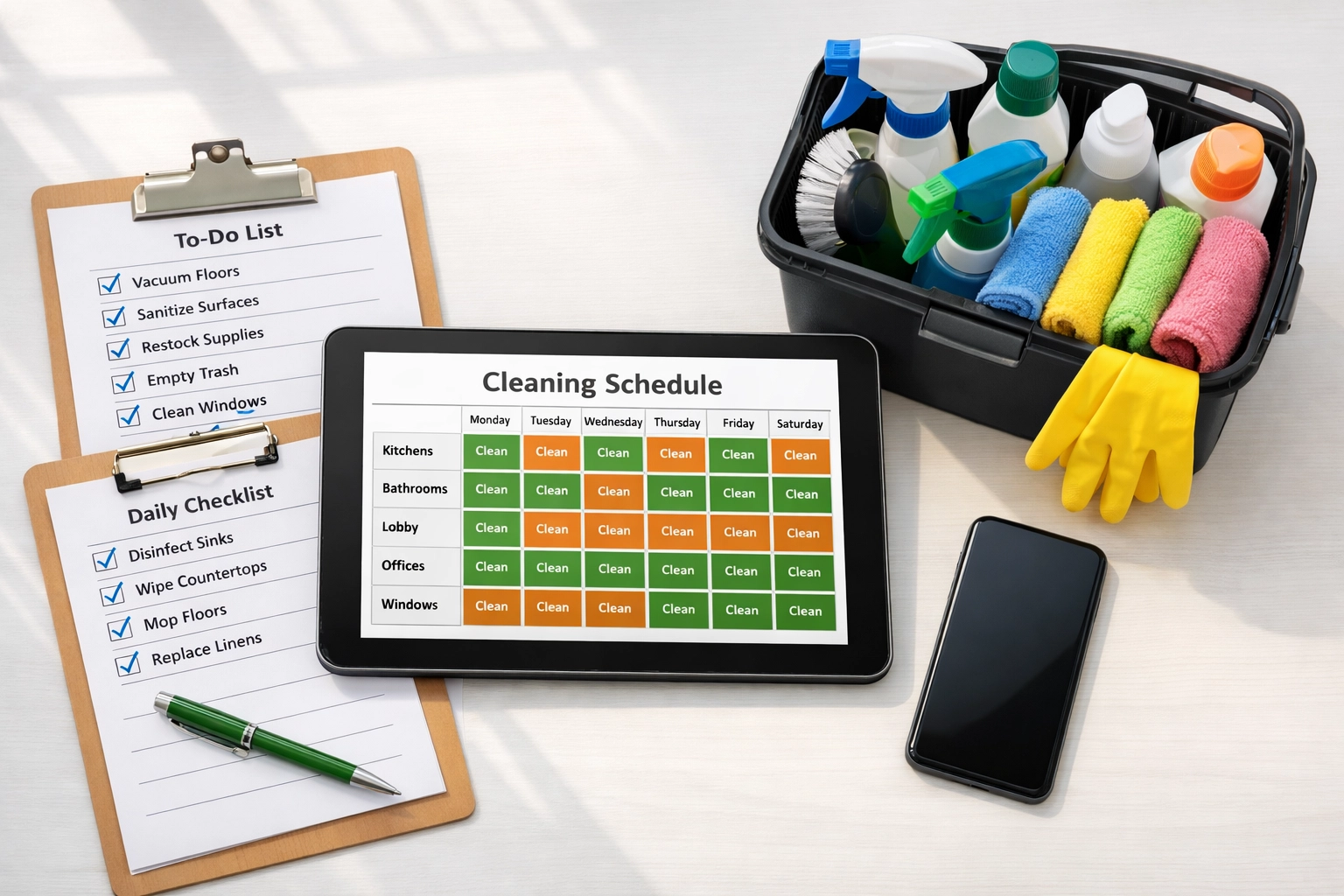
If your cleaning company can't produce a written schedule that specifies which areas are cleaned and how often, you're rolling the dice. Professional operations include:
Daily tasks: Trash removal, restroom sanitation, high-touch surface disinfection, spot-cleaning of spills and smudges
Weekly tasks: Floor mopping with appropriate solutions, interior glass cleaning, dusting of horizontal surfaces
Monthly tasks: High dusting (vents, light fixtures), baseboard cleaning, deep restroom sanitation
A documented plan means accountability. Without one, you're stuck playing defense when tenants complain about inconsistent service.
5. Training Prevents Expensive Mistakes
Untrained cleaning crews can wreck your property faster than you'd think. Acidic cleaners etch marble lobby floors. Over-wetting carpets creates mold problems that cost thousands to remediate. Using abrasive pads on stainless steel leaves permanent scratches.
Professional commercial cleaning requires understanding pH levels, dwell times for disinfectants, dilution ratios, and surface-specific care protocols. When you're evaluating cleaning companies, ask about their training program. If they can't articulate how they onboard and certify staff, keep looking.
6. Quality Control Should Be Built Into Operations: Not Reactive
Here's a red flag: cleaning companies that only send supervisors to a site after you complain. Quality control should be proactive, with supervisors conducting random inspections separate from the regular cleaning crew.
Professional services document inspections with standardized evaluation forms and photograph deficiencies. This paper trail isn't just for your peace of mind: it supports OSHA and state health inspections that can impact your property's insurance and regulatory standing.
7. Deep Cleaning Addresses the Areas Tenants Never See (But Eventually Notice)
Regular janitorial service handles the visible stuff. Deep cleaning tackles HVAC vents, upholstery, storage rooms, grout lines, and the grime behind appliances that accumulates until it becomes a health code violation.
Office properties in downtown Chicago, Indianapolis, and Detroit accumulate dust and allergens faster due to older building infrastructure and urban air quality. Schedule quarterly deep cleans minimum, and make sure your contract specifies exactly what's included. "Deep clean" means different things to different companies.
8. Modern Technology Fills Coverage Gaps
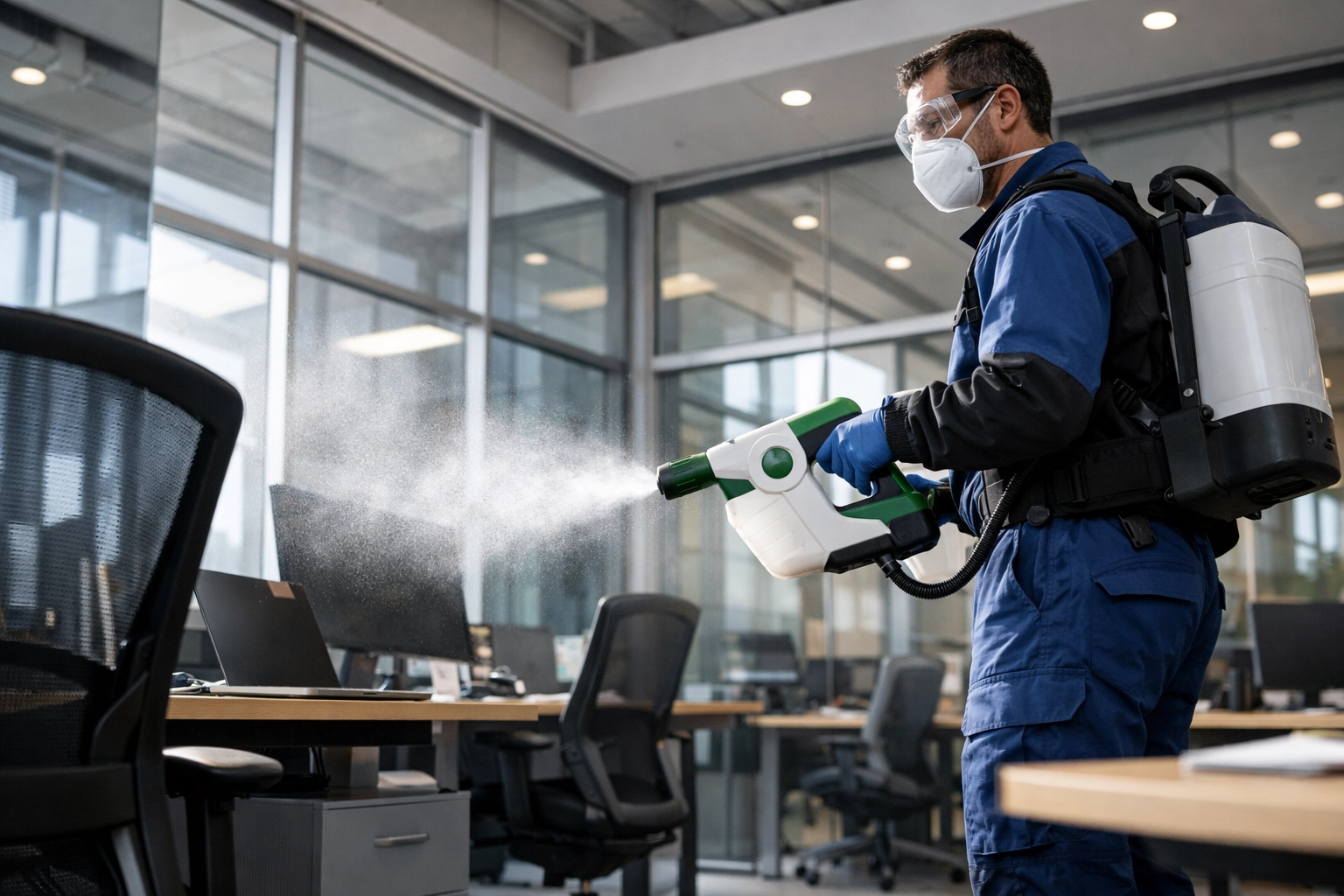
Traditional cleaning methods miss spots: especially in offices with open floor plans and hot-desking arrangements. Electrostatic sprayers, foggers, and UV-C light devices help reach surfaces that are difficult to manually clean.
These aren't gimmicks. They're tools that improve consistency and reduce the chance of cross-contamination in shared workspaces. Ask potential cleaning partners what equipment they use and how it integrates into their standard service protocols.
9. Transparent Communication Prevents Small Problems From Becoming Big Ones
Property managers juggle dozens of vendors and hundreds of moving parts. The last thing you need is a cleaning company that goes dark when issues arise or requires three follow-up calls to get a simple schedule change confirmed.
Reliable office cleaning services provide a single point of contact, confirm service requests promptly, and communicate proactively when staffing shortages or equipment failures might impact service. Operational reliability isn't just about cleaning quality: it's about predictable, professional communication that makes your job easier.
10. Consistency Matters More Than One-Time Heroics
Any cleaning company can show up and blow you away on the first visit. The question is whether they deliver the same quality on visit 47 when nobody's watching.
Look for cleaning partners with documented retention rates, long-term client relationships, and processes that don't fall apart when a key employee leaves. Operational consistency protects your reputation with tenants and reduces the constant vendor-management headaches that eat into your day.
The Bottom Line for Midwest Property Managers
Office cleaning in Chicago, Indianapolis, and Detroit requires more than a crew with mops and spray bottles. It requires regional expertise, documented processes, professional training, and the kind of operational reliability that keeps your properties running smoothly without constant intervention on your part.
When evaluating cleaning services, prioritize companies that understand Midwest-specific challenges, maintain clear communication, and can demonstrate consistent quality over time. Your tenants expect clean, healthy office environments. Your job is to deliver that without it becoming a full-time management project.
The right cleaning partner makes that possible. The wrong one makes it a never-ending headache.