

Category: Property Management
Every day a unit sits vacant costs you real money. If your average rent is $1,500, a 15-day make-ready time costs $750 in lost revenue per unit. Multiply that by 20 units turning over this quarter, and you're looking at $15,000 walking out the door.
The good news? Most property managers are sitting on opportunities to cut their make-ready time in half without hiring more staff or blowing their budget. You just need to stop treating every turnover like a custom project.
Why Your Make-Ready Takes Too Long
Here's what's actually eating your time:
Your maintenance team shows up to a vacant unit without a clear plan. They start walking through, making a mental list. Then they realize they need supplies. They leave to grab what they think they need. They come back and discover something else broken. They call you. You call a vendor. The vendor can't come until Thursday.
Meanwhile, you've got prospects asking to tour that unit, and you're giving them the "it'll be ready soon" line that makes everyone uncomfortable.

The real problem isn't your team. It's the lack of system.
The Standardized Checklist That Changes Everything
Stop reinventing the wheel for every unit. Create one master checklist that covers every single task in the exact order they should happen. Not a vague list, a step-by-step sequence.
Your checklist should include:
- Pre-walkthrough inspection items
- Cleaning sequence (top to bottom, back to front)
- Maintenance repairs by room
- Paint touch-ups or full repaints
- Final inspection items
- Photo documentation points
Here's the thing: when your team follows the same checklist for every unit, they work faster. They're not thinking about what comes next, they're executing. They develop muscle memory. Tasks that used to take 45 minutes drop to 25 minutes.
Print the checklist. Laminate it. Make your team use it for every single turnover. No exceptions.
The One-Person Rule
Split responsibilities kill momentum.
When your maintenance technician is juggling resident service requests and make-ready work, nothing gets finished quickly. They're constantly context-switching between "fix Mrs. Johnson's garbage disposal" and "paint unit 204."
If you manage 100+ units, designate one person exclusively for turnovers during your busy season. They own the entire make-ready process from move-out to move-in ready. No resident calls. No emergency repairs. Just turnovers.
This single change can cut your timeline by 30% because that person maintains focus and momentum. They're not stopping mid-project to handle something else.

Fix Things Before They're Vacant
The best way to speed up make-ready is to eliminate tasks from the list entirely.
Schedule preventive maintenance throughout the year:
- HVAC servicing every spring and fall
- Water heater flushes annually
- Appliance inspections during lease renewals
- Plumbing fixture checks twice yearly
- Cabinet hardware replacement before they break
Yes, this costs money upfront. But it removes these tasks from your turnover checklist and eliminates surprise repairs that derail your timeline.
When a resident gives notice and you already know the HVAC is serviced, the appliances work, and the plumbing is solid, you're starting the turnover three steps ahead.
Build Your Make-Ready Supply Closet
Waiting on supplies is dead time.
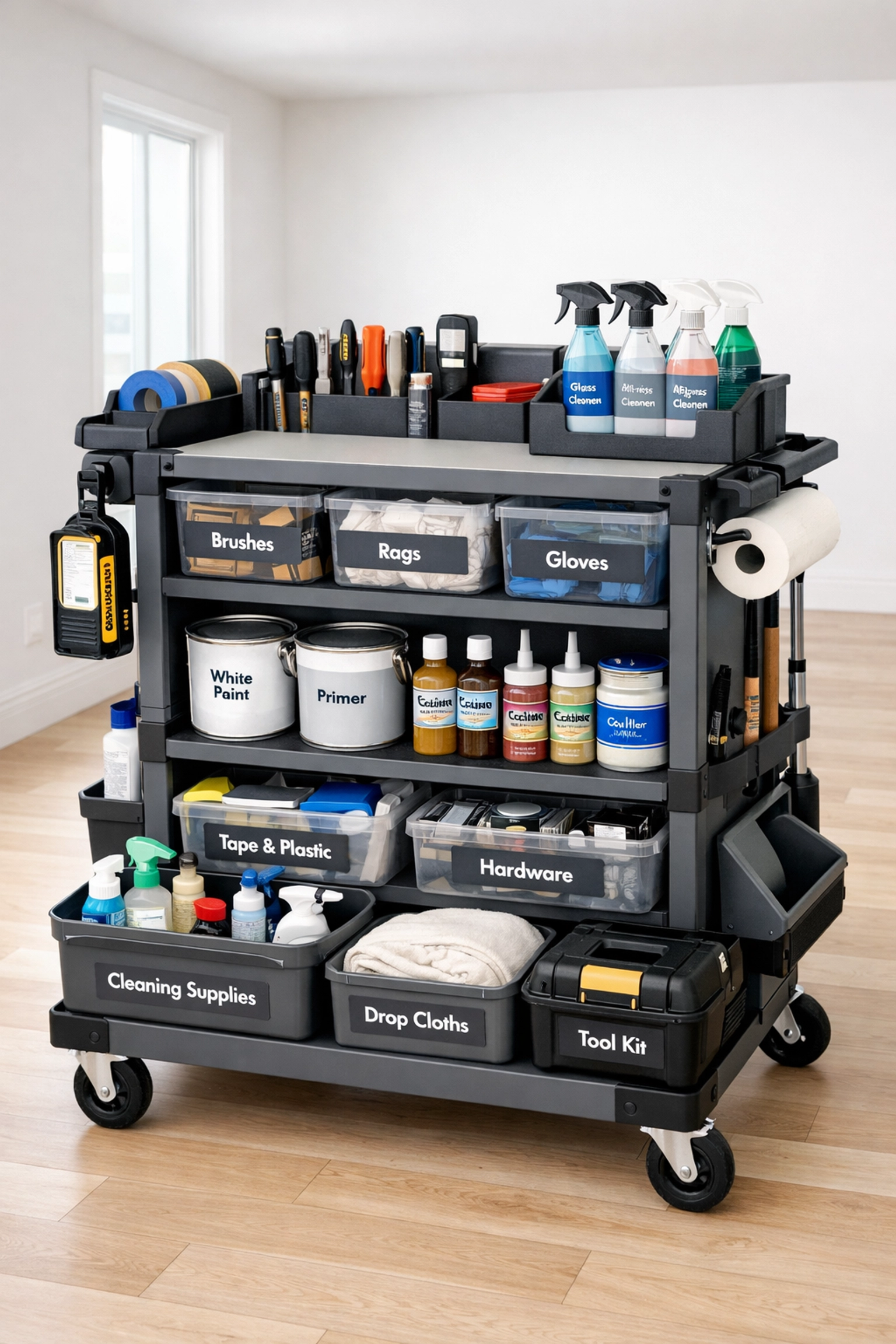
Create a dedicated inventory closet stocked with everything your team needs for standard turnovers. Track exactly what you use across 10 turnovers, then stock based on real data.
Your make-ready closet should include:
- Paint (track your most common colors and quantities per unit size)
- Rollers, brushes, and drop cloths
- HVAC filters (your most common sizes)
- Light bulbs (LEDs in your standard types)
- Cabinet hardware and hinges
- Caulk and spackling compound
- Cleaning supplies in bulk
When your technician walks into a vacant unit with everything they need in a rolling cart, they complete the work in one trip instead of three.

Schedule Contractors Like You Mean It
Contractor coordination kills more timelines than anything else.
The old way: finish cleaning, then call the carpet guy. Wait three days for him to come. Then call the painter. Wait four days. Then realize you need a plumber.
The new way: schedule all contractors the day you receive move-out notice.
Call your carpet cleaner, painters, and any specialty trades before the resident even moves out. Book them back-to-back. Carpet Monday, paint Tuesday, deep clean Wednesday, final inspection Thursday.
This requires planning ahead, but it eliminates the dead time between phases. Your 12-day turnover becomes 6 days.
The Vendor Relationship You're Neglecting
One-off contractors quoted through marketplace apps cost you in ways that aren't obvious.
Build relationships with 3-5 vendors who know your properties and can respond quickly. Give them steady work. In return, you get:
- Priority scheduling
- Consistent quality (they know your standards)
- Faster quotes
- Better pricing on volume
- Fewer surprises
When your go-to flooring contractor knows your buildings and has keys to the maintenance room, they show up and get to work. No site visit. No awkward coordination. No delays.
Speed to Market Matters More Than Perfect
Here's the reality: a unit that's 95% perfect and rented today beats a 100% perfect unit that sits vacant for another week.
Does that light fixture really need replacing, or can it wait until the next turnover? Does every wall need repainting, or can you get away with touch-ups in high-traffic areas?
Your goal is rent-ready, not show-home ready.
The fastest operators ask one question for every task: "Does this prevent us from renting today?" If the answer is no, it goes on the "nice to have" list.
Track Your Real Timeline
Most property managers think they turn units in 10 days. Then they actually measure it and discover it's 17 days.
Start tracking:
- Days from move-out notice to unit vacant
- Days from vacant to work started
- Days from work started to rent-ready
- Days from rent-ready to new lease signed
When you measure actual performance, you'll see where time is leaking. Usually it's in the gaps between phases, not the work itself.
Your Next 30 Days
You don't need to implement everything at once. Start here:
Week 1: Create your standardized checklist and test it on one unit. Time how long each section takes.
Week 2: Build your make-ready supply closet. Order everything you need for three turnovers.
Week 3: Call your top contractors and book them for your next two turnovers in advance.
Week 4: Measure your actual timeline on the units you turned using your new process.
Cut your make-ready time in half, and you're not just saving money on vacancy. You're winning in the market. While your competition is still painting unit 14, you're already collecting rent on it.
That's the difference between running a property and running a business.