

Managing commercial properties across Chicago, Indianapolis, and Detroit means juggling a lot: tenant complaints, vendor coordination, lease renewals, and everything in between. But if there's one thing that affects tenant satisfaction more than anything else, it's the condition of the space. And nothing tanks tenant morale faster than inconsistent, sloppy office cleaning.
We've seen property managers across the Midwest fall into the same traps over and over. Some are easy fixes. Others require a complete system overhaul. Either way, these seven mistakes are costing you time, money, and: most importantly: tenant retention.
Mistake #1: Running Without a Fixed Cleaning Schedule
Here's the problem: too many offices operate on what I call "reactive cleaning": you only call the crew when things look bad. By then, dust has settled into HVAC vents, grime has built up on baseboards, and your tenants have already noticed.
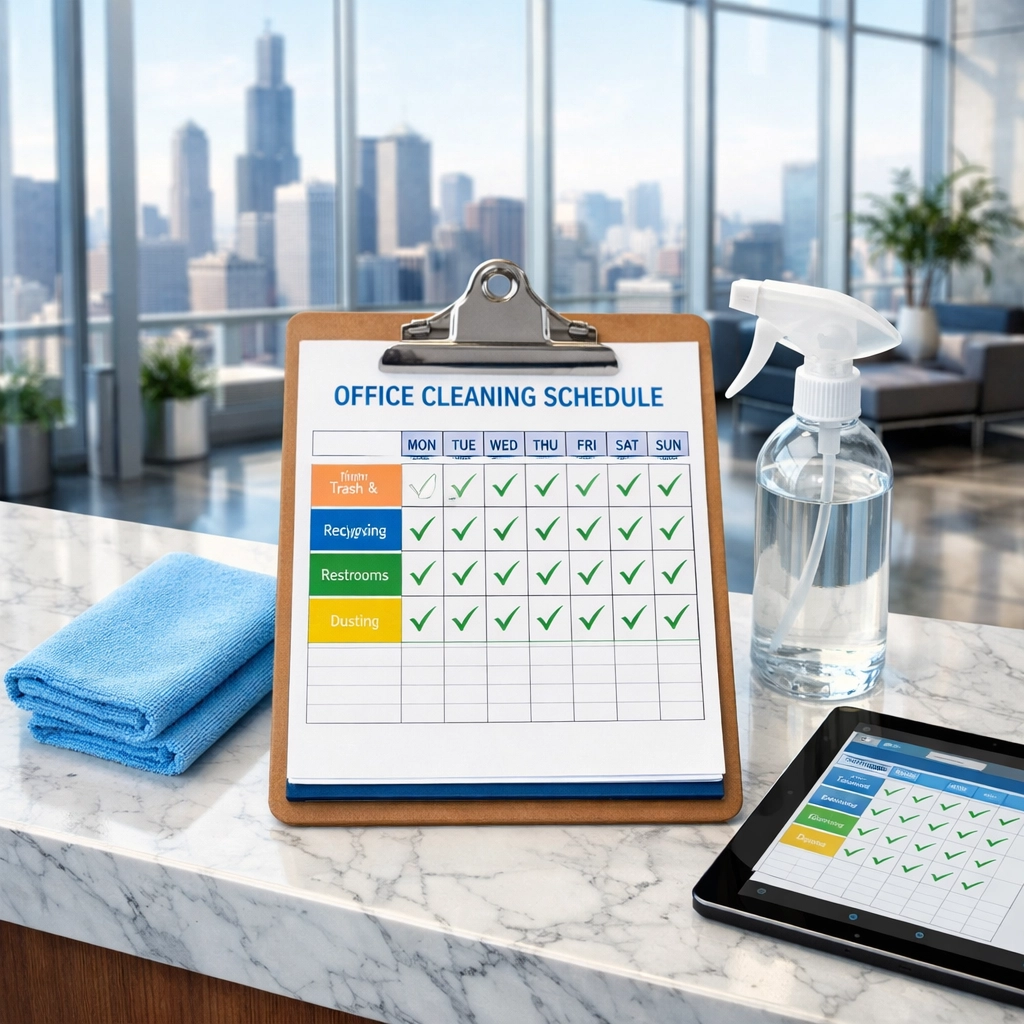
The fix: Build a structured cleaning calendar with daily, weekly, and monthly cycles. High-traffic lobby areas in a Loop office tower need daily attention. Conference rooms might only need a deep clean twice a week. Break rooms? Daily, no exceptions.
Post the schedule in common areas so tenants know when to expect cleaning crews. Use cleaning logs to create accountability: if something's off, you'll know exactly when it was last touched. For larger portfolios across Chicago–Indianapolis–Detroit (MW), standardize your schedules across properties to simplify vendor management and reduce confusion.
Mistake #2: Using the Wrong Cleaning Products on Expensive Surfaces
Your cleaning crew might be using the same all-purpose spray on marble lobby floors, wood conference tables, and vinyl baseboards. That's a recipe for permanent damage: and costly replacements.
Different materials need different solutions. Marble countertops require pH-neutral cleaners. Wood finishes need oil-based products. Electronics and glass require streak-free formulas that won't leave residue on screens or windows.
The fix: Work with a cleaning partner that knows the difference. Professional services use hospital-grade or eco-friendly disinfectants tailored to each surface. They also know which products won't void manufacturer warranties on high-end finishes: something that matters when you're managing Class A office space in the Chicago metro.
If you're managing the cleaning in-house, invest in surface-specific products and train your team to use them correctly. It's cheaper than replacing a $15,000 marble reception desk because someone used acidic cleaner on it.
Mistake #3: Ignoring High-Touch Areas and Hidden Zones
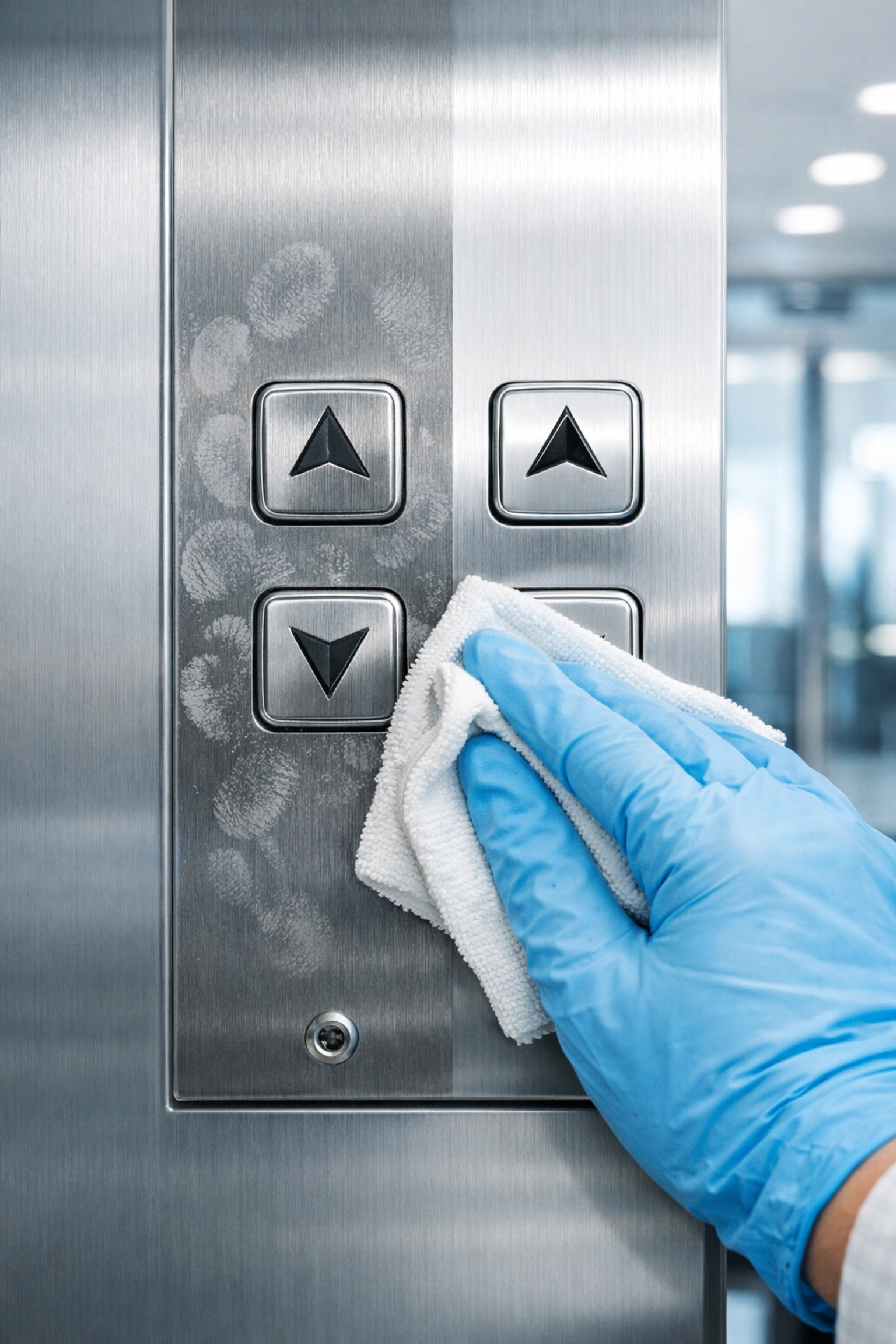
Your crew vacuums the floors and wipes down desks: great. But what about the door handles, elevator buttons, light switches, and shared kitchen appliances? These are the hotspots where germs concentrate, and they're getting skipped.
The same goes for hidden zones: behind copy machines, under desks, air vents, window sills, and baseboards. Out of sight doesn't mean out of mind, especially when dust and allergens build up and affect indoor air quality.
The fix: Create comprehensive checklists that specifically call out high-touch and hidden areas. Make these zones a priority, not an afterthought. Train your cleaning teams to start with the bacteria hotspots: especially in shared spaces like kitchens, restrooms, and elevator lobbies.
For property managers handling multiple buildings across the Midwest, standardized checklists ensure consistent quality whether you're in a Detroit office park or a downtown Indianapolis high-rise.

Mistake #4: Skipping Maintenance on Cleaning Equipment
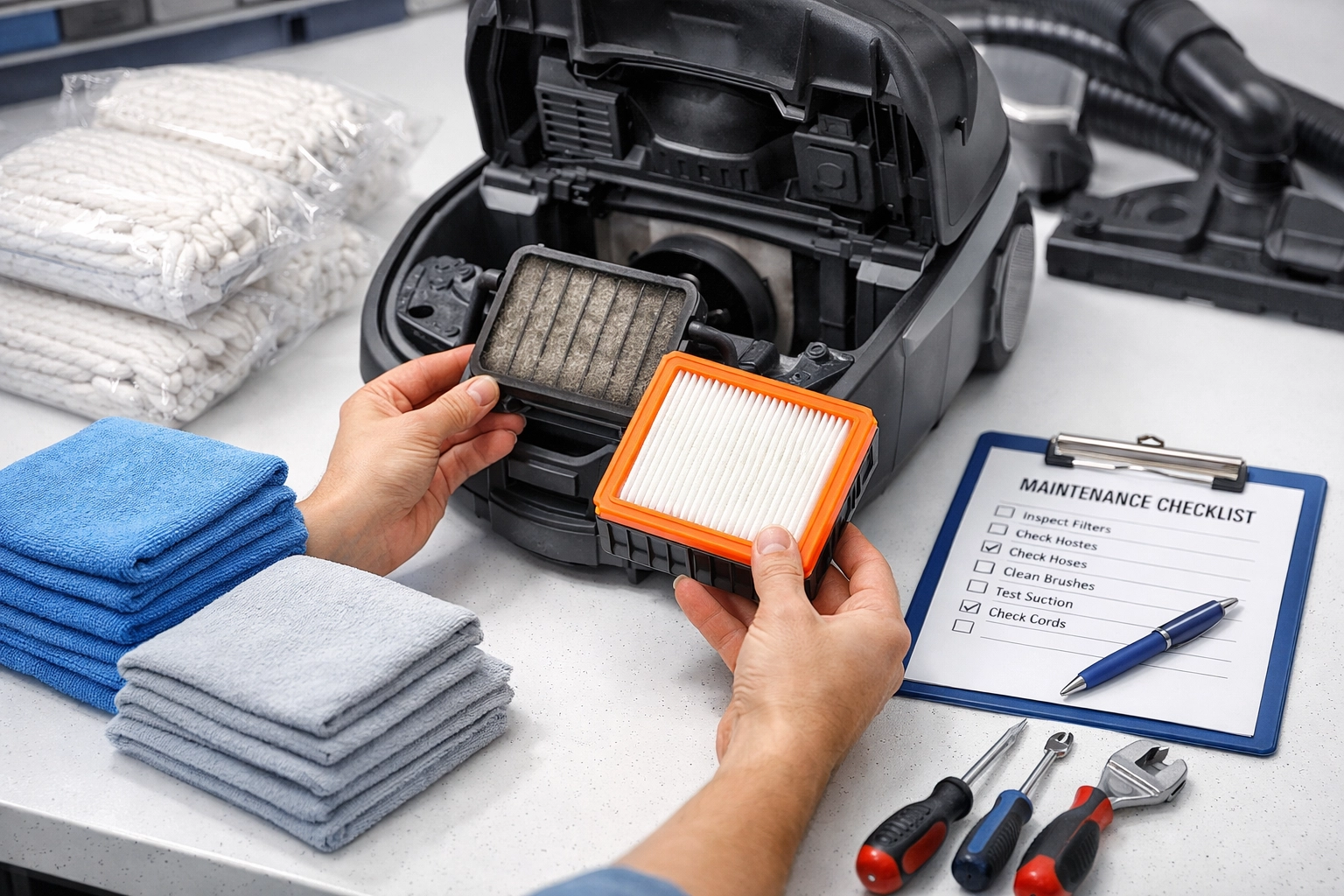
Dirty mop heads, clogged vacuum filters, and expired disinfectant wipes do more harm than good. They spread contaminants instead of removing them. Your cleaning crew might be working hard, but if their tools are shot, the results won't show it.
The fix: Set up a rotation schedule for consumables: mop heads, sponges, microfiber cloths. Empty vacuum bags weekly and inspect equipment condition during every cleaning session. Replace worn-out tools on schedule, not when they fall apart.
If you're outsourcing your cleaning, confirm that your vendor has an equipment maintenance program in place. Ask them how often they rotate mop heads and replace vacuum filters. It's a simple question that separates professional operations from fly-by-night contractors.
Mistake #5: Inadequate Training and Supervision of Cleaning Staff
This is where things fall apart for most property managers. You hire a cleaning crew, hand them keys, and hope for the best. No onboarding. No quality checks. No feedback loop.
The result? Crews cut corners. They skip hallways, miss restrooms, and use unsafe cleaning practices. Tenants complain. Your reputation takes a hit.
The fix: If you're managing cleaning in-house, conduct thorough onboarding and refresher training sessions. Appoint a supervisor to perform routine inspections and establish a feedback process so tenants can report issues without friction.
Better yet, outsource to a professional service with built-in accountability and quality control. A reliable vendor will have training programs, supervision protocols, and clear escalation paths when something goes wrong. That structure matters, especially when you're managing properties across multiple metro markets in the Midwest.
Mistake #6: Failing to Document Property Conditions
Here's a scenario every property manager dreads: a tenant moves out, and there's a dispute over who's responsible for damage. You think the carpet stains were there before the tenant moved in. They swear the space was pristine.
Without documentation, you're stuck in a he-said-she-said argument that costs time, money, and tenant goodwill.
The fix: Photograph every space before a tenant moves in and after every cleaning session. Maintain a digital archive organized by property, floor, and unit. These records protect you and your tenants by establishing a clear baseline for property condition.
This practice is especially important for property managers handling turnover in competitive office markets like Chicago, where tenant expectations are high and disputes can escalate quickly.
Mistake #7: Poor Communication of Cleaning Standards
If your cleaning crew doesn't know what "properly cleaned" means, they can't deliver it. Ambiguous expectations lead to inconsistent results: and that damages your reputation with tenants.
The fix: Share detailed cleaning schedules and quality standards in writing. Hold periodic check-ins with your cleaning team (whether in-house or outsourced) to clarify expectations and address gaps. Post cleaning standards in common areas so tenants know what to expect.
Invite feedback from tenants and use it to refine your process. The goal is continuous improvement, not perfection on day one. But you can't improve what you don't measure, and you can't measure what you haven't defined.
Why Chicago Property Managers Are Outsourcing Office Cleaning
A lot of property managers across the Midwest are solving these problems by partnering with professional cleaning services. The benefits are clear: structured schedules, trained staff, quality control documentation, and built-in accountability.
Outsourcing frees up your internal resources to focus on tenant relations, lease management, and property maintenance: things that directly affect your bottom line. It also reduces liability, since professional cleaning vendors carry their own insurance and handle worker safety protocols.
For portfolios spanning Chicago, Indianapolis, and Detroit, working with a regional cleaning partner ensures consistency across properties while reducing the complexity of managing multiple local vendors.
What to Look for in a Chicago Office Cleaning Partner
If you're evaluating cleaning services for your properties, focus on operational reliability. Ask about:
- Scheduling systems: Do they use documented cleaning schedules and logs?
- Training programs: How do they onboard and supervise their teams?
- Equipment maintenance: What's their protocol for replacing consumables and maintaining tools?
- Quality control: Do they perform regular inspections and solicit tenant feedback?
- Insurance and bonding: Are they properly covered in case something goes wrong?
The right partner won't just clean your properties: they'll help you maintain tenant satisfaction, reduce turnover, and protect your reputation across the Midwest market.
Final Thoughts
Managing office cleaning isn't glamorous, but it's critical. Tenants notice when things are off. They'll forgive a lot, but they won't forgive dirty restrooms, dusty common areas, or inconsistent cleaning schedules.
The seven mistakes we've covered: inconsistent schedules, wrong products, ignored high-touch areas, poor equipment maintenance, inadequate training, lack of documentation, and unclear standards: are fixable. Some require a process change. Others require a vendor change.
Either way, the sooner you address them, the sooner you'll see better tenant retention, fewer complaints, and a stronger reputation across your portfolio.
If you're ready to upgrade your office cleaning operations across Chicago and the Midwest, start by auditing your current process against these seven mistakes. You'll know pretty quickly where the gaps are: and what it'll take to fix them.