


Intent: Value
Social Caption: Managing office cleaning across Chicago, Indianapolis, and Detroit shouldn't feel like a second job. Learn how to standardize your operations and maintain metropolitan authority across the Midwest. #OfficeManagement #MidwestRealEstate #FacilityManagement #MHJanitorial
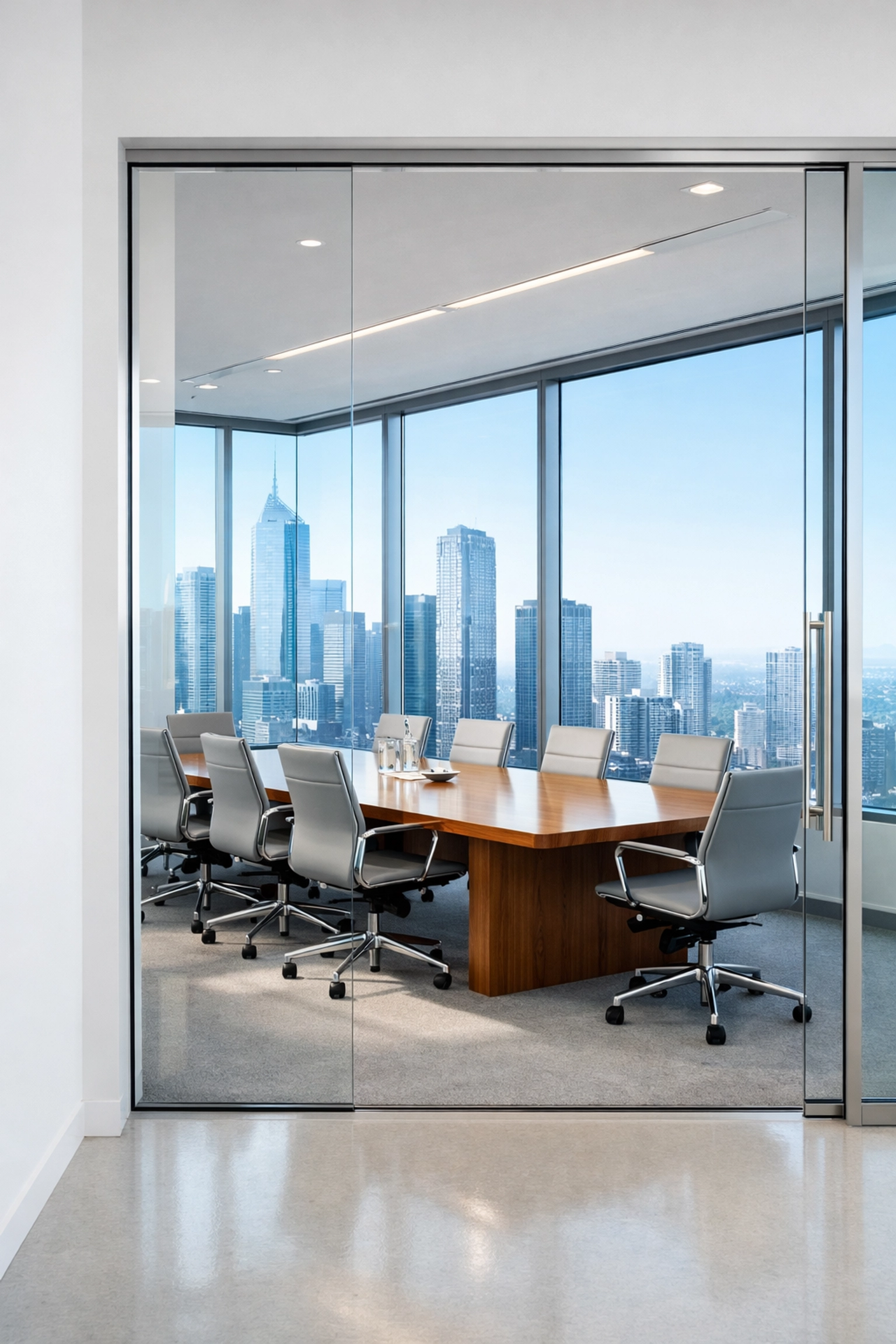
Image Prompt: A high-angle, professional photograph of a clean, modern corporate office lobby in a skyscraper, looking out over a metropolitan skyline like Chicago or Detroit during a clear day. No people, no text.
Managing a single office building is a challenge. Managing a portfolio that stretches from the high-rises of Chicago to the sprawling corporate campuses of Indianapolis and the industrial-turned-tech hubs of Detroit? That is a logistical mountain.
For property managers and portfolio directors in the Midwest (MW), the "bottleneck" isn't just about finding someone to empty the trash. It’s about consistency. It’s about ensuring that the level of service a tenant receives in a West Loop loft is identical to what they get in a suburban Indy office park.
At MH Janitorial, we’ve seen the evolution of regional facility management firsthand. Since being founded in 2011, we’ve helped navigate the complexities of multi-city operations, with over 15,000 jobs completed nationwide. We know that success in the Midwest requires more than just a mop; it requires a system.
Here is your ultimate guide to mastering multi-city office cleaning.
The Regional Bottleneck: Why Multi-City Management Fails
Most multi-city cleaning strategies fail because they rely on "fragmented localized sourcing." This is a fancy way of saying the property manager is juggling five different contracts with five different sets of standards.
In the Midwest, metropolitan authority matters. If you are managing properties in Chicago, Indianapolis, and Detroit, you are dealing with different weather patterns, different building ages, and different labor markets. However, your brand: and your tenants' expectations: must remain uniform.
The bottleneck usually happens in communication and accountability. When a tenant in Detroit complains about a missed restroom restock, does that information reach the same dashboard as a similar complaint from Indianapolis? If not, you aren't managing a portfolio; you're just putting out fires in three different time zones.
Step 1: Conduct a Comprehensive Site Audit
Before you can standardize, you have to understand what you’re working with. A skyscraper in Chicago has different needs than a single-story medical office in Indianapolis.
You need to document:
- Square Footage & Floor Types: Are we talking marble lobbies, high-traffic carpet, or industrial sealed concrete?
- Occupancy Patterns: Is it a 24/7 call center or a 9-to-5 legal firm?
- High-Touch Zones: Elevator buttons, shared kitchenettes, and conference room handles.
- Regional Weather Impact: In Detroit and Chicago, "Salt Season" is a real thing. Your audit needs to account for extra floor protection and entryway maintenance from November through March.
Step 2: Establish a Standardized Scope of Work (SOW)
The secret to metropolitan authority is the SOW. This document ensures that every "Pro" entering your building knows exactly what success looks like. Without a uniform checklist, your operations will drift into chaos.
Your SOW should be broken down into three clear tiers:
Daily Tasks
These are the non-negotiables that keep the lights on and the tenants happy.
- Trash Removal: Including recycling separation.
- Restroom Sanitation: Full wipe-down of all surfaces and restocking of supplies.
- High-Touch Disinfection: Focus on door handles, elevator panels, and railings.
- Lobby Maintenance: First impressions are everything in major hubs like Chicago.
Weekly Tasks
These tasks prevent the gradual buildup of grime that makes an office feel "old."
- Floor Mopping and Detailed Vacuuming: Getting into the corners, not just the "high-traffic" paths.
- Glass Cleaning: Entry doors and interior partition glass.
- Break Room Deep Cleans: Including appliance exteriors and communal sinks.
Monthly Tasks
This is the "detail work" that separates professional management from the amateurs.
- High Dusting: Vents, ceiling fans, and tops of cabinets.
- Baseboard Detailing: Often overlooked but essential for a truly clean look.
- HVAC Vent Cleaning: Crucial for air quality in older Detroit buildings.

Step 3: Local Adaptation for Midwest Realities
While the SOW is standard, the execution must be local. This is where many national providers trip up: they don't understand the "Midwest Shuffle."
In Chicago, your Pros might need to navigate complex loading dock schedules and freight elevator bookings. In Indianapolis, the focus might be on sprawling parking lot transitions and multiple entry points.
Seasonality is the biggest factor. A multi-city manager must have a "Winter Protocol" ready to trigger. When the first snow hits Detroit, your cleaning service providers should already be prepared with walk-off mats and neutralizer for salt-stained carpets. You shouldn't have to call them; it should be part of the regional playbook.
Step 4: The Power of Consistent Pros
One of the biggest advantages of working with a platform like MaidHop is the ability to connect with vetted cleaning service providers who understand your specific building.
When possible, having the same "MaidHop Pros" assigned to your locations creates a "site-specific memory." They learn where the tricky locks are, which tenant is sensitive to scents, and which conference rooms are used most frequently. This reduces the administrative burden on you. Instead of explaining the layout every week, you have a team that operates like an extension of your own staff.
Step 5: Transparency and the 24-Hour Rule
In a multi-city setup, you can't be everywhere at once. You need a system of accountability that doesn't require you to drive three hours between Detroit and Indy.
This is where digital logs and clear communication come in. You should have access to service logs that prove the work was done. But even with the best systems, things can occasionally go sideways.
At MH Janitorial, we lean on a simple, effective protocol: If something isn’t right, we return within 24 hours to address it.
This 24-hour return policy is the safety net for property managers. It ensures that a small oversight on a Tuesday doesn't become a tenant revolt by Friday. It’s about operational reliability: the knowledge that "fixed" is only a message away.

Step 6: Leveraging Technology for Growth
Managing 10 locations is different than managing 50. As your portfolio grows across the Midwest, the "manual" way of managing cleaning: emails, phone calls, paper invoices: will break.
Modern property management requires a tech-forward approach. This is why we developed the AI Growth Engine. For a setup fee plus $397, this engine allows property managers and office owners to automate the scheduling, vetting, and communication aspects of facility maintenance. It’s designed to provide metropolitan authority without the overhead of a massive in-house cleaning department.
By using technology to bridge the gap between Chicago, Indianapolis, and Detroit, you can maintain a "small shop" feel for your tenants while enjoying "large-scale" efficiency.
Summary Checklist for Success
If you are looking to streamline your multi-city operations today, start here:
- Consolidate Communication: Stop using three different apps or email threads for three different cities. Centralize.
- Standardize the SOW: Ensure your Chicago building and your Detroit building are being graded on the same scale.
- Audit for Seasonality: Do you have a salt-mitigation plan for the MW winter?
- Confirm the 24-Hour Protocol: Does your current provider have a commitment to return within 24 hours if something isn't right?
- Scale with Tools: Don't be afraid of the AI Growth Engine. Automation is the friend of the busy Portfolio Manager.
Managing multi-city office cleaning doesn't have to be a headache. It requires a blend of high-authority standards and local, boots-on-the-ground execution. Whether you are overseeing a few floors in a landmark Chicago building or a multi-tenant complex in Indianapolis, the goal is the same: a clean, professional environment that protects your asset and keeps your tenants coming back.
Ready to simplify your Midwest portfolio? Join our newsletter for more operational insights or visit MH Janitorial to see how we can help you scale.

MH Janitorial connects customers with vetted cleaning service providers. Founded in 2011, we have helped property managers across the nation maintain excellence with over 15,000 jobs completed.