


Intent: Value
Social Caption: Scaling apartment turnovers in Chicago, Indianapolis, or Detroit doesn't have to be a logistical nightmare. Managing 50+ move-outs in a single weekend requires a system, not just a mop. Check out our latest guide on streamlining the "turn" and keeping your Portfolio Managers happy. #PropertyManagement #MidwestRealEstate #ApartmentTurnover #MaidHop
Image Prompt: A wide-angle, professional shot of a modern, vacant apartment living room with floor-to-ceiling windows overlooking a metropolitan skyline (Chicago style). The floors are gleaming, and the space is sunlit and pristine. No people or text in the image.
Managing a handful of units is a job. Managing a portfolio across major Midwest hubs like Chicago, Indianapolis, and Detroit during peak turnover season? That’s an Olympic sport. When the calendar hits those high-velocity move-out dates, the difference between a smooth transition and a budgetary disaster usually comes down to one thing: your cleaning operations.
At MH Janitorial, we’ve seen how the "turn" can break even the most seasoned teams. Since we were founded in 2011, we’ve learned that scaling move-out cleaning isn't about working harder; it’s about deploying a repeatable system that works across 10 units or 1,000.
Whether you are overseeing a luxury high-rise in the Chicago Loop or a sprawling multifamily complex in suburban Indianapolis, this guide is designed to help you master move-out cleaning at scale.
The Regional Reality: Why the Midwest Scaling is Different
In the Midwest (MW), property managers face unique seasonal bottlenecks. We have specific "moving windows": often tied to university schedules or the brutal shift from winter to spring: where hundreds of leases end simultaneously. In cities like Detroit, where urban revitalization is bringing massive new developments online, the pressure to maintain "like-new" standards is higher than ever.
When you’re dealing with scale, you can’t rely on a "guy with a van" approach. You need a partner that understands metropolitan authority. MaidHop connects customers with vetted cleaning service providers who are used to the pace of professional property management. With over 15,000 jobs completed nationwide since 2011, we know that reliability is the only currency that matters during a turn.

Standardizing the "Clean" Across Your Portfolio
The biggest drain on a Portfolio Manager’s time is "subjective quality." If Manager A thinks a unit is clean, but Manager B (or the incoming tenant) disagrees, you’ve got a dispute, a delay, and a potential hit to your reputation.
To scale effectively, you must move away from "clean" and toward a "Standardized Unit Specification."
1. The Kitchen: The Make-or-Break Zone
The kitchen is where most move-out inspections fail. When scaling, Pros focus on the areas tenants miss, but incoming residents always check:
- Inside Appliances: Degreasing the oven and ensuring the refrigerator is pulled out to clean the floor beneath it.
- Cabinetry: Wiping out every drawer and shelf. In high-turnover environments, crumbs left in a corner are an invitation for pests.
- The Sink and Disposal: Polishing fixtures to give that "new" sparkle.
2. The Bathroom: The Hygiene Standard
Bathrooms must be more than just visually clean; they must look sanitized (though we avoid medical claims, the "hotel-ready" look is the goal).
- Grout and Tile: Removing soap scum and hard water deposits.
- Medicine Cabinets: Often overlooked, these need to be wiped inside and out.
- Toilet Bases: A common spot for missed dust and hair.
3. Living Areas and Bedrooms
- Window Tracks: In the MW, dust and soot from the city can settle quickly. Cleaning the tracks: not just the glass: is a mark of a professional turn.
- Baseboards and Light Fixtures: These are the "detail" items that make a unit feel truly refreshed.
- Closet Shelving: Ensuring no hangers or debris are left behind.
Operational Reliability: The "Hidden" Costs of Cheap Cleaning
When you’re managing at scale, the lowest bid is often the most expensive. Why? Because a "no-show" during a 48-hour turn window can cost you thousands in prorated rent or emergency labor.
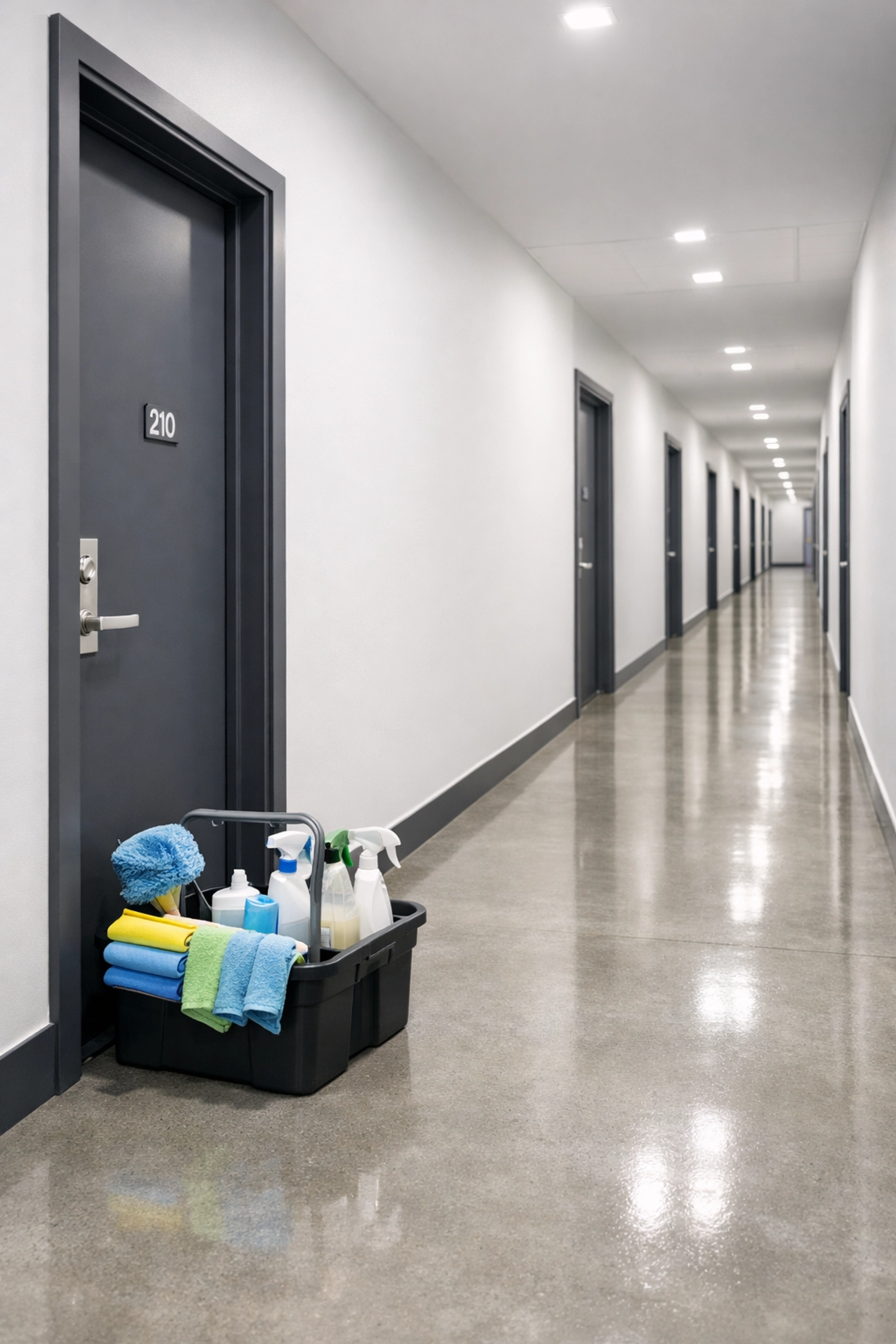
As a Portfolio Manager, you need predictability. You need to know that when you book a block of units, the Pros will show up, do the job to the spec, and leave the unit ready for the next lease. This is why many PMs are moving toward centralized platforms like MH Janitorial.
The 24-Hour Resolution Rule
In the world of high-volume turnovers, mistakes can happen. The mark of a professional partner isn't perfection: it’s the response. At MH Janitorial, we follow a strict protocol: If something isn’t right, we return within 24 hours to address it. This keeps your move-in schedule on track and prevents your on-site maintenance team from having to pick up the slack.
Managing the "Turn" Workflow
Scaling requires a shift in how you schedule. Instead of treating each unit as a separate ticket, think in blocks.
- The Pre-Inspection: Have your maintenance team walk the units 48 hours before the lease ends. Identify any "heavy" cleans early so you can adjust your booking with your service provider.
- The Staggered Start: In a large building in Chicago or Indianapolis, don't try to have every unit cleaned at 8:00 AM on the 1st. Stagger the starts to allow the Pros to move efficiently through floors.
- Digital Verification: Use a system that provides confirmation. Knowing a job is "done" without having to drive across the city to verify it is how you manage a regional portfolio.
Why Metropolitan Authority Matters
Writing for the Midwest means understanding the specific challenges of our hubs. In Detroit, logistics can be a hurdle; in Chicago, parking and elevator access for cleaning crews can add hours to a job if not managed correctly.
MaidHop Pros are local to these markets. They understand that a high-rise turn in the West Loop is different from a townhome turn in Carmel, IN. By leveraging a nationwide footprint with a "boots on the ground" mentality, we provide the infrastructure that allows property managers to grow their portfolios without increasing their stress levels.

The Financial Impact of Scaled Cleaning
Let’s talk numbers. The cost of a vacant unit isn't just the lost rent; it's the marketing cost, the utility cost, and the "days on market" (DOM) metric that investors watch closely.
A unit that sits for three days because the cleaning was subpar is a unit that is actively losing money. By standardizing your move-out process, you can often shave 24 to 48 hours off your total turn time. Over a 200-unit portfolio, that’s a massive increase in Net Operating Income (NOI).
If you’re looking for a way to streamline this, our Sitemap offers a look at the various services and regions we cover, ensuring you can find the right fit for your specific asset class.
Final Thoughts for the Modern Portfolio Manager
The era of managing move-outs with a spreadsheet and a prayer is over. To compete in the modern MW real estate market, you need professional-grade operations. You need a partner that understands the difference between a residential "maid" service and a B2B cleaning professional.
At MH Janitorial, we specialize in being that bridge. We connect you with vetted Pros who understand the stakes of property management. Whether you’re prepping for a massive lease-up or just trying to survive the spring turnover, focus on the system, not just the scrub.
Ready to see how we can help you scale your operations? From Chicago to Indianapolis to Detroit, we’re here to ensure your units are ready for their next story.
Stay ahead of the curve. For more tips on operational excellence and regional real estate updates, sign up for our newsletter at maidhop.com/newsletter.
Founded in 2011, MaidHop Services Inc. has facilitated over 15,000 jobs nationwide. We connect customers with vetted cleaning service providers, ensuring that if something isn’t right, we return within 24 hours to address it.