
Intent: Value
Social Caption: Managing multi-unit buildings in the Midwest isn't just about sweeping floors: it's about battling the elements. From Chicago salt to Detroit slush, your recurring cleaning schedule is your best defense. Learn how to master the rotation. #PropertyManagement #MidwestRealEstate #ChicagoMF #DetroitPM #IndianapolisHOA
Image Prompt: A professional-grade cleaning cart standing in a high-end modern apartment building lobby in a major Midwest city like Chicago, with large windows showing a city skyline. No text on image.
Managing a multi-unit building in the Midwest (MW) is a different beast than managing one in the Sun Belt. Between the lake-effect snow in Chicago, the humidity in Indianapolis, and the industrial grit of Detroit, your property’s common areas and individual units take a beating.
For property managers (PMs) and multifamily (MF) operators, the secret to maintaining asset value and keeping tenant retention high isn't just "cleaning": it’s the systems behind it. Recurring cleaning is the heartbeat of property maintenance. When done right, it’s invisible. When neglected, it’s the first thing tenants complain about in their renewal meetings.
At MH Janitorial, we’ve seen it all. Since our founding in 2011, we’ve seen over 15,000 jobs completed nationwide. We’ve learned that in the Midwest, a "one size fits all" checklist leads to rapid building depreciation. You need a strategy that accounts for regional bottlenecks and operational reliability.
The Midwest "Grinding Paste" Problem
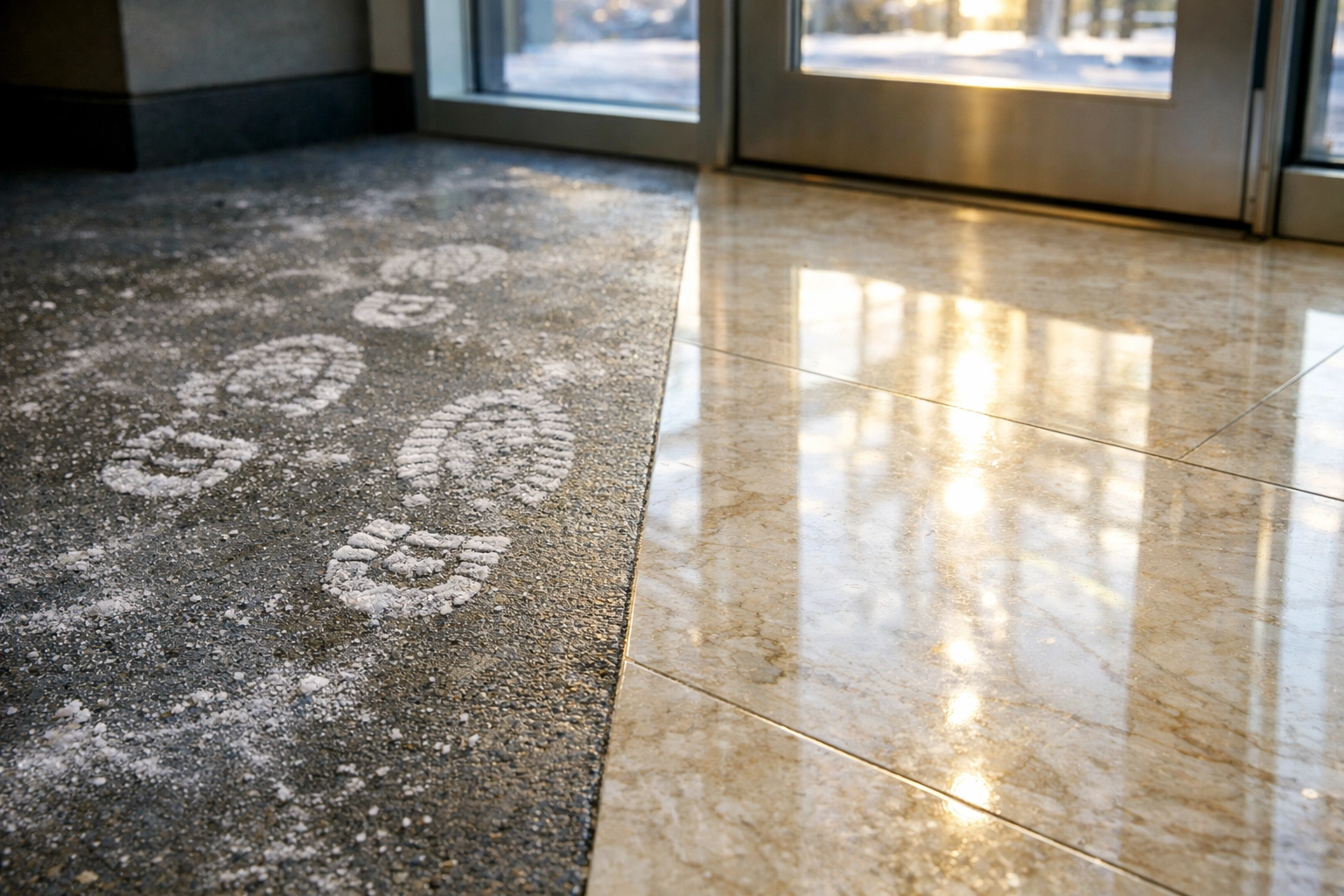
If you’re managing property in Chicago or Detroit, your biggest enemy isn't just dirt: it’s salt. During the winter months, tenants track in a cocktail of road salt, sand, and moisture. This creates what we call a "grinding paste."
This paste doesn't just look ugly; it acts like sandpaper on your hard floors and carpet fibers. If left to sit, it will eat through the finish of your lobby floors and permanently fray carpeted hallways.
Pro Tip: In the MW region, your recurring schedule must be seasonal. What works in July will fail you in February. From November to March, entryway maintenance and high-traffic vacuuming frequencies should double.
Building Your Recurring Cleaning Framework
A successful recurring cleaning program for multi-unit buildings relies on a tiered schedule. You shouldn't be deep-cleaning the HVAC vents every day, but you also shouldn't be waiting a month to wipe down the elevator buttons.
1. The Daily Essentials (High-Traffic Areas)
Daily cleaning is about sanitation and first impressions. In buildings across Indianapolis and Minneapolis, the lobby and entryways are your "handshake" with the tenant.
- Trash Removal: Emptying common area receptacles before they overflow.
- High-Touch Disinfection: Doorknobs, elevator panels, and mailroom surfaces.
- Entryway Mopping: Removing the daily accumulation of salt and slush.
- Package Room Organization: A cluttered package room is a liability and an eyesore.
2. The Weekly Rotation (Deep Sanitation)
Weekly tasks focus on areas that accumulate "lifestyle" grime: the kind of dirt that builds up from regular use.
- Common Area Kitchens/Lounges: Deep cleaning appliances and sanitizing countertops.
- Glass and Mirrors: Removing fingerprints from glass doors and window panes.
- Floor Detailing: Moving light furniture to clean the corners and edges that daily mopping misses.
3. The Monthly and Seasonal Push
This is where many beginner property managers fail. Monthly tasks address the "invisible" areas that contribute to indoor air quality and long-term wear.
- HVAC Vents and Grilles: Dust buildup in vents circulates allergens and makes the building smell "stale."
- Baseboards and Door Frames: These are notorious for collecting dust and scuff marks.
- Light Fixtures: Dead bugs and dust in lobby chandeliers can make a luxury building look neglected.
The "Top-to-Bottom" Methodology
When MaidHop Pros enter a space, they follow a systematic "top-to-bottom" approach. This isn't just a preference; it’s a professional standard that prevents re-contaminating areas that were already cleaned.
- Ceiling Fans and Vents: Dust falls downward. Start here.
- Window Casings and Walls: Clean the mid-level surfaces next.
- Countertops and Furniture: Wipe down everything at waist level.
- Floors: Save the floors for last to catch all the dust and debris that was pushed down from above.
By ensuring your cleaning service providers follow this hierarchy, you reduce the time spent on-site and improve the overall "crispness" of the clean.
Addressing Regional Bottlenecks in Chicago, Indy, and Detroit
Metropolitan authority comes from understanding local pain points. In Detroit, industrial dust can be a factor. In Chicago, the wind-driven rain can lead to moisture traps in window tracks.
Mold and Mildew Prevention:
In the Midwest, humidity swings are common. Bathroom ventilation fans in multi-unit buildings are a common failure point. If these vents are clogged with dust, they can't exhaust moisture, leading to mildew in the grout. A recurring cleaning schedule should include vacuuming out these vent covers every quarter to protect your liability.
The Kitchen Scrutiny:
Whether it’s a communal "clubhouse" kitchen or a turnover clean for a new tenant, kitchens receive the most scrutiny. MaidHop Pros focus on the areas tenants always check: behind the refrigerator, inside the microwave, and the grease buildup on top of the cabinets.
Documentation: The Property Manager’s Best Friend
"I cleaned it" is not a professional standard. In the world of property management, if it isn't documented, it didn't happen.
We recommend that PMs require their cleaning service providers to use digital checklists and take photos of completed tasks. This protects you from tenant disputes. If a tenant claims the gym wasn't cleaned on Tuesday, having a time-stamped photo of the sanitized equipment is your shield.
At MH Janitorial, we understand that reliability is the most important "feature" of a cleaning service. If something isn’t right, we return within 24 hours to address it. This commitment to operational reliability is why property managers in major Midwest hubs trust the MaidHop ecosystem.

Why Consistency Beats Intensity
Many new property managers make the mistake of scheduling one massive "deep clean" every six months while neglecting the daily and weekly basics. This leads to a "boom and bust" cycle of cleanliness.
Consistency creates a baseline of quality. When a building is consistently maintained, the "deep clean" tasks become much easier and less expensive. It also sets a standard for your tenants. When a building is spotless, tenants are more likely to respect the common areas and report maintenance issues early.
Scaling Your Portfolio with MaidHop Pros
Whether you are managing a 10-unit walk-up in Indianapolis or a 200-unit high-rise in Chicago, your cleaning needs will scale. Trying to manage individual independent cleaners for every building is an administrative nightmare for a Portfolio Manager.
MaidHop connects customers with vetted cleaning service providers who understand the specific demands of the B2B sector: including Multifamily and HOAs. By centralizing your cleaning operations through a platform that prioritizes reliability and clear communication, you can focus on what you do best: managing the asset and the tenants.
For more insights on streamlining your property operations and to stay updated on regional maintenance trends, join our community of pros at maidhop.com/newsletter.
Final Thoughts for the Beginner PM
Mastering recurring house cleaning for multi-unit buildings isn't about knowing how to mop; it’s about knowing how to manage the system of mopping.
- Account for the weather: Don't let Midwest salt destroy your floors.
- Tier your tasks: Differentiate between daily sanitation and seasonal deep cleans.
- Demand documentation: Use photos and logs to ensure accountability.
- Trust the pros: Leverage a network of vetted providers who have a track record of nationwide success.
Maintaining a building in a major metro like Detroit or Chicago is a marathon, not a sprint. With the right recurring cleaning schedule and a partner like MH Janitorial, you can ensure your property stays in peak condition through every lake-effect snowstorm and humid summer day.