


Category: Property Management
Let's talk about the number that keeps property managers up at night: vacancy cost.
Every day an apartment sits empty, you're bleeding money. The average cost? Around $50-100 per day in lost rent, not to mention the ongoing expenses that don't stop just because the unit's vacant. If your average turnover takes 30 days, you're potentially losing $1,500-3,000 per unit before the new tenant even signs the lease.
The good news? Most property managers are wasting time on turnover without even realizing it. Cut that time in half, and you've just added serious money back to your bottom line.
Here are the five steps that actually work.
Step 1: Create Your Standardized Turnover Checklist (And Actually Use It)
Here's what happens without a checklist: you walk the unit, see some obvious stuff that needs fixing, handle that, then realize you missed the carpet stains, the cabinet hinges, and oh yeah, the HVAC filter hasn't been changed in who knows how long.
A standardized checklist eliminates that "oh crap" moment when you're halfway through turnover.

Your checklist should cover:
- Deep cleaning requirements for every room
- All inspection points (appliances, fixtures, flooring, walls)
- Standard repairs that typically need attention
- Preventative maintenance items
- Final walk-through verification
The key word here is "standardized." This isn't a one-time thing. Use the same checklist for every single turnover. Your team stops thinking and starts executing, which is exactly what you want. Decision fatigue slows everything down.
Once you have it dialed in, your cleaning crews and maintenance teams can work simultaneously without tripping over each other because everyone knows exactly what needs to happen and in what order.
Step 2: Stop Waiting for Vacancies to Do Maintenance
This is the biggest time-saver nobody talks about enough.
If you're only doing maintenance when units turn over, you're setting yourself up for a nightmare. That water heater that's been making weird noises for six months? It's not going to magically fix itself. It's going to die right when you need to turn the unit fast.

Proactive maintenance while units are occupied means:
- Regular HVAC filter changes and system checks
- Quarterly or bi-annual inspections to catch small issues
- Addressing tenant maintenance requests promptly (yes, this actually saves time later)
- Keeping records of what's been done and when
When a tenant moves out, you're doing a make-ready, not a full renovation. There's a huge difference. Properties that stay well-maintained throughout occupancy turn faster because you're not discovering major issues during the vacancy period.
Think of it this way: would you rather spend 2 hours every few months on preventative maintenance, or 2 weeks scrambling to replace a failed system during turnover?
Step 3: Build Your Reliable Vendor Dream Team
Speed-to-market depends on how fast you can get work done. And that depends entirely on your vendor relationships.
The property managers who turn units in 10-14 days instead of 30? They have a roster of vendors who pick up the phone, show up on time, and do quality work the first time.

Here's how to build that roster:
- Pay vendors on time, every time (this seems obvious but you'd be surprised)
- Give them consistent work, not just emergency calls
- Communicate clearly about your expectations and timelines
- Be reasonable with pricing: the cheapest bid usually costs more in the long run
When you have trusted partnerships, you can text your cleaner on Tuesday and have them at the property Thursday. Try that with someone you found on Craigslist that morning.
For make-ready cleaning specifically, find a service that specializes in turnover work. They understand the difference between regular cleaning and getting a unit market-ready. The best ones have their own checklists that align with yours, and they work fast because they've done thousands of turnovers.
Step 4: Streamline Your Maintenance Workflow
Even with a checklist and good vendors, chaos happens when coordination falls apart.
Someone shows up to paint before the drywall repairs are done. The cleaner arrives before the carpet replacement. The photographer comes while there's still dust everywhere. You get the idea.
Your workflow should look something like this:
Phase 1: Assessment (Day 1-2)
- Move-out walk-through
- Document everything
- Create work order priority list
Phase 2: Heavy Work (Day 3-8)
- Major repairs
- Appliance replacement
- Flooring work
- Painting
Phase 3: Finishing (Day 9-12)
- Final repairs and touch-ups
- Deep cleaning and make-ready
- Final inspection
Phase 4: Marketing (Day 13-14)
- Professional photos
- List the unit
- Start showing
Notice what's NOT happening: overlap that causes delays. The cleaning team isn't redoing work because someone tracked dirt through after they left. The photographer isn't rescheduling because the unit wasn't ready.
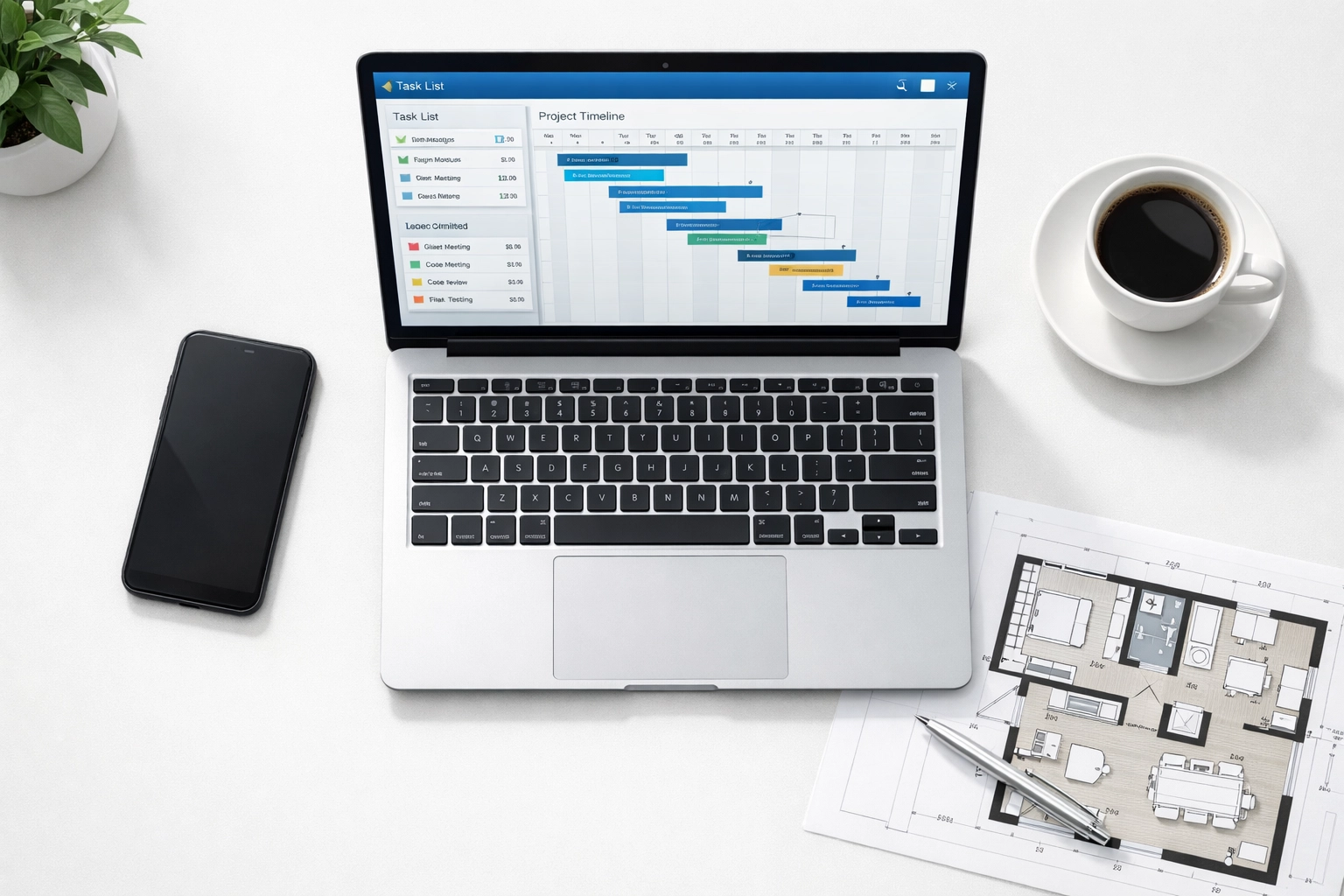
Use project management tools if you need to. A shared calendar or simple task management app can prevent the "I thought you were scheduling that" conversations that add days to your timeline.
Step 5: Inspect Early, Inspect Often
The worst turnovers are the ones where you discover major issues three weeks into the process.
Smart property managers inspect units at multiple touchpoints:
- 60 days before lease end (gives you time to plan)
- At move-out (confirm condition, adjust expectations)
- Mid-turnover (catch issues before they delay completion)
- Pre-marketing (make sure it's actually ready to show)
That first inspection: 60 days out: is gold. You spot the worn carpet or the tired appliances while the tenant is still there. You can budget, order materials, and schedule vendors before the unit is even vacant. When the tenant moves out, you're executing a plan, not creating one.
The mid-turnover inspection catches the stuff that gets missed. That outlet that doesn't work. The closet door that sticks. The grout that looks worse than you thought. Finding these things mid-process means you can fix them before the final cleaning, not after.
The Real Cost of Slow Turnovers
Let's do the math on why this matters.
If you manage 50 units with 30% annual turnover, that's 15 turnovers per year. If your average turnover takes 30 days and you cut it to 15 days, you're recovering 225 days of vacancy across your portfolio.
At $75/day average lost rent, that's $16,875 back in your pocket annually. Per year. That's not even counting the reduced carrying costs, happier owners, and competitive advantage of having units available faster than your competition.
Getting Started Tomorrow
You don't need to overhaul everything at once. Here's what to do right now:
- Document your current turnover time for the last 5 units
- Create or refine your turnover checklist
- Identify which vendor relationships need work
- Implement the 60-day pre-inspection on your next upcoming vacancy
Speed-to-market isn't about cutting corners. It's about cutting waste: wasted time, wasted motion, wasted opportunities.
The property managers who consistently turn units fast aren't working harder. They're working smarter with systems that eliminate delays before they happen.
Your next turnover starts now. Make it count.
Need help with professional make-ready cleaning that keeps your turnovers on track? Learn more about our services.