


Categories: Property Management | Make-Ready Cleaning | Apartment Turnovers
Every day a unit sits empty costs you money. We're talking $50-$150 per day in lost rent, plus utilities you're still covering. For a property manager juggling multiple units, those vacancy days add up fast, turning what should be profitable properties into expensive headaches.
Here's the thing: most vacancy delays aren't about major repairs or market conditions. They're about chaos in the make-ready process. One team shows up before another finishes. The cleaner finds paint still wet. The inspector catches things that should've been handled days ago. You're constantly playing phone tag trying to coordinate everyone.
The property managers who consistently turn units in 3-4 days instead of 7-10? They're not working harder. They've just stopped winging it.
The Real Cost of Slow Turnovers
Let's do quick math. If you manage 20 units with average turnover twice a year, and your current process takes 8 days per turnover:
- 20 units × 2 turnovers × 8 days = 320 vacancy days per year
- At $100/day average rent = $32,000 in lost revenue
Cut that to 4 days per turnover, and you've just saved $16,000 annually. That's not counting the competitive advantage of getting units listed while demand is hot.
Speed to market matters more than most property managers realize. List a unit on Tuesday instead of the following Monday, and you're catching weekend apartment hunters. You're also the fresh listing at the top of search results.

The Framework That Actually Works
Forget complicated systems. The make-ready framework successful property managers use comes down to four elements working together. None of them are rocket science, but most people skip at least two.
1. Written Standards (Yes, Actually Write Them Down)
You know what "move-in ready" means. Your cleaner has their own idea. Your maintenance guy has another. Without written standards, you're basically hoping everyone telepathically agrees on what needs to happen.
Create a simple document that spells out:
- What "clean" means in each room (not just "clean kitchen": specify appliances inside and out, baseboards wiped, cabinet interiors, the works)
- Paint touch-up vs. full repaint criteria
- Required safety checks
- Acceptable condition for fixtures, flooring, walls
This isn't about being controlling. It's about eliminating the back-and-forth that adds days to your timeline. When your team knows exactly what's expected, they do it right the first time.
2. The Master Checklist
A good make-ready checklist isn't just a reminder list. It's your proof of work, your quality control, and your insurance policy all in one.
Your checklist should cover:
Kitchen
- All appliances tested and cleaned (inside ovens, behind fridge, dishwasher filters)
- Cabinets and drawers wiped inside and out
- Sink and faucet descaled and shining
- Countertops sealed if needed
- Fresh caulk around sink
Bathrooms
- Toilet, tub, shower deep cleaned and descaled
- Grout cleaned and resealed if necessary
- Fresh caulk around all wet areas
- All fixtures working properly
- Medicine cabinets and vanities cleaned inside
Living Areas and Bedrooms
- Walls inspected, holes patched, painted where needed
- Baseboards and trim cleaned
- Windows and tracks cleaned
- Light fixtures cleaned and bulbs working
- HVAC filters replaced
- Smoke and CO detectors tested
General
- Locks changed or rekeyed
- All keys accounted for
- Flooring cleaned or replaced as needed
- Trash and debris removed
- Final walkthrough completed

The checklist gets signed off at each stage. Your cleaner checks off their items. Maintenance checks theirs. You do the final inspection with the checklist in hand. No more "I thought you were handling that."
3. Pre-Scheduled Teams
Here's where most property managers lose days: waiting for availability.
Tenant gives 30 days notice on the 15th? Don't wait until move-out day to start making calls. Block your make-ready team's calendar immediately for the day after expected move-out.
Work with cleaning companies and contractors who understand your timeline needs. Better yet, establish ongoing relationships where they keep specific windows available for your properties. At MH JaniJournal, we work with property managers who need rapid turnovers: we're already familiar with their properties and standards before we even get the call.
The coordination order matters:
- Initial walkthrough and damage assessment (same day as move-out or next morning)
- Heavy repairs/painting start immediately
- Cleaning team comes in as soon as paint is dry
- Final touches and inspection
- Photos and listing goes live
When everyone knows their slot in the sequence, you're not wasting days coordinating schedules.

4. Inspection Before Work Starts
Most property managers inspect after everything's done. Smart ones inspect before work even begins.
Walk the unit the moment the tenant moves out. Document everything with photos. Create a precise scope of work with cost and time estimates right there.
This advance inspection lets you:
- Get accurate bids immediately
- Order any needed materials before teams arrive
- Identify potential delays (like appliances that need replacing)
- Schedule everyone in the right sequence
- Give realistic timelines to your leasing team
That same-day scope means your cleaner knows whether they're walking into a 3-hour job or a 6-hour job. Your painter knows if it's touch-ups or two full rooms. No surprises, no delays.
Timeline Optimization: The 4-Day Turnover
Here's what a streamlined timeline actually looks like:
Day 1 (Move-out day): Walkthrough completed, scope documented, teams scheduled, materials ordered if needed.
Day 2: Maintenance and repairs happen. Painting if needed. Any appliance work or replacements.
Day 3: Professional make-ready cleaning. This isn't regular cleaning: it's the deep clean that makes units feel brand new.
Day 4: Final inspection, photos, unit listed and showing-ready.
Can it go faster? Sometimes. A unit in great condition with minimal turnover needs might be ready in 48 hours. Can it take longer? Sure, if you're dealing with significant damage or renovation. But 4 days should be your standard target for normal turnover.
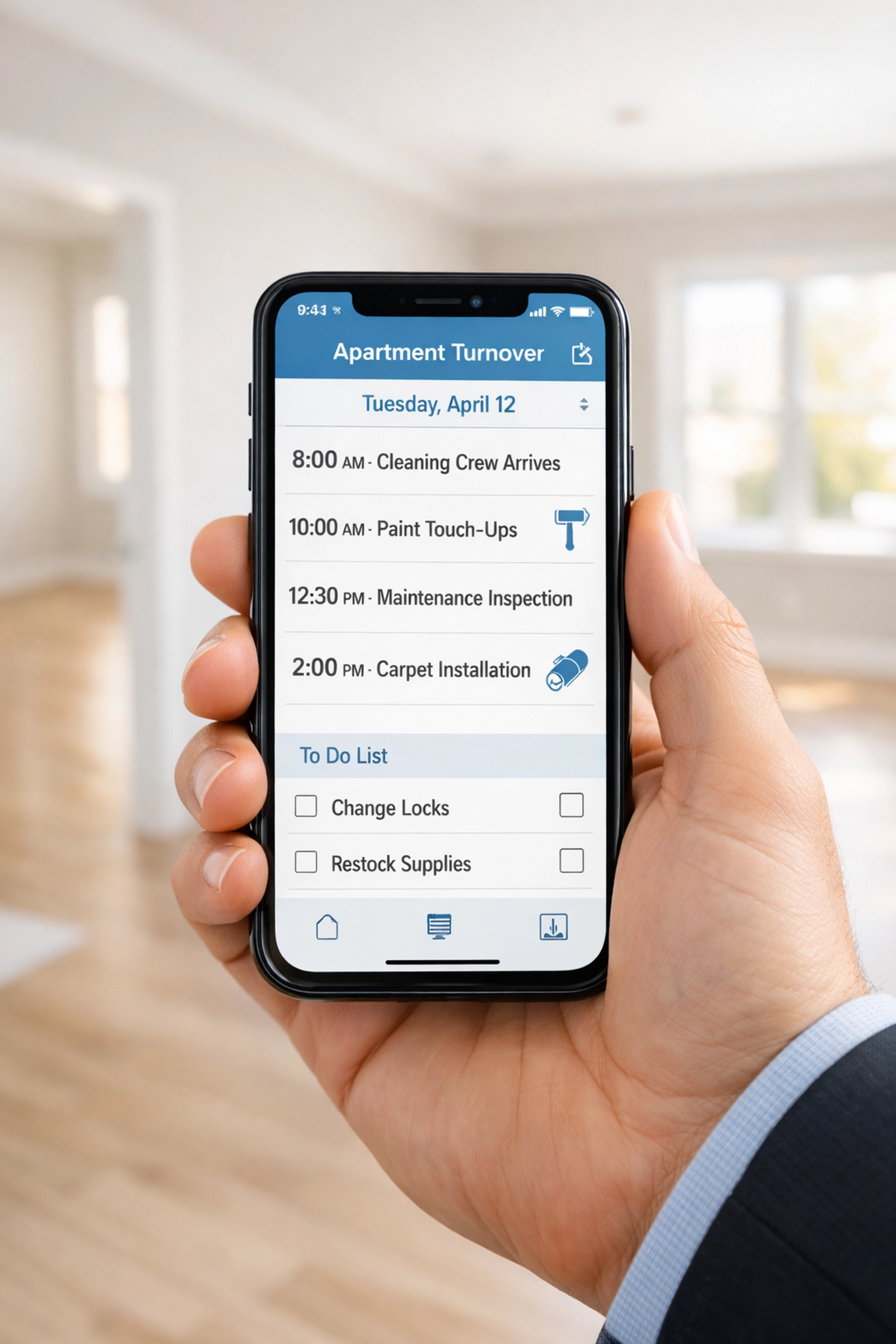
The secret is compression, not corner-cutting. When your cleaning company sends a team of 3 instead of 1 person working solo, that 6-hour job becomes 2 hours. When your maintenance person isn't waiting on paint to dry because you coordinated the sequence, you're not losing unnecessary days.
What This Actually Gets You
Cutting vacancy days in half isn't just about the obvious rent recovery. It's about:
Better tenant quality: Fresh listings attract more applicants. More applicants mean you can be selective instead of desperate.
Competitive positioning: You're catching demand cycles your competitors miss. That weekend surge of apartment shoppers? You're in front of them.
Reduced carrying costs: Fewer days paying utilities, insurance, and other costs on empty units.
Team efficiency: Your staff spends less time managing chaos and more time on high-value activities.
Higher NOI: All of this flows directly to your bottom line. Property owners notice when their vacancy losses drop and their annual returns improve.
Getting Started Tomorrow
You don't need to overhaul everything at once. Pick one element:
Start with written standards. Spend an hour writing down exactly what "move-in ready" means for your properties. Share it with your team.
Or create your master checklist. Model it after the one above, adjust for your specific properties.
Or call your regular contractors today and block their calendars for your next expected turnover.
Any of these steps will shave days off your current process. Combined, they'll transform how fast you can get units back on the market.
The property managers crushing it on turnover times aren't doing anything you can't do. They just stopped accepting that "7-10 days is normal" and built a system that makes 4 days the new standard.
Your vacancy clock is ticking. What's the first change you're making?