


Categories: Property Management, Apartment Turnover, Make-Ready Process
Here's the thing about turnover time: every extra day your unit sits empty costs you real money. We're talking $50-$150 per day in lost rent, depending on your market. A typical 21-day turnover? That's potentially $3,150 in vacancy costs before your next tenant even moves in.
The good news? Most property managers are leaving days, sometimes weeks, on the table simply because they're starting the process too late and coordinating vendors poorly.
Let me show you how to cut that time in half with a framework that actually works.
The Real Cost of Slow Turnovers
Before we dive into the framework, let's talk about speed-to-market. In today's rental market, the difference between a 10-day turnover and a 25-day turnover isn't just the lost rent (though that's painful enough). You're also:
- Missing out on peak leasing season opportunities
- Losing quality tenants to faster-moving properties
- Paying utilities on an empty unit
- Risking property deterioration from vacancy
- Creating cash flow gaps in your portfolio
Speed matters. And it's completely within your control.
Step 1: Activate the 60-Day Pre-Planning Protocol
This is where most property managers blow it. They wait until move-out day to start thinking about turnover. Big mistake.
Start planning 60 days before the lease ends. Not 30 days. Not two weeks. Sixty days.

Here's your 60-day checklist:
Schedule a pre-move-out inspection. Walk the unit and identify everything that needs attention. Don't guess, see it with your own eyes.
Order standardized materials now. Your paint colors, fixtures, and flooring samples should already be decided. Create a master spec sheet for your properties so you're not reinventing the wheel every time.
Alert your contractor network. Give your vendors a heads-up about the upcoming vacancy. The contractors who consistently deliver fast turnarounds are the ones who can plan their schedules.
Gather competitive rental data. Know your market pricing before the unit is vacant. This saves you from scrambling later.
Prepare marketing materials. Get your photos ready (professional shots of similar units work great) and write your listing copy in advance.
This pre-planning alone can save you 2-3 days per turnover. That's $150-$450 back in your pocket, just from being organized.
Step 2: Launch Pre-Leasing at 30-45 Days
Want to know the secret to zero-day vacancy? Start leasing before the unit is even empty.
Begin marketing 30-45 days before move-in ready. Yes, really.

Your timeline looks like this:
List the property with professional photos. If you don't have photos of the exact unit yet, use shots from a recently completed turnover with the same floor plan.
Schedule showings during the final weeks of the current lease. Give proper notice to your existing tenant, obviously, but get qualified prospects through the door.
Screen and approve tenants while the turnover is happening. Run background checks, verify employment, check references: all the normal stuff, just on a parallel track.
Coordinate lease signing for immediate occupancy. Your goal is to hand keys to the new tenant within 24-48 hours of turnover completion.
This strategy can completely eliminate vacancy time. Instead of finishing the turnover and then starting to look for tenants, your new resident is ready to move in the day you finish.
Step 3: Implement the 48-Hour Power Start
The first 48 hours after move-out are critical. This is where you build momentum or lose it.
Hours 1-24: Demolition and Deep Clean
Get everything out. Remove all tenant belongings (coordinate this ahead of time), haul away trash, and complete a thorough deep clean. This includes carpet cleaning if you're keeping the flooring.
Document everything with photos. Take shots of any damage or issues before work begins. This protects you and gives your contractors clear direction.
Hours 25-48: Deploy Core Trades
Now bring in the heavy hitters in the right sequence:
- Structural or electrical work first
- Plumbing repairs next
- Flooring contractor (if replacing)
Never: and I mean never: schedule painting before plumbing work. Don't schedule final cleaning before maintenance tasks. Sequence matters.

Getting this 48-hour power start right sets the tone for the entire turnover. You're showing your vendors that this is a well-run operation, and you're building momentum that carries through the rest of the process.
Step 4: Execute Coordinated Vendor Management
Here's the truth: the difference between a 10-day and 25-day turnover usually comes down to vendor coordination. Or the lack of it.
Build Your A-Team
Establish pre-negotiated rates with reliable contractors. Know your costs before you start. Maintain backup options for each trade: plumber, electrician, painter, cleaner. You need options when someone's booked.
Look for contractors who handle multiple services. A painter who can also do minor drywall repairs is worth their weight in gold. You're coordinating with one person instead of three.
Require Real Commitments
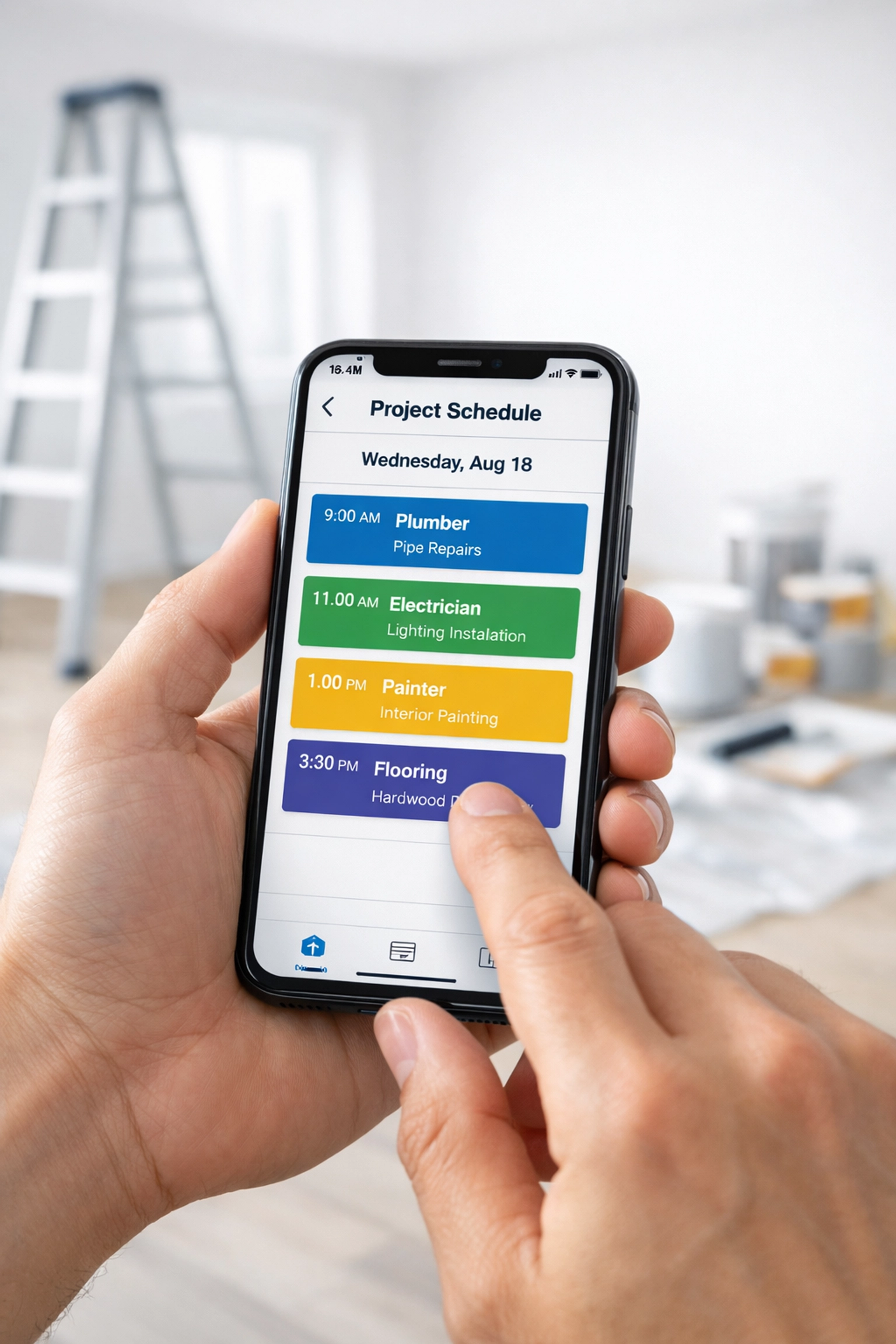
Stop accepting vague promises like "I'll get to it sometime next week." Get specific dates and times. Use project management tools or simple shared calendars to coordinate schedules.
Schedule quality control inspections at 25%, 50%, 75%, and 100% completion. Catch issues early when they're easy to fix, not at the end when they blow your timeline.
Pro tip: Create a preferred vendor list with actual phone numbers and realistic lead times. Update it after every turnover based on performance. The contractors who deliver on time get more work. The ones who don't get replaced.
Step 5: Perfect the Handoff Process
You're in the home stretch. Don't fumble it now.
Your move-in ready checklist:
✓ Professional cleaning completed (including inside cabinets, windows, and appliances)
✓ All systems tested (HVAC, plumbing, electrical)
✓ Fresh batteries in smoke detectors and carbon monoxide detectors
✓ New locks installed and keys ready
✓ Move-in packet assembled (lease copies, emergency contacts, property rules)
✓ Utilities coordinated and ready for tenant transfer
Schedule a pre-move-in walkthrough 24-48 hours before the new tenant arrives. Walk through with your checklist and catch anything that needs a quick touch-up.
Photo-document the completed turnover. These become your before-and-after records and can be used for marketing future turnovers.
The Buffer Zone: Your Safety Net
Build 2-3 buffer days into your timeline. Always.
You will discover unexpected issues. A hidden water leak. Subfloor damage under old carpet. Electrical outlets that need upgrading. These surprises happen on nearly every turnover.
The buffer zone means these discoveries don't blow your whole timeline. You've already accounted for them.
Making It Work for Your Portfolio
This framework scales whether you manage one property or fifty. The principles stay the same:
- Start early (60 days)
- Pre-lease aggressively (30-45 days)
- Execute fast (48-hour power start)
- Coordinate vendors tightly
- Perfect the handoff
The difference is in developing systems and relationships that support consistent execution. Create standardized checklists. Build reliable vendor networks. Document what works and repeat it.
Your Next Steps
Pick your next turnover and implement this framework. Not "someday": your actual next vacancy.
Start the 60-day protocol even if the tenant hasn't given notice yet. The moment a lease is within 60 days of expiration, activate the planning process.
Track your results. Measure your actual turnover time before and after implementing this framework. Measure your vacancy costs. The numbers will speak for themselves.
Cutting turnover time in half isn't magic. It's just better planning, better coordination, and better execution. And it's completely within your reach.
Ready to speed up your next turnover? Start with Step 1 tomorrow. Your bank account will thank you.