


Category: Property Management
Every day a unit sits empty, you're bleeding money. Two weeks of vacancy? That's easily $1,500-$3,000 gone. And here's the kicker: most property managers are losing this money not because units need massive repairs, but because their make-ready process is painfully slow.
I've worked with property managers across the country, and the ones who consistently fill units fast all follow the same playbook. They're not working harder: they're working smarter. And they're cutting their make-ready time by 50% or more.
Let me show you exactly how they do it.
Step 1: Stop Playing Catch-Up With Tenant Timelines
The biggest mistake? Waiting until move-out day to figure out what needs doing.
Here's what the pros do differently: They manage the entire tenant lifecycle, not just the exit. When a tenant gives 30 or 60 days notice, that's your starting gun. Not when they hand back the keys.
The moment you get that notice, you should be:
- Scheduling the pre-move-out inspection
- Alerting your cleaning and maintenance teams
- Blocking off your calendar for the turnover period
- Reaching out to your preferred vendors
Think of it like calling an Uber before you leave the restaurant, not after you're standing on the curb. The car's already moving toward you.
Two weeks of vacancy represents real money. If you're managing a $1,800/month unit, that's $840 lost: just sitting there. But if you're proactive, you can compress that timeline dramatically and get someone new paying rent while your competitors are still scheduling their first vendor call.

Step 2: Fix Problems Before They Become Emergencies
Preventive maintenance isn't sexy, but it's how you avoid the disasters that kill your turnaround time.
The property managers who consistently hit their speed targets? They're not dealing with surprises on move-out day. They already know the HVAC filter needs replacing. They saw the small drywall crack three months ago. They've been tracking that slow-draining bathroom sink.
Here's a practical approach: Do a walkthrough every 6-12 months while the tenant is still living there. Not a full white-glove inspection: just a friendly maintenance check. You'll spot 80% of the issues that would otherwise ambush you later.
Keep a simple spreadsheet for each unit:
- Last HVAC service date
- Paint color codes
- Appliance models and warranty info
- Known quirks (that bedroom door that sticks in summer, etc.)
When move-out happens, you're working from a checklist, not starting from scratch. Your vendors can order parts ahead of time. Your cleaning crew knows exactly what they're walking into.
This alone can save you 2-3 days per turnover.
Step 3: Kill the Back-and-Forth
Every email asking "how much to repaint the living room?" is time wasted. Every phone call about drywall repair pricing is another day your unit sits empty.
The fastest property managers have pre-negotiated rates for everything standard. And I mean everything:
- Interior paint (per room, per unit)
- Carpet cleaning vs. replacement
- Standard appliance repairs
- Door repairs and rehang
- Basic plumbing fixes
- Electrical outlet/switch replacement
- Drywall patching (by size)
One property manager I know created a menu of about 50 line items with her go-to vendors. When a unit needs work, she just texts: "Unit 204 needs items 7, 12, and 23." Done. No estimates, no negotiations, no delays.
Set this up once, and you'll save hours on every single turnover.
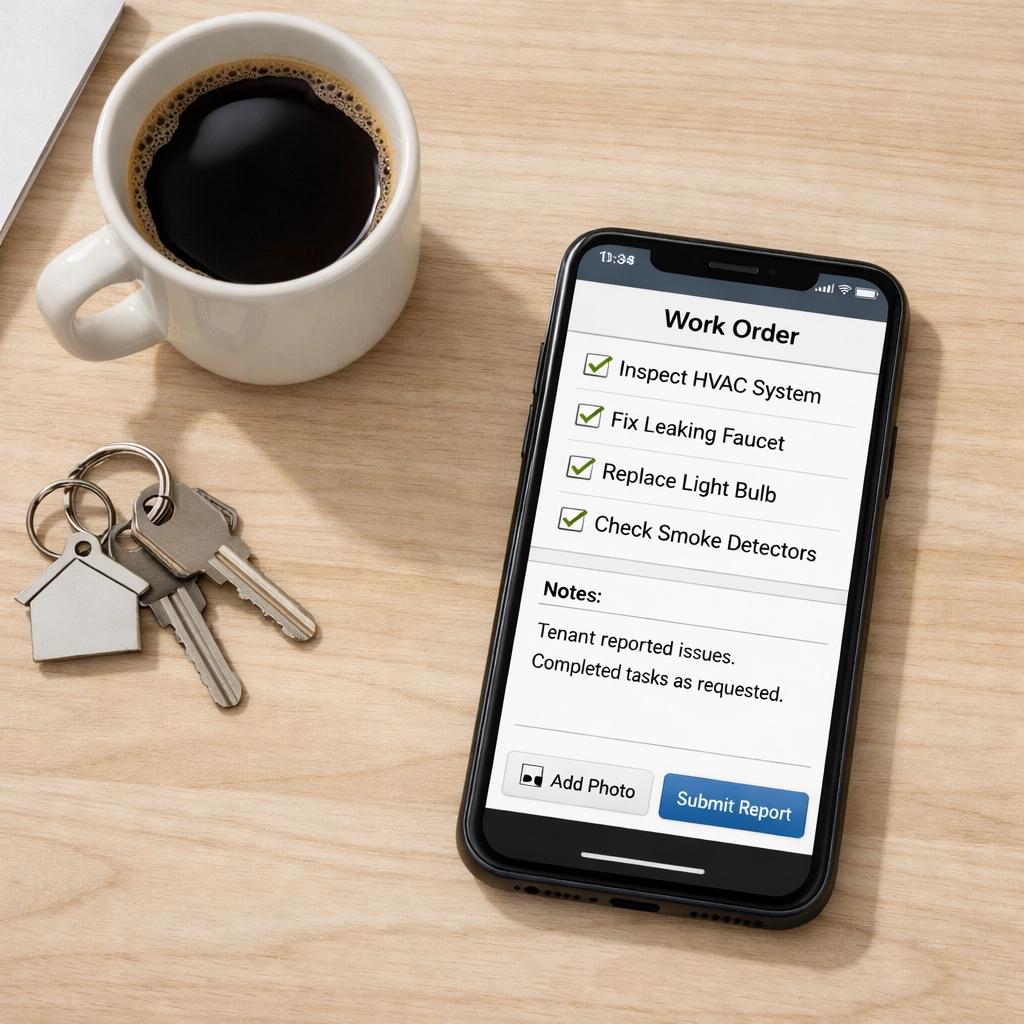
Step 4: Let Technology Do the Heavy Lifting
Look, I get it: you didn't become a property manager to stare at software all day. But the right tech can cut your make-ready time dramatically without adding complexity.
The game-changers:
Digital documentation: Take photos of everything when a tenant moves in. Paint colors, appliance models, flooring type, fixture brands. Store it all in one place where your team can access it from their phones. When your maintenance guy is standing in unit 305 at 7 AM, he shouldn't have to call you to ask what color the walls are supposed to be.
Smart sensors: Water leak sensors catch problems before they become disasters. Smart thermostats alert you to HVAC issues before tenants even complain. Motion sensors can automatically trigger your turnover checklist the moment a unit's empty.
Automated workflows: Set up automatic reminders and checklists that trigger based on move-out dates. Your cleaning company gets notified automatically. Your photographer gets scheduled. Your listing goes live the moment the unit passes inspection.
One property management company using connected sensors reported their average make-ready time dropped from 23 days to 11 days. Same properties, same staff: just better information flowing to the right people at the right time.
Step 5: Market Before You're Ready
This sounds backwards, but hear me out.
The property managers with the lowest vacancy rates start marketing before the unit is 100% ready. Not when it's a construction zone: but when it's 85-90% there.
Here's how it works:
As soon as you have clean floors, fresh paint, and working appliances, take professional photos. Create the listing. Start showing the unit with a clear "available [specific date]" label.
Why? Because finding the right tenant takes time too. If you wait until everything's perfect to start marketing, you're adding another 1-2 weeks of vacancy while you find someone, run their application, and coordinate move-in dates.
By overlapping your marketing with the tail end of your make-ready, you're compressing the total vacancy period. The unit might become available on March 15th, but you've already got a qualified tenant scheduled to move in on March 16th.

The Metrics That Actually Matter
You can't improve what you don't measure. The property managers who consistently cut their make-ready time in half track three key numbers:
Speed metrics: What's your average days from move-out to ready? What's your time from notice to listing live? Track these monthly and watch for trends.
Cost metrics: Total make-ready cost per unit, broken down by category (cleaning, repairs, staging). This helps you spot where you're hemorrhaging money.
Quality metrics: How many units pass the first inspection? How many maintenance callbacks do you get in the first 30 days? Speed means nothing if you're rushing through and creating quality issues.
Properties that implement this systematic approach typically see:
- 50% reduction in turnover time
- 25-30% lower costs per turnover
- Fewer tenant complaints in the first month
- Better online reviews (because units are actually ready on move-in day)
The Real Secret
Here's what nobody tells you: The property managers who master make-ready time aren't doing one big thing differently. They're doing fifty small things better.
Every day saved is money back in your pocket and less stress on your plate. Every system you put in place compounds over time. The property manager handling 10 units a year saves 70 days of vacancy. The one handling 50 units? That's 350 days of vacancy eliminated: nearly a full year of rent recovered.
Start with Step 1 this week. Pick the unit that's furthest from move-out and start building your proactive timeline. Next week, tackle Step 2.
The framework works. But only if you implement it.
Every day you wait is another day of lost revenue sitting in empty units. What are you waiting for?
Need help getting your units ready faster? Check out how we help property managers across the country at mhjanitorial.com