


Every day a unit sits empty costs you money. We're talking $50-$150 per day in lost rent, depending on your market. That's $1,500 to $4,500 per month per unit. Multiply that by turnover season, and you're looking at serious revenue leakage.
The good news? Most property managers are leaving 7-10 days on the table with inefficient make-ready processes. That's not a maintenance problem, it's a systems problem.
Here's the framework that gets units rent-ready in half the time.
Step 1: Create Your Turnover Strike Team
Stop spreading your maintenance team thin across a hundred different tasks. The properties cutting turnover time fastest have one thing in common: dedicated make-ready resources.
For properties with 100+ units, a full-time make-ready technician pays for itself in reduced vacancy costs within the first month. For smaller properties, designate your fastest maintenance tech as the primary turnover coordinator during high-volume seasons.

This person owns the entire make-ready process from move-out to rent-ready. No getting pulled away to fix Mrs. Johnson's leaky faucet. No splitting time between work orders and turnovers. Just laser focus on getting units back on the market.
The difference this makes is massive. When someone owns the process end-to-end, accountability goes up and finger-pointing goes down. You get one throat to choke (in the nicest way possible) and one person obsessed with beating their last turnover time.
Step 2: Build Your Preventive Maintenance Shield
Here's where most properties blow their turnover timelines: surprise repairs that should've been caught months ago.
You open up a unit after move-out and find the HVAC struggling, the garbage disposal dead, and mystery stains that require professional intervention. Now your 5-day turnover just became 12 days because you're waiting on parts and specialized vendors.
The fix? Get ahead of it.
Run quarterly preventive maintenance sweeps across occupied units:
- HVAC filter changes and system checks
- Appliance inspections (especially disposals and dishwashers)
- Plumbing leak checks under sinks and around toilets
- Cabinet hardware tightening
- Window and door seal inspections
Yes, this requires coordination with residents. Yes, it takes time upfront. But it removes 60-70% of the "surprise" issues that tank your turnover schedule.
When a unit becomes vacant, you're doing cosmetic updates and deep cleaning: not emergency repairs. That's the difference between a 5-day turnover and a 14-day nightmare.
Step 3: Standardize Everything (Seriously, Everything)
Your maintenance team shouldn't be figuring out the process every single time. Build a turnover checklist so detailed that a new hire could execute it on day one.
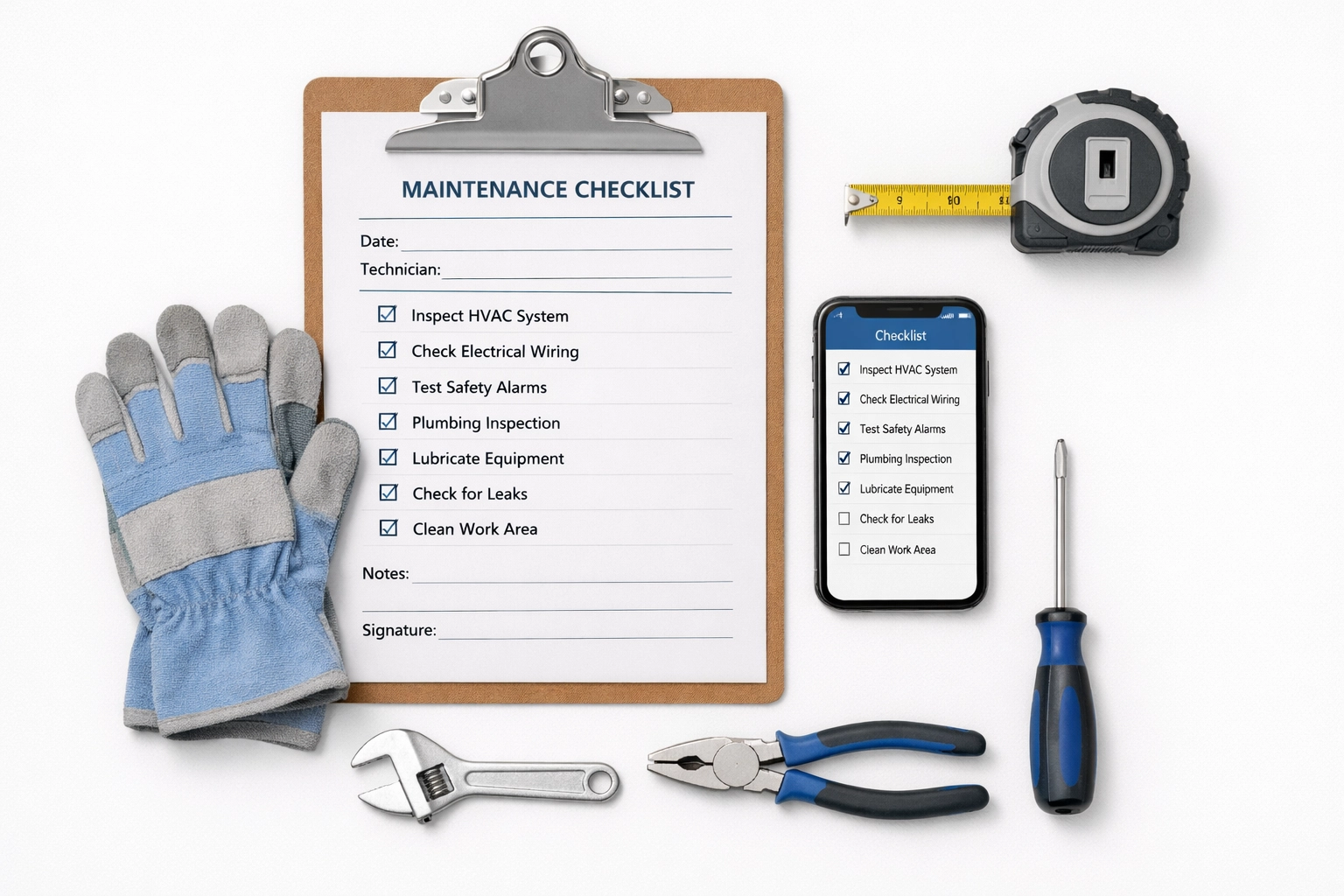
Break it down by room and sequence:
Kitchen:
- Clean inside/outside all cabinets
- Degrease stove and hood
- Deep clean oven and refrigerator
- Check and clean disposal
- Replace any worn cabinet hardware
Bathroom:
- Scrub and sanitize all fixtures
- Re-caulk tub/shower if needed
- Clean/replace exhaust fan cover
- Check for leaks under sink
- Replace toilet seat if worn
Living areas and bedrooms:
- Patch and paint walls
- Deep clean carpets or refinish floors
- Clean light fixtures and ceiling fans
- Replace any burned-out bulbs
- Check/clean air vents
The key is sequencing. Repairs happen first. Then painting and flooring. Then deep cleaning. Trying to clean before painting is finished just means cleaning twice.
Every unit of the same floor plan should follow the exact same process in the exact same order. This is how you get predictable timelines instead of constant surprises.
Step 4: Master the Vendor Dance
Most turnover delays happen in the gaps between trades. The painter finishes Tuesday afternoon. The cleaning crew doesn't start until Thursday morning. That's 36 hours of dead time on a unit that could be showing by Wednesday evening.
Coordinate your vendor schedule like you're conducting an orchestra:
Day 1: Maintenance completes all repairs, appliance checks, and minor fixes
Day 2: Painters knock out walls and trim
Day 3: Flooring crew (if needed) or carpet cleaning
Day 4: Deep cleaning crew does final make-ready
Day 5: Final walk-through and photos for listing
Notice there's zero overlap and zero gaps. Each trade finishes completely before the next one starts, and the next trade starts immediately.
This requires relationship-building with your vendors. You need painters and cleaners who can commit to specific dates and actually show up. For commercial cleaning partners, look for teams that specialize in turnover work and understand the speed-to-market urgency.

When you have reliable vendors who understand they're part of a tight timeline, everything clicks. When you're constantly chasing contractors or dealing with no-shows, timelines explode.
Step 5: Stockpile Smart
Nothing kills turnover momentum like running to Home Depot for the third time in two days.
Bulk-buy the materials you use on every single turnover:
- Paint (track exactly how much each floor plan needs)
- Cabinet hardware
- Light bulbs (standard sizes for your units)
- Toilet seats
- Air filters
- Cleaning supplies
- Touch-up materials
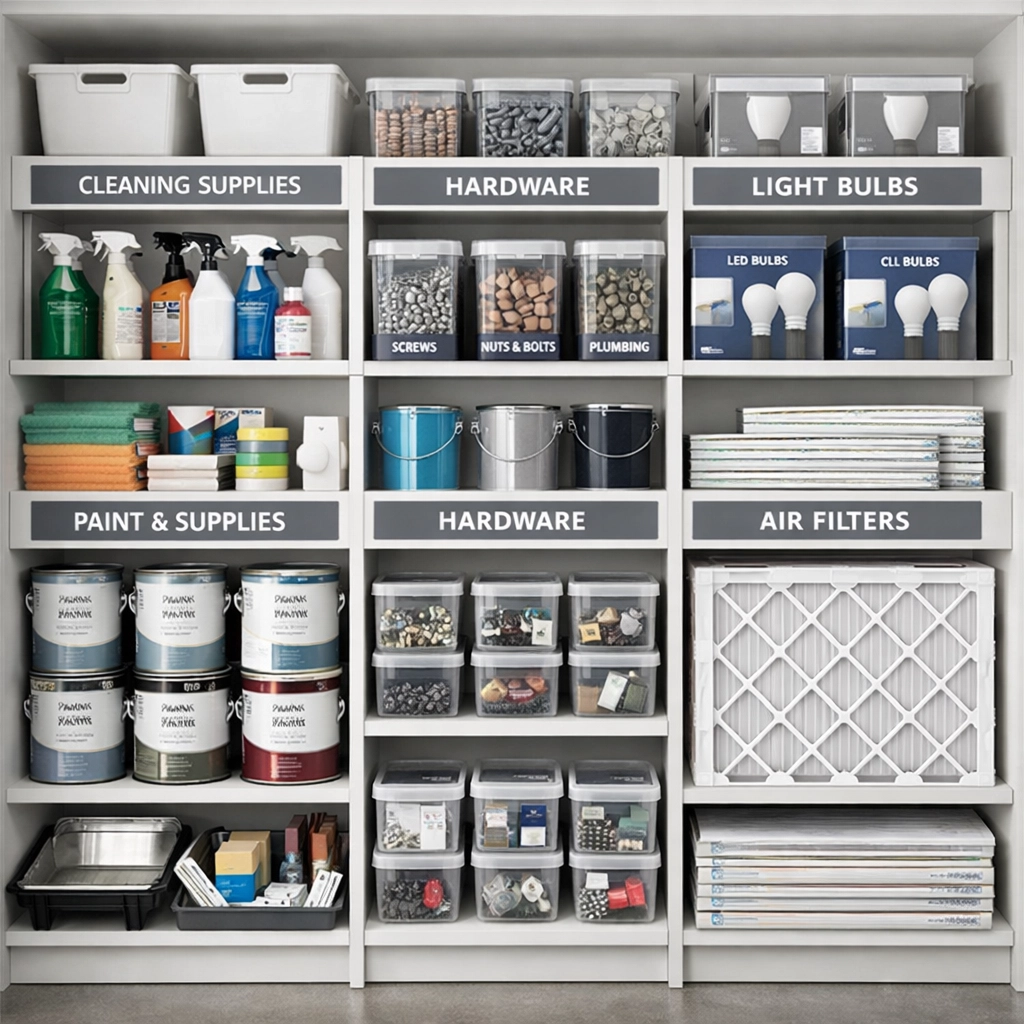
Create a turnover supply closet that's restocked automatically. When a unit becomes vacant, your team grabs the pre-staged materials and gets to work immediately.
Track your historical usage by floor plan. A 2-bedroom, 2-bath typically needs exactly 3 gallons of white for walls and 1 quart of trim paint. Know these numbers cold so you're never short and never over-ordering.
The properties doing this well can start turnover work within hours of move-out instead of days. That speed compounds over dozens of turnovers per year.
The Real-World Impact
Let's do the math on a 200-unit property with 30% annual turnover:
Before framework:
- Average turnover time: 14 days
- Annual turnover vacancy days: 60 units × 14 days = 840 days
- Lost rent at $100/day: $84,000
After framework:
- Average turnover time: 7 days
- Annual turnover vacancy days: 60 units × 7 days = 420 days
- Lost rent at $100/day: $42,000
You just captured an additional $42,000 in annual revenue without raising rents or adding units. That's the speed-to-market advantage.
Start With One Step
You don't have to implement all five steps tomorrow. Pick the one that'll give you the biggest immediate impact.
If you're constantly surprised by repair issues, start with preventive maintenance. If your vendors are unreliable, focus on vendor coordination. If every turnover feels different, build your standardized checklist first.
The goal isn't perfection. The goal is progress. Cut one day off your average turnover time this month. Then another next month. Compound those improvements over a year, and you're looking at dramatically better occupancy rates and revenue.
Your units don't make money sitting empty. Get them cleaned, fixed, and back on the market. Fast.
Need help scaling your turnover process across multiple properties? Check out our nationwide commercial cleaning solutions designed specifically for property managers who need reliable, fast turnovers.