


Every day a unit sits empty, you're bleeding money. The average apartment turnover costs between $1,000 and $5,000, and that's before you factor in lost rent. If your turnover process takes 30 days, you're losing thousands in revenue that could've stayed in your pocket.
Here's the good news: most property managers are doing turnovers the slow way. By tweaking just a few key processes, you can cut that time in half and get units rent-ready in 15 days or less.
Let's break down exactly how to do it.
Step 1: Create Your Turnover Checklist (Before Anyone Moves Out)
The biggest mistake? Starting your turnover process when the tenant hands you the keys. By then, you're already behind.
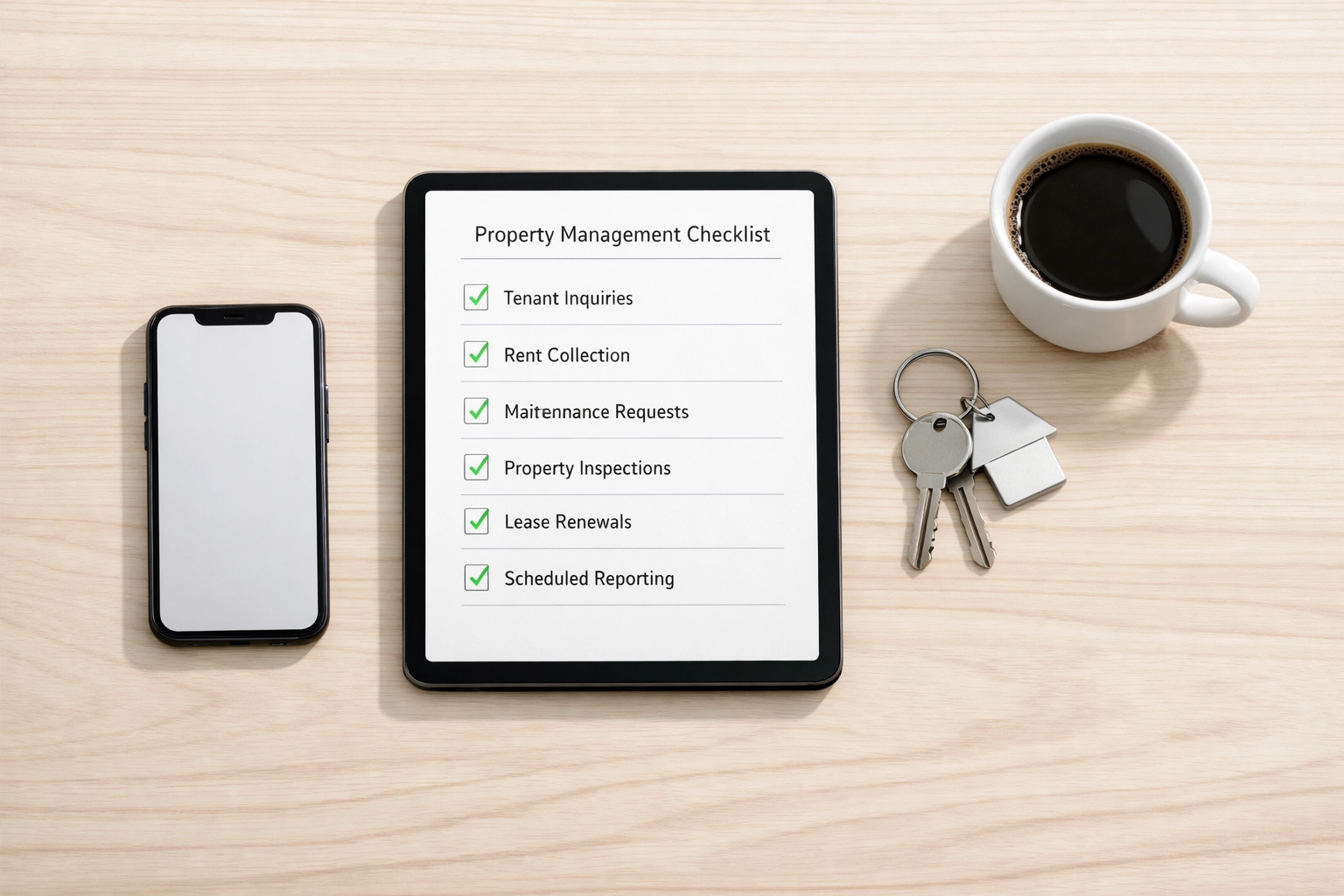
Your checklist should exist before anyone gives notice. Here's what it needs:
Pre-Move-Out (30 Days Before)
- Schedule move-out inspection
- Line up your cleaning crew
- Alert your maintenance team
- Book contractors for any known repairs
- Start pre-marketing the unit
Move-Out Day
- Complete walk-through inspection
- Document everything with photos
- Create punch list immediately
- Send punch list to all vendors same day
Post-Move-Out
- Deep clean (1-2 days max)
- Repairs and painting (3-5 days)
- Final inspection
- Professional photos
- List the unit
The secret is having this all mapped out so you're not scrambling or waiting on people to get back to you. You know exactly what happens when, and everyone involved knows their deadline.
Step 2: Build Your Speed Team (And Keep Them Close)
You can't cut turnover time in half with vendors who take a week to return your calls.
Your "speed team" needs three types of professionals:
- A reliable cleaning company that can turn units in 24-48 hours
- Maintenance contractors who prioritize your work
- A painter who can knock out a 2-bedroom in 2-3 days
Here's the trick: don't treat them like random service providers. Treat them like partners.
Pay them on time, every time. Give them consistent work. Send holiday cards if you want. When February hits and everyone needs turnovers done yesterday, guess whose calls they'll answer first?
One property manager I know keeps the same three vendors on retainer. She pays a small monthly fee, and in exchange, they guarantee 48-hour response times. Her average turnover? 12 days.
Your vendors can make or break your timeline. Choose wisely, treat them well, and they'll save you thousands in lost rent.
Step 3: Run Everything Simultaneously (Not Sequentially)
This is where most managers lose a week or more.
The old way: Wait for cleaning to finish. Then start repairs. Then paint. Then take photos. Then market.
The new way: Overlap everything humanly possible.
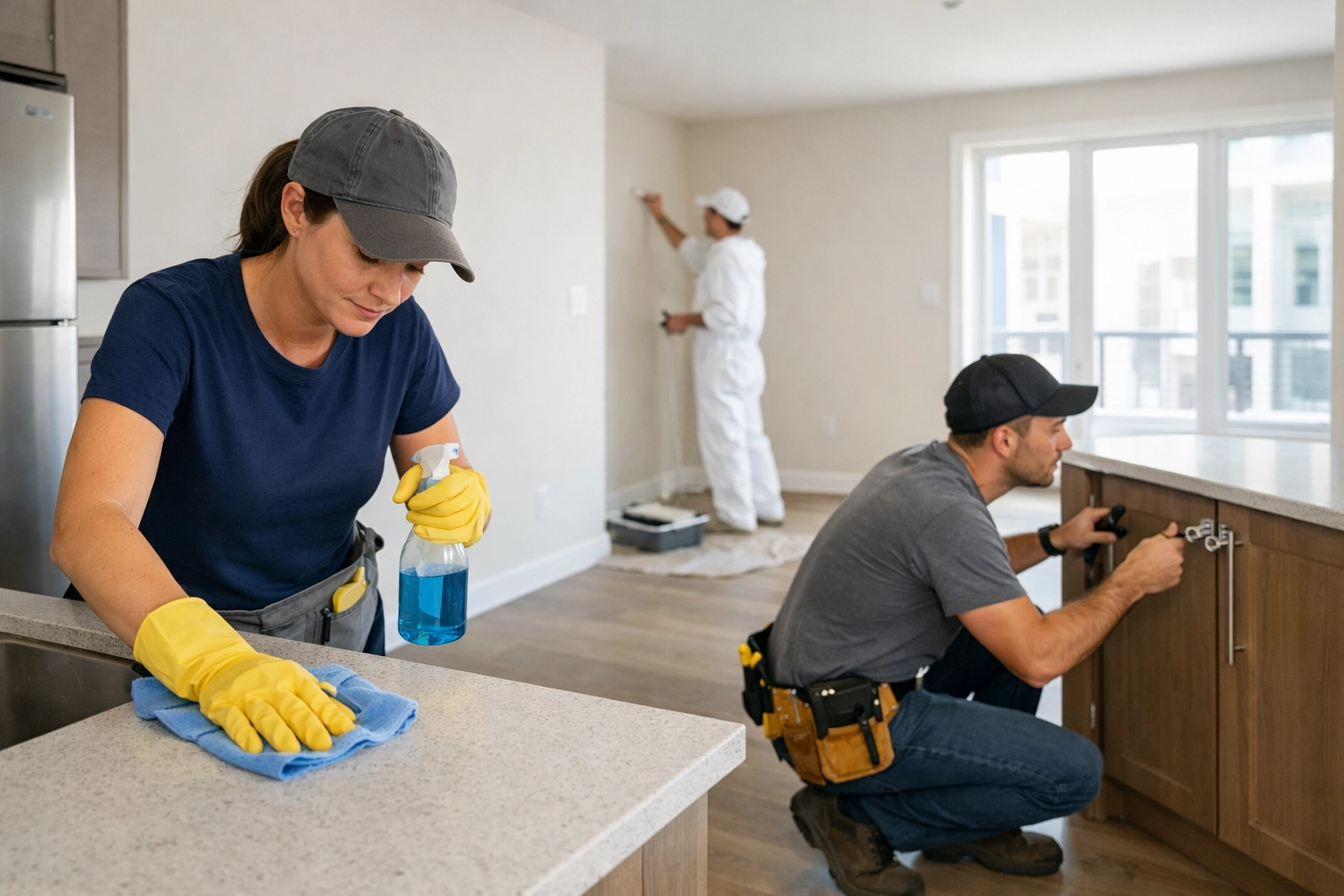
Day 1-2: Deep Clean
While the cleaning crew is working, have your maintenance person assess repairs and order any materials needed.
Day 2-5: Repairs and Painting
As soon as cleaning finishes in a room, start repairs and painting in that room. Don't wait for the entire unit to be clean.
Day 4-5: Professional Photos
Take photos of completed rooms even if the whole unit isn't done yet. You can start building your listing.
Day 5: List the Unit
Don't wait for perfection. List it as "available [date]" and start taking applications.
One complex in Texas uses this simultaneous approach and averages 10-day turnovers. Their secret? A detailed scheduling system where everyone knows exactly when they can access each room.
Step 4: Start Marketing Before the Unit Is Ready
This feels wrong to a lot of property managers. "But the unit isn't ready yet!"
Exactly. That's why you need to start now.
List the unit with an "available date" 5-7 days out. Use photos from the previous tenant (if they're good) or stock photos of similar units in your property. Be transparent: "Photos are of similar unit. This unit will be available on [date]."
Why this works:
- You're already in front of renters while competitors wait
- Qualified prospects schedule viewings for your availability date
- You can pre-screen and collect applications
- By the time the unit is ready, you have a shortlist of approved applicants
Some property managers even schedule "preview showings" while light cosmetic work is still happening. Renters can see the bones of the unit, and you're setting expectations. Just be upfront about what's still in progress.
Speed to market matters more than perfect timing. A unit that's 90% ready with an interested renter beats a 100% ready unit with no leads.

Step 5: Make the Make-Ready Cleaning Non-Negotiable
Here's the reality: your make-ready clean makes or breaks everything else.
A half-done cleaning means tenants complain on day one. Complaints mean maintenance calls. Maintenance calls mean your team is distracted from the next turnover. The cycle continues.
Professional make-ready cleaning should cover:
- Baseboards and trim (completely dust-free)
- Inside all cabinets and drawers
- All appliances (inside and out, including the oven)
- Light fixtures and ceiling fans
- Windows (inside and out)
- Carpets professionally cleaned or replaced
- All surfaces sanitized
This isn't regular cleaning. This is "better than when they moved in" cleaning.
Property managers who skip or cheap out on this step lose days in the long run. One manager told me she tried saving $200 by having her maintenance guy "quickly clean" a unit. The new tenant complained about the oven on day three. Her maintenance team spent two trips fixing it. Total cost in wasted time? Way more than $200.
The make-ready clean is your foundation. Get it right, or everything else falls apart.

The Real Cost of Slow Turnovers
Let's do quick math. Say your average rent is $1,500/month. That's $50 per day.
A 30-day turnover costs you $1,500 in lost rent. A 15-day turnover? $750. You just saved $750 per unit, per turnover.
If you manage 50 units with an average turnover rate of 50% annually, that's 25 turnovers per year.
At 30 days each: $37,500 in lost rent
At 15 days each: $18,750 in lost rent
That's $18,750 back in your pocket. Every single year.
And we haven't even talked about the competitive advantage. In hot rental markets, speed wins. The property manager who can turn a unit in 12 days while competitors take 25 days gets first pick of quality tenants.
Your Next Step
Pick one thing from this list and implement it this week. Not all five: just one.
Maybe it's creating that standardized checklist. Maybe it's having a conversation with your cleaning crew about guaranteed turnaround times. Maybe it's listing your next unit before it's 100% ready.
Small changes compound. One property manager started with just step 2 (building a speed team). Six months later, she'd cut her average turnover from 28 days to 14 days without implementing anything else.
The units don't turn themselves faster. But with the right systems, your team can do in two weeks what used to take a month.
And that's money in the bank.