


Category: Property Management
Every day your unit sits empty, you're hemorrhaging money. We're not talking pocket change here: the average property loses $50 to $100+ per day in vacancy costs. A typical 14-day turnover? That's $700 to $1,400 straight off your bottom line. Per unit.
Here's the thing: most property managers are stuck in a sequential turnover process that's bleeding them dry. Move-out inspection on Monday, cleaning crew on Wednesday, repairs on Friday, final walkthrough next Tuesday. Meanwhile, your competitors are flipping units in 5-7 days and renting them at market rate.
The good news? You can cut your turnover time in half without sacrificing quality. These five steps are battle-tested by property managers who've cracked the code on speed-to-market.
Step 1: Start Your Turnover Before Move-Out Day
The biggest mistake property managers make is waiting until they get the keys back. By then, you're already behind.
Smart PMs schedule a pre-move-out inspection 30 days before lease end. Walk the unit with your tenant still living there. Document what needs fixing. Get your cleaning and repair estimates lined up.
This isn't about charging tenants early: it's about knowing exactly what you're dealing with the moment they hand over the keys. No surprises. No waiting around for bids.
When Jessica, a portfolio manager in Dallas, started doing pre-inspections, her average turnover dropped from 12 days to 6. "I used to spend the first three days just figuring out what needed to be done," she says. "Now my cleaning crew is scheduled before the tenant even moves out."

Step 2: Use a Make-Ready Cleaning System (Not Just a Crew)
Here's where most turnovers fall apart: the cleaning crew shows up, does their thing, and you find out two days later they missed the baseboards or left streaks on the windows. Now you're scheduling a callback, waiting another day, and your listing date keeps sliding.
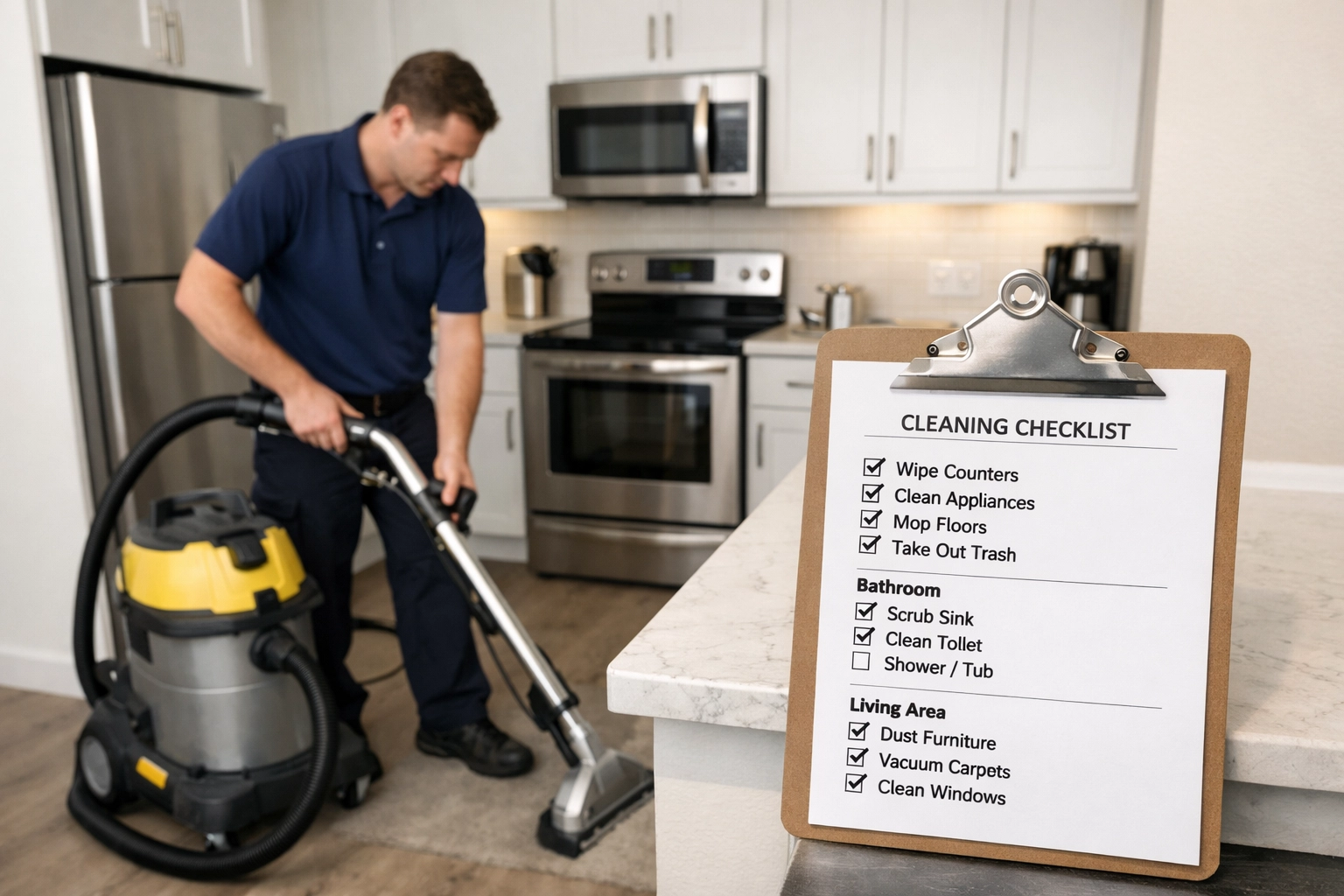
The fix? A standardized make-ready cleaning checklist that gets verified on-site before the crew leaves.
Your system should include:
- Room-by-room photo documentation (before and after)
- A punch list that covers every surface: and we mean every surface
- Same-day quality verification by someone who actually knows what move-in ready means
- A relationship with a commercial cleaning company that specializes in turnovers, not just general cleaning
The difference between a general cleaner and a turnover specialist is massive. Turnover pros know that property managers need speed AND perfection. They bring the right equipment, work with your timeline, and understand that a delayed cleaning costs you real money.
Step 3: Run Repairs in Parallel, Not Sequential
This is the game-changer most property managers miss: stop doing things one after another.
Traditional turnover timeline:
- Monday: Cleaning (Day 1)
- Wednesday: Painting (Day 3)
- Friday: Flooring repair (Day 5)
- Monday: HVAC service (Day 7)
- Wednesday: Final walkthrough (Day 9)
Smart turnover timeline:
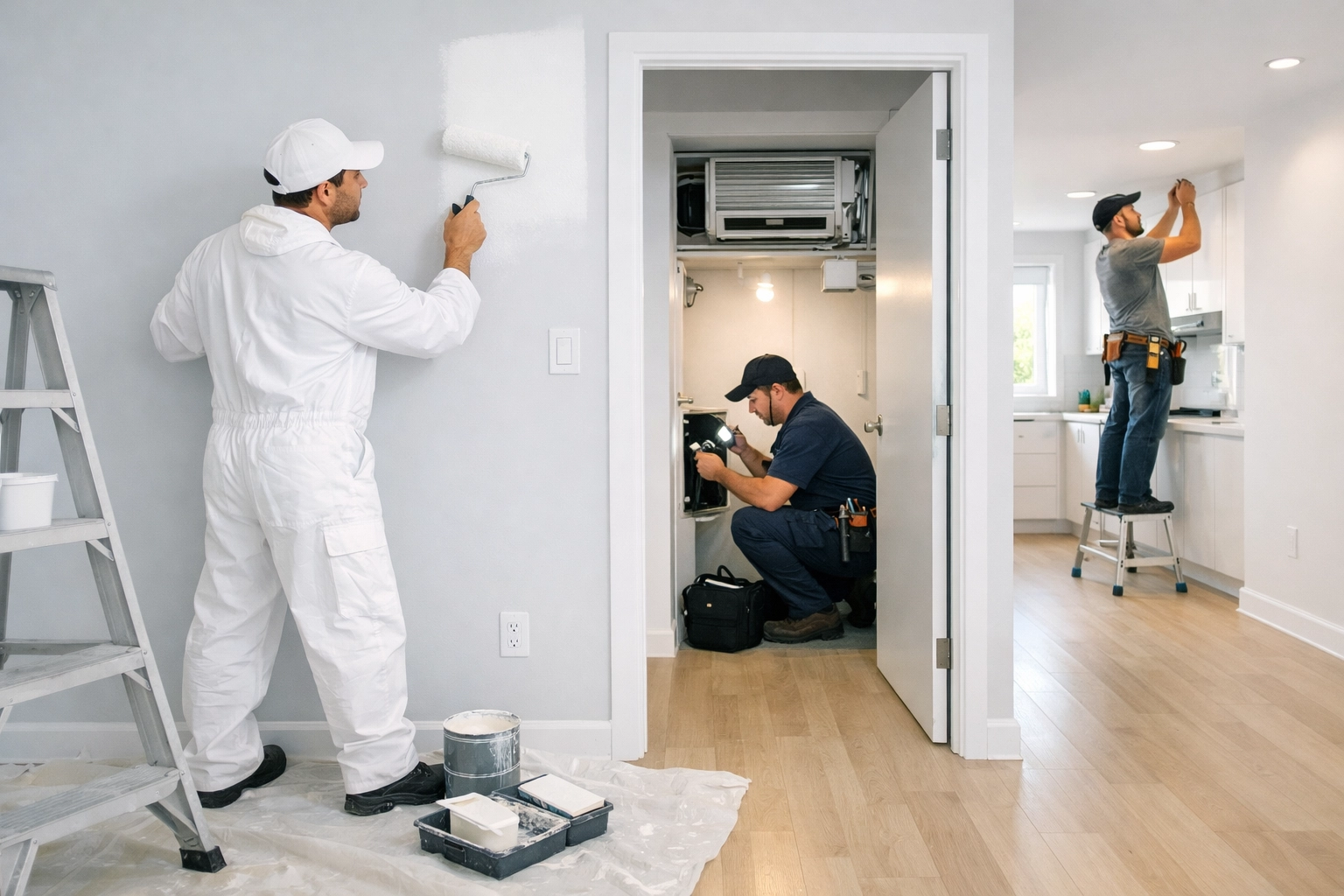
- Monday: Deep clean, painting crew starts in bedrooms while cleaners finish kitchen/bath, flooring guy measures
- Tuesday: Painters finish, flooring repair happens, HVAC tech comes during painting
- Wednesday: Final walkthrough, photos, list it
You just shaved 6 days off your timeline.
The secret is coordination. Your vendors need to know they're part of a relay team, not solo runners. Brief them on the full scope upfront. Make sure your cleaning crew knows the painters are coming right behind them. Tell your flooring guy he's working around wet paint.
Marcus, who manages 200+ units in Atlanta, keeps a core vendor team on speed dial. "They know each other. They know my timeline. They show up when they say they will because they know everyone else is counting on them."
Step 4: Set "Move-In Ready" Standards (And Stick to Them)
You know what kills turnover speed? Judgment calls.
"Is this carpet clean enough?" "Does this wall need paint?" "Can we get away with touching up instead of repainting?"
Every question adds delay. Every debate adds another day.
Set clear, non-negotiable standards for move-in ready:
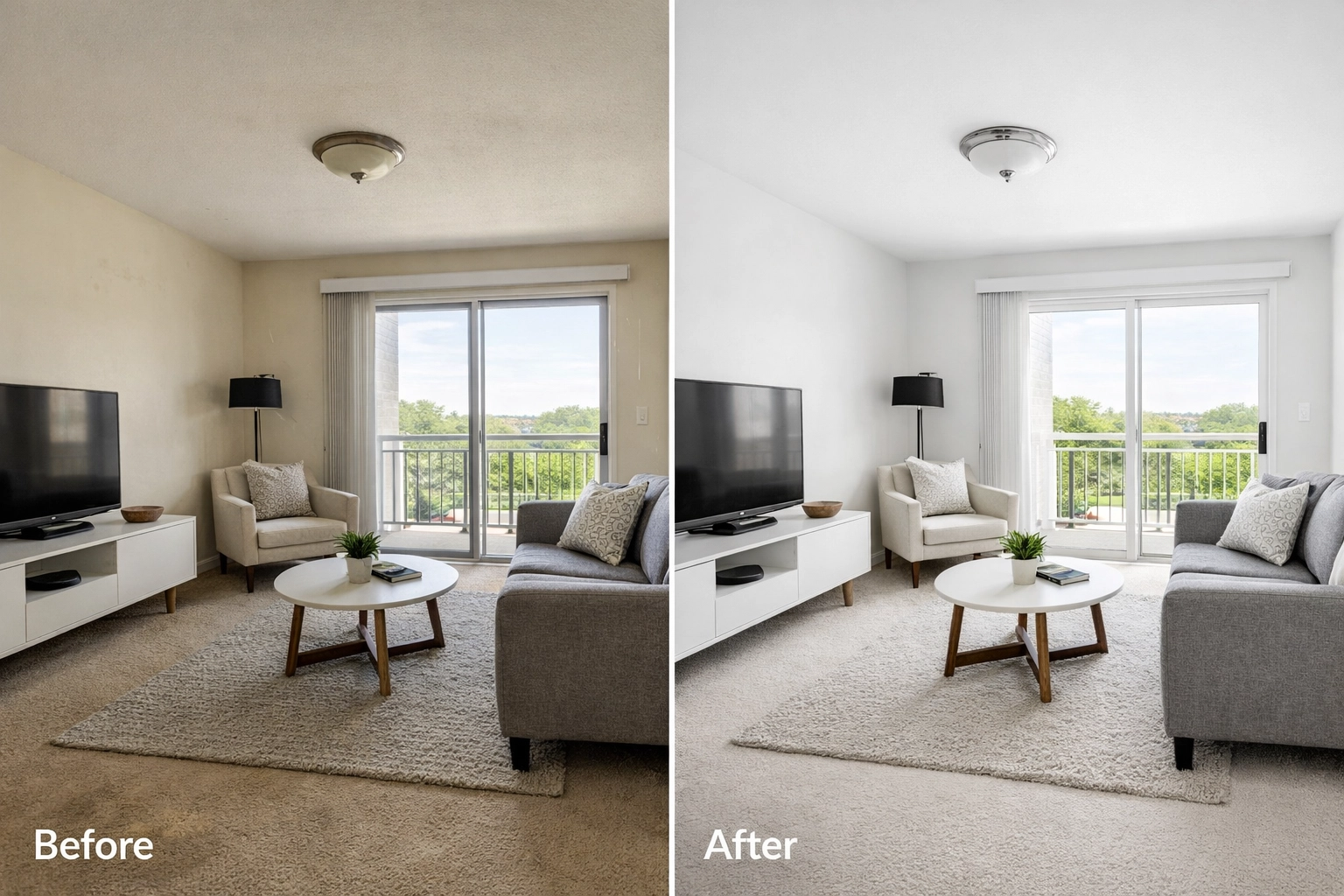
- Walls: No marks, scuffs, or discoloration visible from 3 feet away
- Carpet: Professional cleaned or replaced: no middle ground
- Appliances: Spotless inside and out, or swapped
- Fixtures: All working, no drips, no grime
- Smell: Neutral. Period.
When you eliminate the gray area, your team moves faster. The cleaning crew isn't guessing whether something passes muster. The maintenance guy isn't wondering if he should replace that cabinet handle. Everyone knows the standard, and they hit it the first time.
Step 5: Treat Your First Showing Like Your Only Showing
Here's the truth about speed-to-market: every day you delay listing costs you money, but listing before you're truly ready costs you even more.
A unit that's 95% done might sit for two weeks while fully finished units in your complex rent in three days. Prospective tenants see that scuff mark, that paint smell, that one crooked blind: and they remember it. They compare it to the perfect unit they just saw down the street.
Your goal isn't just to flip units fast. It's to flip them to immediately showable, immediately rentable condition.
That means:
- Photos taken in natural light with the unit actually finished
- Listing goes live when the unit is 100% ready, not 95%
- First showing scheduled within 24 hours of listing
- Unit staged (even minimally) to feel move-in ready
Property managers who nail this see applications within 48 hours of listing. The ones who limp across the finish line? They're still showing that unit three weeks later.
The Math That Matters
Let's make this concrete. Say you manage 50 units with 30% annual turnover. That's 15 turnovers per year.
Old way (14-day average turnover):
- 15 turnovers × 14 days = 210 days of vacancy
- 210 days × $75/day average loss = $15,750 in lost rent
New way (7-day average turnover):
- 15 turnovers × 7 days = 105 days of vacancy
- 105 days × $75/day = $7,875 in lost rent
You just saved $7,875 per year. Per 50 units. Scale that across a bigger portfolio and you're looking at serious money.
Start With One Unit
You don't need to overhaul your entire operation overnight. Pick your next turnover. Implement these five steps. Track your timeline. Compare it to your average.
The property managers who swear by this approach didn't get there by doing everything at once. They started with one faster turnover. Then another. Then it became their system.
Your next vacant unit is your opportunity to cut that turnover time in half. The question is: will you take it?
If you're looking for a commercial cleaning partner who understands turnover speed matters, check out how we help property managers get units rent-ready faster.