


Category: Property Management
Every day your apartment sits empty costs you money. We're talking $50-$150 per day in lost rent, depending on your market. A 30-day turnover? That's potentially $4,500 gone. The math is brutal.
Here's the good news: most property managers are losing weeks to avoidable delays. Fix those bottlenecks, and you can cut your make-ready time in half without spending a fortune.
This isn't theory. These five steps are working for property managers right now to hit consistent 7-10 day turnovers instead of the industry average of 20-30 days.
Step 1: Stock Your Supplies Before You Need Them
Stop sending maintenance guys to Home Depot three times per unit. That's where days disappear.
Set up a dedicated storage area with everything you need for a standard turnover: paint (your standard colors), light fixtures, outlet covers, air filters, cabinet hardware, basic appliances, and cleaning supplies.

Buy in bulk. Yes, it's an upfront cost. But when you're not making emergency runs for a $3 doorknob, your crew keeps working. No delays. No excuses.
The real cost of "just running to the store":
- 1-hour round trip = half a workday lost
- Multiply by 3-4 trips per unit
- Add rush delivery fees when you order online
- Factor in the wrong items purchased under pressure
One property manager told us they cut 3 days off every turnover just by keeping paint on-site. That's 3 days of rent you're collecting instead of losing.
Track what you use. After a few turnovers, you'll know exactly what supplies to keep stocked. Build your kit around the 80% of repairs that happen every time, not the 20% that are random.
Step 2: Standardize Everything (Seriously, Everything)
Your units don't need to look different. They need to turn fast.
Pick one paint color for walls. One color for trim. One style of light fixture. One type of flooring. One appliance package. Done.
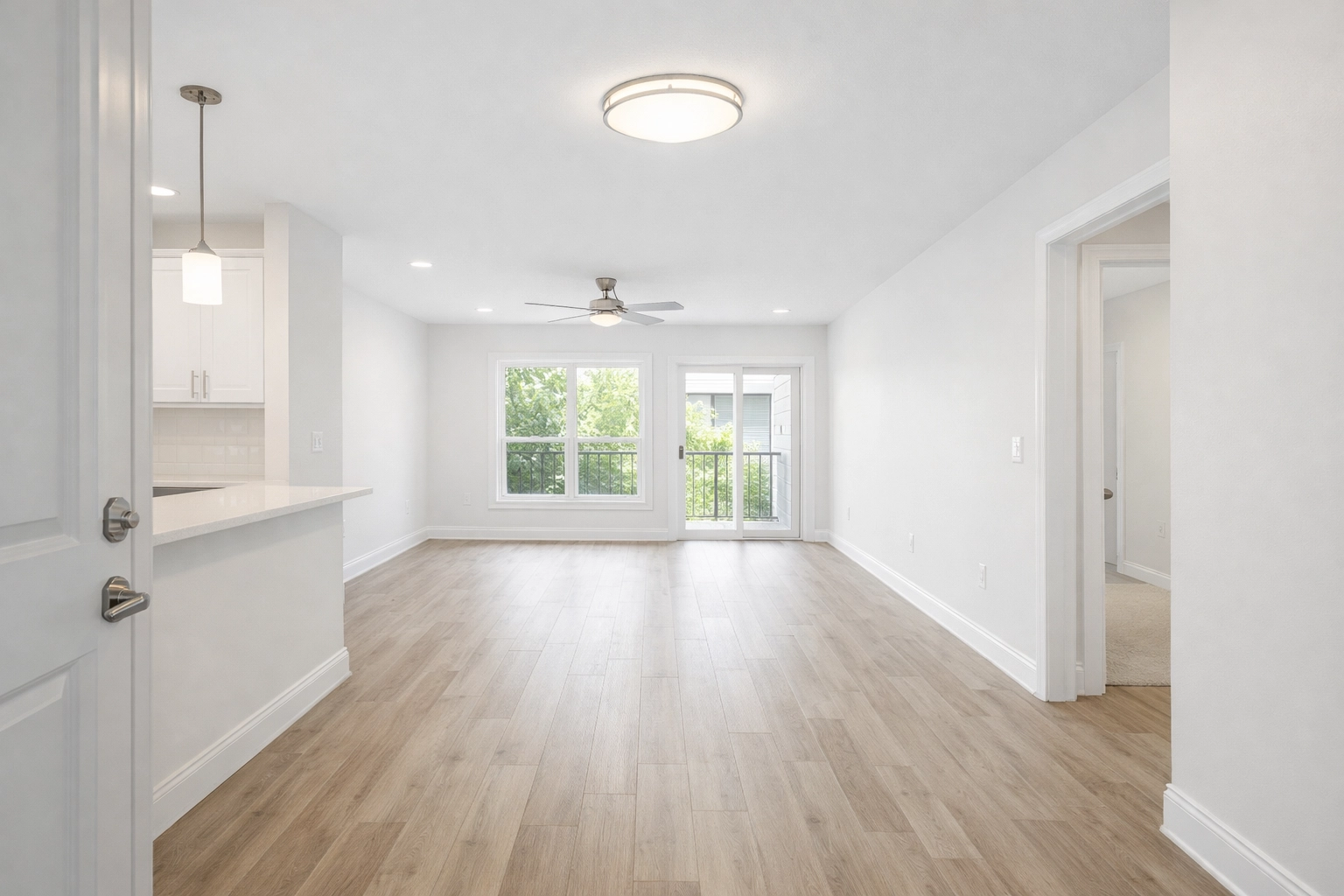
When your maintenance team walks into any unit, they already know what goes where. No measuring. No matching. No trips to three different stores looking for "that specific shade of beige."
What to standardize immediately:
- Wall paint (one neutral color)
- Trim paint (one color)
- Light fixtures (same style throughout)
- Cabinet hardware
- Outlet and switch covers
- Flooring type
- Basic appliances
This isn't about being boring. It's about speed-to-market. Every decision you eliminate saves hours.
Plus, buying the same items repeatedly gets you bulk pricing. And when something breaks in an occupied unit, you've got the replacement sitting in storage.
Step 3: Automate Your Scheduling (Stop Playing Phone Tag)
Manual scheduling kills momentum. You're texting contractors, waiting for replies, coordinating who goes when, and inevitably someone shows up on the wrong day.
Property management software fixes this. Set it up once, and turnover tasks automatically trigger when a tenant gives notice.

What good software schedules automatically:
- Move-out inspection
- Maintenance assessment
- Contractor appointments
- Cleaning crew
- Final walk-through
- Move-in inspection
The system sends reminders. Tracks completion. Flags delays before they become problems.
You're not playing project manager for every single turnover anymore. The software does it while you focus on leasing.
Even basic scheduling tools beat spreadsheets and sticky notes. The goal is visibility. You need to see what's happening across all your turnovers without making phone calls.
Step 4: Sequence Your Work (Don't Let Trades Trip Over Each Other)
Here's where most turnovers stall: painting happens before plumbing gets fixed. Cleaning happens before painting. New floors get installed, then someone drips paint on them.
The correct order matters. A lot.
The right sequence:
- Major repairs (plumbing, electrical, HVAC)
- Painting and flooring
- Fixture installation and touch-ups
- Deep cleaning
- Final inspection

Each trade should complete their work before the next one starts. No overlap. No do-overs.
Coordinate this upfront. When your plumber finishes, your painter should start the next day. Not three days later when they "have an opening."
This is where having reliable contractors pays off. You need people who show up on schedule. If someone constantly delays your timeline, find someone who won't.
One missed appointment pushes everything back. Two missed appointments and you've lost a week.
Step 5: Start Leasing Before the Unit Is Ready
This is the biggest money-saver on the list.
Most property managers wait until the unit is perfect before showing it. That's 10-20 days of zero leasing activity. Then you need time to find a tenant, run their application, and schedule move-in.
Start pre-leasing as soon as your current tenant gives notice. Yes, even when the unit is still occupied.
Pre-leasing timeline:
- Week 1: Tenant gives 30-day notice
- Week 2: Start marketing the unit
- Week 3: Schedule showings (unit still occupied)
- Week 4: Tenant moves out, you start make-ready
- Week 5: New tenant moves in
Zero days of lost rent.
Show the unit as-is if it's in decent shape. Or show a similar unit and explain the new tenant will get a freshly renovated space. Most renters understand this.
The goal is having a lease signed before make-ready is even complete. When your cleaning crew finishes, you're handing keys to a new tenant the same day.
Speed-to-market wins every time. The fastest property to market captures the best tenants. The units sitting vacant for 30 days? They get whoever is left.

The Bottom Line on Turnover Speed
Here's what cutting turnover time in half actually means for your income:
30-day turnover at $1,500/month rent:
- Lost rent: $1,500
- Faster tenant placement: Standard wait
- Annual revenue (if this happens 4 times): $72,000 – $6,000 = $66,000
15-day turnover at $1,500/month rent:
- Lost rent: $750
- Faster tenant placement: Better applicant pool
- Annual revenue (if this happens 4 times): $72,000 – $3,000 = $69,000
That's $3,000 more per year per unit just from faster turnovers. Multiply by your total units and that's real money.
And that's before you factor in the better tenants you attract by having units available when demand is high. Speed equals revenue. Always.
Start With One Change This Week
Don't try to implement everything at once. Pick the biggest bottleneck in your current process and fix it first.
If you're constantly running to the store, start stocking supplies. If scheduling is chaos, get basic software in place. If trades are overlapping, create a standard sequence.
One improvement will show you results. Then tackle the next bottleneck.
Most property managers are sitting on weeks of wasted time in their current process. Cut that waste, and you cut your turnover time in half without working harder.
Your units aren't making money sitting empty. Get them back on the market faster.
Ready to speed up your turnovers even more? Check out how professional make-ready cleaning can take the biggest time-sink off your plate entirely.