


Let's talk about something that keeps property managers up at night: slow unit turnovers. You know the scenario. A tenant moves out on the 1st, and your unit doesn't get re-rented until the 20th. Those 20 days just cost you way more than you think.
Here's the reality: every day a unit sits vacant, you're bleeding money. And we're not just talking about lost rent. We're talking about a cascade of costs that can easily add up to $3,000 or more per unit.
The good news? Most of these costs are completely avoidable. Let's break down where your money's going and exactly how to plug those leaks.
The Real Cost of Slow Turnovers (It's Not Just Lost Rent)
Most property managers focus only on the obvious cost: lost rent. If your unit rents for $1,500/month and sits empty for 20 days, that's $1,000 gone. Simple math.
But that's just the beginning.

Here's what those slow turnovers are actually costing you:
Lost Rent: The obvious one. Every day vacant is rent money you'll never get back. For a $1,500 unit, that's $50/day. Twenty days? There's your first $1,000.
Carrying Costs: Your mortgage, insurance, property taxes, and HOA fees don't stop just because the unit's empty. These fixed costs continue whether someone's living there or not. Add another $500-800 for those 20 days.
Utilities: You're still paying for water, gas, electric, and sometimes internet during the turnover. Tack on another $100-200.
Market Timing: Here's the killer most people miss. The rental market moves fast. A unit that would've rented for $1,500 on day 5 might only fetch $1,450 by day 25. You just lost $50/month for an entire lease term. That's $600 over a year.
Opportunity Cost: The longer your unit sits empty, the more you miss out on the compound effect of consistent occupancy. It's not just this month's rent, it's your annual occupancy rate taking a hit.
Add it all up? Yeah, we're well past $3,000 when you factor in a full year of reduced pricing and lost momentum.
Why Turnovers Take Forever (The Bottleneck Breakdown)
The average apartment turnover takes 15-30 days. But here's what's wild: the actual work only requires about 3-5 days when done right.
So what's eating up the other 10-25 days?
Communication Delays: The inspector identifies issues on Monday. The report doesn't reach you until Wednesday. You don't contact vendors until Friday. They can't start until the following Tuesday. One issue just ate up 8 days.
Vendor Scheduling: You call your regular cleaning crew. They're booked out for a week. Your painter? Two weeks. Your carpet guy? He'll "try to squeeze you in." This domino effect is turnover death.
Sequential Work Instead of Parallel: Here's a common mistake. You wait for the cleaner to finish before calling the painter. You wait for the painter to finish before scheduling the carpet install. You're adding unnecessary days between every task.
Quality Issues Requiring Rework: The cleaning crew rushes through and misses things. Now you need them to come back. Or worse, you're scrambling to fix issues right before showing the unit. These quality problems add days and stress.
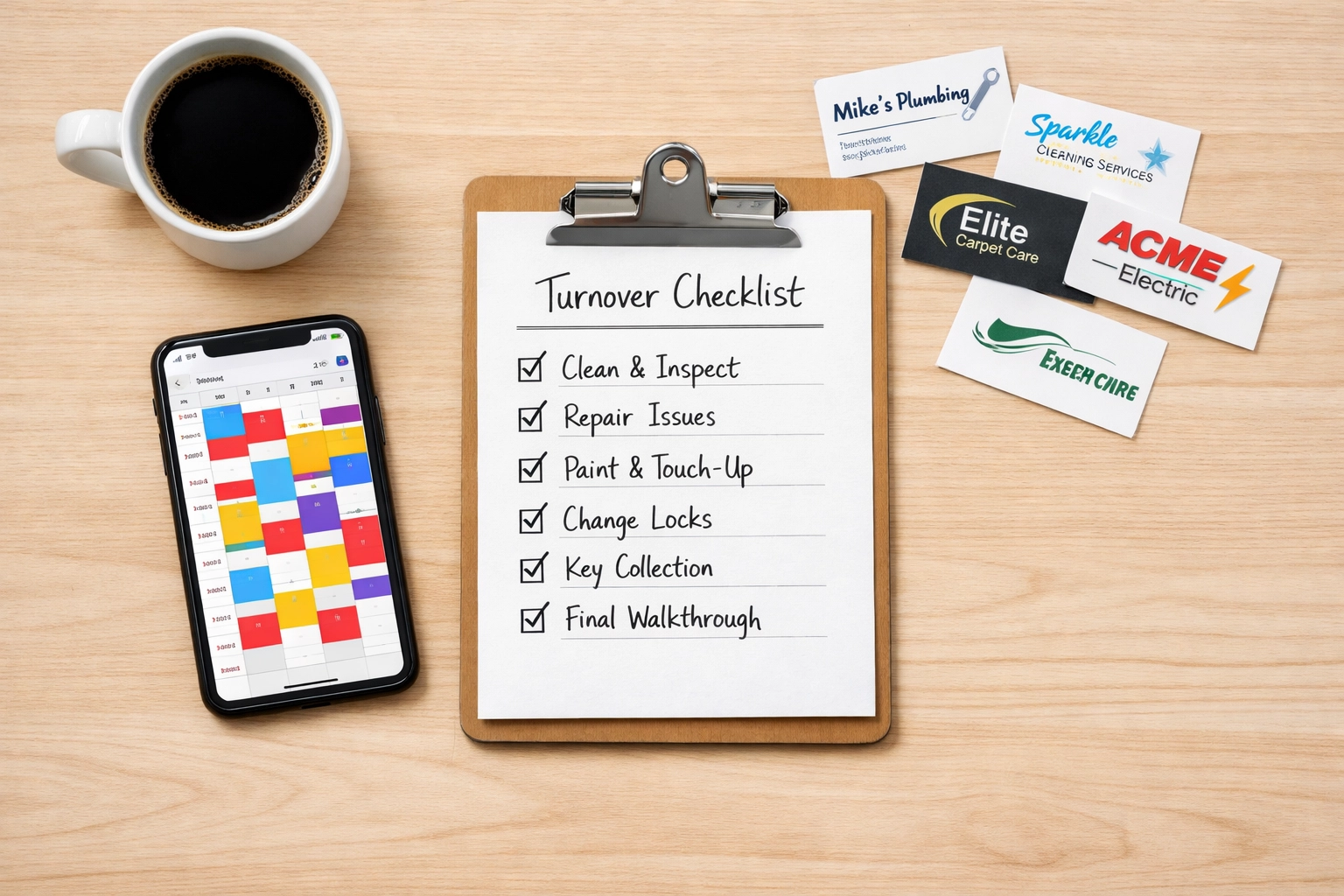
No Standard Process: Every turnover is handled differently. There's no checklist, no system, no accountability. You're reinventing the wheel every single time.
The Speed-to-Market Advantage
Property managers who consistently turn units in 7 days or less have a massive competitive edge. They're not superhuman: they just have better systems.
Think about it: while your competitor's unit sits empty for 25 days, you've already collected three weeks of rent. Over a 100-unit portfolio, the difference between 7-day turnovers and 25-day turnovers is hundreds of thousands in annual revenue.
Plus, faster turnovers mean you're hitting the market when demand is highest. You're not waiting until all the good tenants have already signed leases elsewhere.

How to Fix It: The 7-Day Turnover System
Ready to stop losing money? Here's your roadmap to consistently hitting 7-day (or faster) turnovers.
Day 0 – Before Move-Out: Schedule your move-out inspection 48 hours before the tenant leaves. Create a turnover checklist immediately. Line up your vendors before the keys are even returned. This single step saves you 3-5 days.
Day 1 – Immediate Assessment: Walk the unit the day keys are returned. Take photos. Create your scope of work. Send it to all vendors simultaneously: cleaner, painter, maintenance: by end of day. Don't wait to sequence the work. Get everyone scheduled at once.
Days 2-5 – Parallel Execution: This is where the magic happens. Your make-ready cleaning crew tackles deep cleaning while painters handle any touch-ups in different rooms. Small maintenance fixes happen simultaneously. Everything runs parallel, not sequential.
Day 6 – Quality Check: Walk the unit with your detailed checklist. Catch any issues while vendors are still engaged. Fix them immediately, not a week later.
Day 7 – Market Ready: Professional photos. Listing goes live. Showings start. You're collecting rent while your competitors are still waiting for their painter to show up.
The Make-Ready Cleaning Difference
Here's something most property managers learn the hard way: your cleaning vendor makes or breaks your turnover speed.
A professional make-ready cleaning team doesn't just clean: they understand the turnover process. They know what inspectors look for. They coordinate with other trades. They move fast without cutting corners.

What separates make-ready cleaning from regular cleaning?
Standard cleaning services clean occupied spaces. Make-ready cleaning prepares vacant units for inspection and new occupancy. It's deeper, more detailed, and turnover-focused.
Make-ready pros clean inside appliances, scrub baseboards, detail light fixtures, and handle move-out specific issues like adhesive removal and wall washing. They make units inspection-ready, not just clean.
Most importantly, they work on your timeline. Need them there tomorrow? They're there. Need them to coordinate with your painter? They handle it.
The Nationwide Advantage
If you manage properties in multiple markets, working with a nationwide commercial cleaning partner changes everything. One point of contact. Consistent quality. Standard processes across all your properties.
No more managing different vendors in different cities. No more variation in quality from market to market. Just reliable, fast turnovers everywhere you operate.
Your Action Plan (Start This Week)
Don't wait until your next vacancy to implement these changes. Start now.
This week: Create your standard turnover checklist. List every task that happens during a typical turnover. Assign target completion times to each task.
This month: Audit your current vendor relationships. Are they helping you hit 7-day turnovers or slowing you down? Find a make-ready cleaning team that understands property management timelines.
Ongoing: Track your turnover times for every unit. Measure the number of days from keys-in to rent-ready. You can't improve what you don't measure.
Set a goal: reduce your average turnover time by 50% in the next 90 days. If you're currently averaging 20 days, get to 10. If you're at 15, get to 7.
The property managers winning in this market aren't lucky: they're fast. They've systemized their turnovers, partnered with pros who understand speed-to-market, and stopped accepting 25-day vacancies as normal.
Every day you wait to fix your turnover process is another $50+ walking out the door. Your next vacancy is coming whether you're ready or not. The question is: are you going to lose another $3,000, or are you going to cut that time in half and start keeping more of your rental income?
The choice is yours. The system is here. Time to move fast.
Looking for a make-ready cleaning partner that understands property management timelines? Learn more about how MH JaniJournal helps property managers hit faster turnovers.