


Categories: Property Management, Make-Ready Cleaning, Apartment Turnovers
Let's talk numbers. Every day your unit sits vacant, you're losing money. For a typical unit renting at $1,500/month, that's $50 per day walking out the door. Yet most property managers are unknowingly extending their vacancy periods by days or even weeks because of preventable turnover mistakes.
Here's the reality: properties that nail their turnover process protect over $50,000 annually in revenue while maintaining resident satisfaction scores above 95%. The ones that don't? They're bleeding cash through extended vacancies, emergency repairs, and tenant complaints.
Let's fix that.
Mistake #1: Treating Final Cleaning as an Afterthought
You've repainted. You've fixed the faucet. But if the unit isn't spotless, none of that matters.
Why it's costing you: A dirty unit creates an immediate negative impression. New residents notice baseboards, appliances, and bathroom grout. When they see grime, they start their tenancy already disappointed: and that's a fast track to poor retention and mediocre reviews.
The fix: Make cleaning non-negotiable. Schedule a mandatory final inspection before move-in. Your unit should look better than a hotel room. Period.
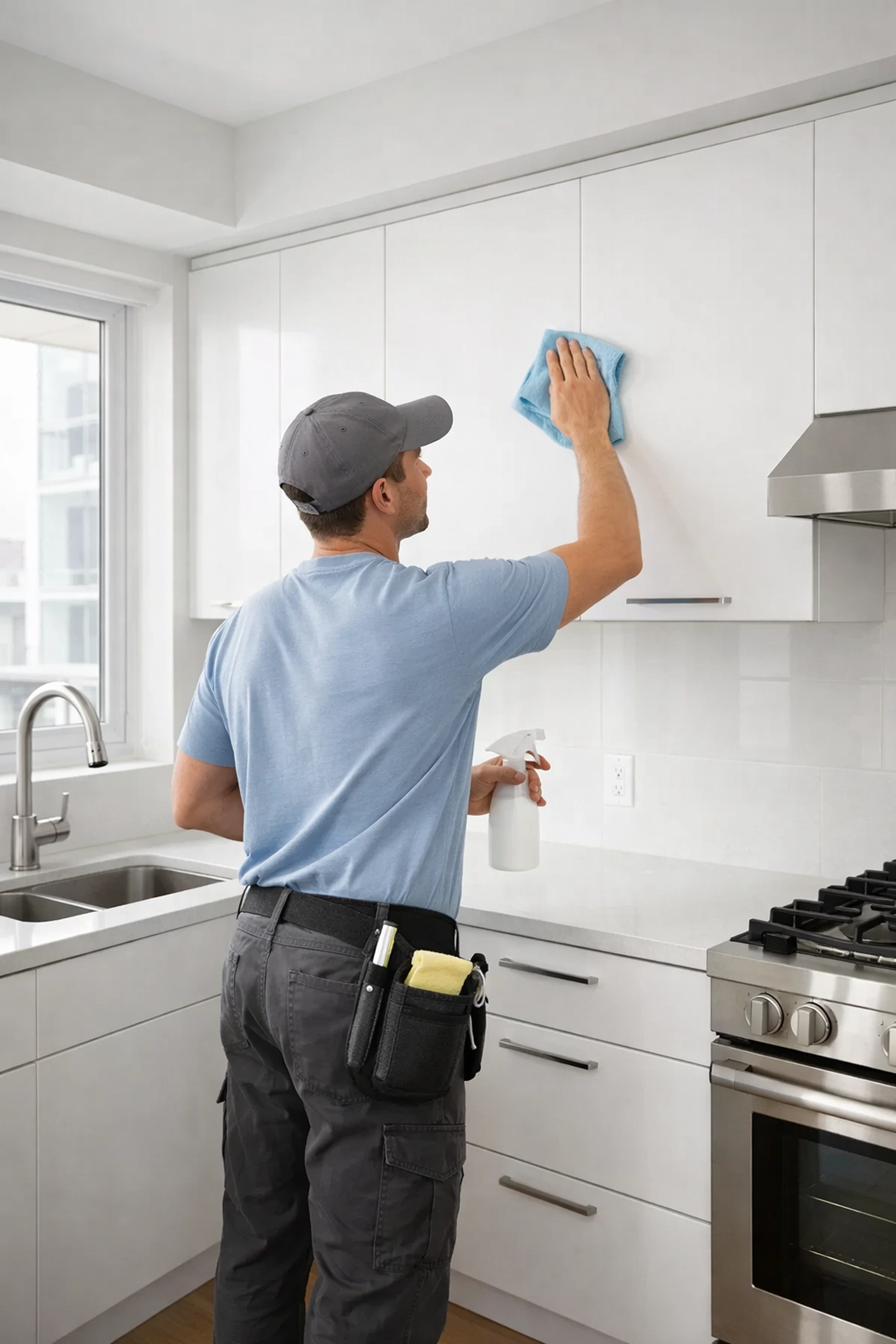
This isn't about surface-level dusting. We're talking appliance interiors, window tracks, light fixtures, and those corners everyone forgets. A professional make-ready cleaning should be as standard as changing locks between tenants.
Mistake #2: Using Different Paint Colors Across Units
Sounds minor, right? It's not.
Why it's costing you: Every time you switch paint colors or brands, you need 2-3 coats to get proper coverage. That means extra labor hours, more materials, and longer vacancy periods. When you're paying painters by the hour, those extra coats add up fast.
The fix: Pick one signature neutral color and stick with it across all units. Something like a warm white or light greige works universally. One coat, faster turnovers, lower costs. Simple math.
Bonus: standardized paint means you can buy in bulk and keep touch-up supplies on hand for quick maintenance between tenants.
Mistake #3: Playing Vendor Coordination Whack-a-Mole
The painter can't come until Tuesday. The cleaner is available Thursday. The carpet guy? Next week. Meanwhile, your unit sits empty and you're watching dollar bills evaporate.
Why it's costing you: Uncoordinated vendors create scheduling gaps that extend vacancy periods unnecessarily. Each extra day of vacancy costs you $40-$70 in lost rent, depending on your market.
The fix: Coordinate all vendors on a single timeline before you even start. Properties using coordinated turnover systems report average turn times under two days. That's the difference between a 10-day vacancy and a 2-day vacancy: potentially $400-$560 in saved revenue per turnover.
Work with vendors who understand speed-to-market matters. Better yet, find a single point of contact who can manage the entire turnover process.

Mistake #4: Ignoring the "Small Stuff"
That loose cabinet hinge? The dripping bathroom faucet? The outlet that doesn't work? They seem minor during turnover. They become major headaches for your new tenant.
Why it's costing you: Every small repair you skip becomes a maintenance callback within the first month. Each callback costs you time, vendor fees, and resident goodwill. Plus, it signals to your new tenant that you cut corners: not exactly the retention message you want to send.
The fix: Conduct a thorough preventive inspection during turnover. Fix everything now when the unit is empty and you have full access. A $15 cabinet hinge repair now prevents a $100 service call later, plus the frustration of coordinating access with an occupied unit.
Create a standardized checklist that covers:
- All cabinet hardware
- Plumbing fixtures and water pressure
- Electrical outlets and switches
- HVAC function and filter replacement
- Window and door operation
- Appliance performance
Mistake #5: Skipping Documentation (and Paying for It Later)
Paper checklists and memory aren't enough anymore. When a damage dispute comes up six months later, you need proof.
Why it's costing you: Without timestamped photo documentation, you'll lose damage deposit disputes. Properties with poor documentation approval rates hover around 30-40% for damage claims. That means you're eating repair costs that should have been covered by the previous tenant's deposit.
The fix: Require a full photo inspection within 30-60 minutes of checkout. Document everything: condition, damage, wear patterns, cleanliness. Use timestamped photos stored in cloud-based systems.
Properties with solid documentation increase damage claim approval rates to 65-70%. That's real money recovered instead of written off.

Mistake #6: Cramming Same-Day Turnovers
Checkout at 10 AM, new tenant moving in at 4 PM. Six hours to turn an entire unit. Sounds doable, right?
Why it's costing you: Rushed turnovers sacrifice quality. Cleaning gets rushed. Repairs get skipped. And when the new tenant arrives to a unit that's not actually ready? You're looking at comped nights, refunds, and brutal reviews. Failed turnovers cost properties $3,600-$7,200 annually through these exact scenarios.
The fix: Implement at minimum a 7-hour checkout-to-check-in window, but ideally build in a one-night buffer. No same-day turnovers unless absolutely necessary.
This buffer gives you breathing room for unexpected issues (and there are always unexpected issues). It also ensures quality doesn't suffer for speed. Remember: a perfect 2-day turnover beats a botched same-day turnover every single time.
Mistake #7: Waiting to Market Until the Unit Is "Perfect"
Your unit is 80% ready. You're waiting for that last vendor to finish before taking photos and listing the property. Meanwhile, qualified applicants are signing leases elsewhere.
Why it's costing you: Every day you delay marketing is a day you're not generating leads. Speed-to-market directly impacts vacancy length. Properties that market proactively fill units faster and can be more selective with applicants.
The fix: Prepare your listing materials immediately upon vacancy notice. Take professional photos as soon as the unit is visually ready: even if minor repairs are still pending. Start marketing while work continues.
You can always note "available [date]" in your listing. What matters is capturing attention and building your applicant pipeline early. Properties with pre-planned maintenance and rapid listing preparation consistently outperform reactive approaches.

The Real Cost of Inefficiency
Let's put this in perspective. A property with 50 units and average annual turnover of 40% processes 20 turnovers per year. If poor processes add just 5 extra vacancy days per turnover at $50/day in lost rent, you're looking at $5,000 in unnecessary vacancy costs annually. That's before factoring in emergency repairs, damage disputes you lose, or tenant retention issues from poor move-in experiences.
Properties that systematically avoid these seven mistakes don't just protect revenue: they create competitive advantages. Better move-in experiences improve retention. Faster turnovers mean less vacancy loss. Coordinated processes reduce stress and chaos.
Your Next Steps
Pick one mistake from this list and fix it in your next turnover. Just one. Maybe it's standardizing your paint color or implementing photo documentation. Start small, measure results, then tackle the next one.
The properties winning in today's market aren't doing anything magical. They're just avoiding these seven expensive mistakes consistently.
Need help streamlining your turnover process? MH JaniJournal specializes in make-ready cleaning and coordinated turnover services that get units rent-ready faster. Because every day vacant is money you'll never get back.
What's your biggest turnover challenge right now? Fix it, track the results, and watch your bottom line improve.