


Category: Property Managers, Short-Term Rental Hosts
Every day a unit sits empty costs you money. We're talking $50-$100 per day in lost rent for the average property. That adds up fast, a 30-day turnover means you're kissing goodbye to $1,500-$3,000 in revenue. Per unit.
Here's the thing: most property managers aren't losing time because they're being thorough. They're losing time because they don't have a system.
The good news? You can cut your turnover time in half without sacrificing quality. You just need to work smarter, not faster. Let's break it down.
Step 1: Create a Bulletproof Turnover Checklist (And Actually Use It)
Look, checklists aren't sexy. But they work.
The biggest time-killer in apartment turnovers? Backtracking. Your cleaning crew finishes, then maintenance realizes they needed to paint first. Or your painter shows up before the deep clean is done and has to work around grime. It's a mess.
A standardized checklist eliminates this chaos. Here's what yours should include:
- Pre-inspection walk-through (document everything with photos)
- Deep cleaning sequence (always clean before repairs)
- Repair and maintenance tasks (in priority order)
- Paint schedule (which rooms, what colors)
- Final inspection criteria (your non-negotiables)
- Marketing-ready photos (schedule the photographer)
The key word here is "standardized." Every unit gets the same treatment, in the same order, every single time. This means your team knows exactly what's expected, and you're not making decisions on the fly.
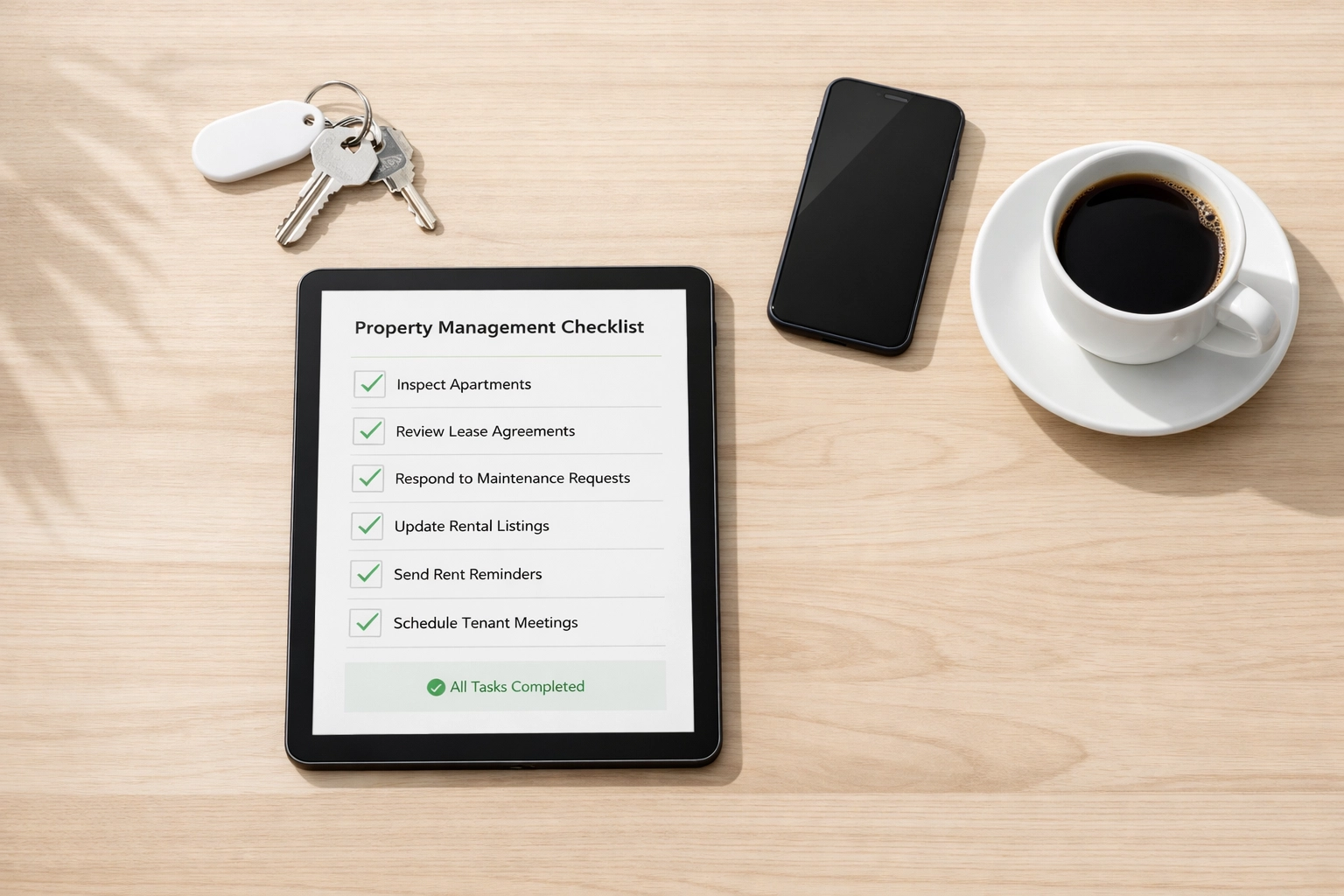
Pro tip: Build buffer time into your checklist. If cleaning usually takes 4 hours, schedule 5. Those extra minutes save you from the domino effect when one task runs long.
Step 2: Stop Reacting, Start Maintaining
Here's a reality check: most turnover delays happen because of problems that should've been caught months ago.
That leaky faucet your tenant mentioned in March? It's now water damage that needs drywall replacement. The HVAC filter that didn't get changed? Now you need a full system repair before the unit's rentable.
Proactive maintenance during occupancy is your secret weapon for fast turnovers.
Set up a quarterly inspection schedule for occupied units. Yeah, it takes time upfront, but here's what happens:
- Small issues get fixed before they become big problems
- You build a maintenance history for each unit
- Tenants see you care (which improves retention)
- When they do move out, you're starting from a better baseline
When move-out day comes, you're doing touch-ups, not overhauls. That's the difference between a 5-day turnaround and a 30-day nightmare.

Step 3: Build Your Dream Team (And Keep Them Close)
Speed-to-market depends on having reliable people you can call immediately when a unit opens up.
Trying to find a new cleaning crew or handyman every time you have a turnover? You're bleeding time and money. Vetting vendors, getting quotes, waiting for availability, it all adds days to your timeline.
Instead, cultivate relationships with a core group of service providers:
- Professional cleaning company specializing in make-ready turnovers
- Maintenance contractor who knows your properties
- Painter with consistent availability
- HVAC and plumbing specialists for quick emergency fixes
Here's how to make this work: Give them consistent business, and they'll prioritize you when you need fast turnarounds. Pay on time, communicate clearly, and treat them like partners, not vendors.
The best property managers have a speed-dial list of pros who will show up the next day because they know the work is steady and the relationship is solid.
Step 4: Stock Smart, Move Fast
Nothing kills momentum like waiting for supplies.
Your painter's ready to go, but you're waiting on paint delivery. The cleaning crew needs replacement blinds, but they're on backorder. Every delay pushes your available date further out, and every day costs you rent.
Create a turnover supply inventory:
- Standard paint colors (choose 2-3 neutral colors and stick with them)
- Common fixtures (faucets, cabinet handles, light fixtures)
- Cleaning supplies (in bulk)
- Basic appliances (or know your supplier's 24-hour delivery options)
- Flooring materials (for quick patch jobs)
Yes, this requires upfront investment and storage space. But compare that cost to losing a week of rent because you're waiting on a $40 faucet.

The goal isn't to stock everything: it's to stock the things that commonly need replacement so you're not starting from zero every time.
Step 5: Market Before the Move-Out
This is where you really accelerate the process.
Most property managers wait until the unit is move-in ready before listing it. That means even with a perfect turnover, you've got days (or weeks) of vacancy while you find a tenant, run applications, and schedule move-in.
Flip the script: start pre-leasing as soon as you get notice.
Here's the timeline:
- Day 1: Tenant gives 30-60 day notice: start marketing immediately
- Week 2: Schedule showings (even if unit's still occupied, with proper notice)
- Week 3: Screen applicants and run background checks
- Move-out day: You already have an approved tenant ready to sign
By the time your turnover team finishes, you're handing keys to the new tenant within days, not weeks.
Can't show an occupied unit? Use photos from the last turnover (units are standardized, remember?). Be upfront with prospects about availability dates. Most renters plan ahead and appreciate the transparency.
This single strategy can eliminate 15-20 days of vacancy time. That's $750-$2,000 per unit back in your pocket.
The Real Cost of Slow Turnovers
Let's talk numbers for a second.
Say you manage 50 units with average annual turnover of 30%. That's 15 turnovers per year. If your average turnover takes 30 days and you cut it to 15 days, you're saving 225 days of vacancy annually.
At just $75/day in lost rent, that's $16,875 in recovered revenue. Every. Single. Year.
And that's just the rent. Fast turnovers mean:
- Lower carrying costs on vacant units
- Better reputation with owners
- Competitive advantage in tight markets
- More time to focus on resident retention (which reduces future turnovers)
Speed-to-market isn't just about moving faster: it's about protecting your bottom line and delivering better results.
Your Next Move
You don't need to implement all five steps tomorrow. Pick one. Nail it. Then add the next.
Most property managers see the biggest immediate impact from Step 3 (building a reliable vendor team) and Step 5 (pre-leasing). Start there if you want quick wins.
The goal isn't perfection: it's progress. Every day you shave off your turnover time is money in the bank.
Your units won't turn themselves over, but with the right system in place, they'll turn over a whole lot faster.
Want help with the cleaning and make-ready piece? That's literally what we do. Check out how we help property managers nationwide get units rent-ready faster without the headaches.