

Category: Property Management
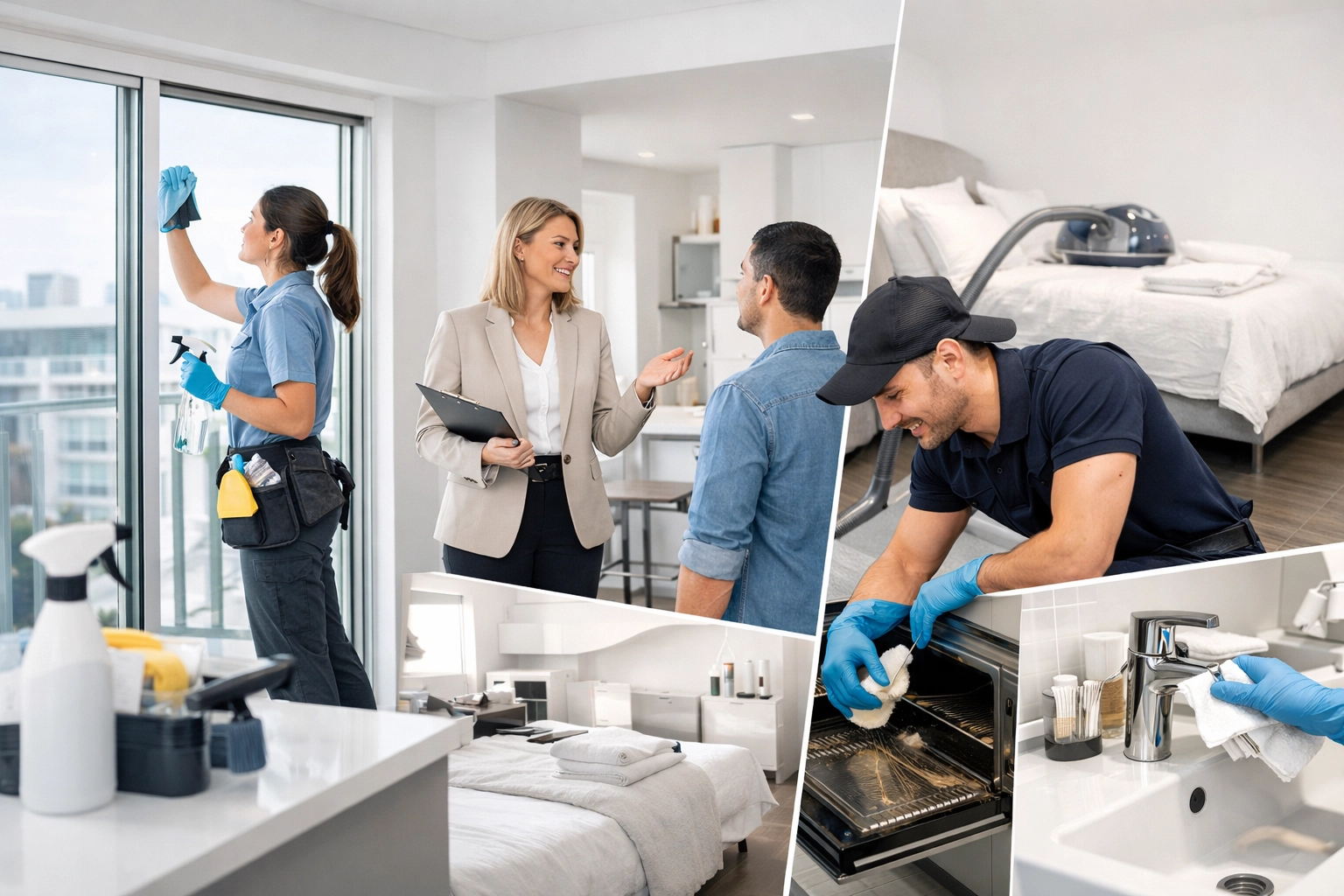
Every day your unit sits vacant costs you money. The average apartment vacancy costs property managers $50-$100 per day in lost revenue. That's why speed-to-market matters, and why professional make-ready cleaning gets units rent-ready faster than DIY approaches.
Here's the thing: your maintenance team might do great work, but professional cleaning crews catch the details that separate a "clean enough" unit from a "move-in ready" unit. These overlooked spots are exactly what slow down your turnover and give prospective tenants pause.
Let's walk through the 47 things professional cleaners tackle that typically get missed during standard turnovers.
Kitchen: 12 Critical Touch Points
- Inside the dishwasher filter – Most people wipe down the inside but miss the removable filter that's full of gunk
- Oven door between the glass panels – That mysterious grease buildup that makes the door look dirty even when it's clean
- Range hood filter and fan blades – Grease magnet that affects air quality
- Behind and under the refrigerator – Dust bunnies and forgotten food create odors
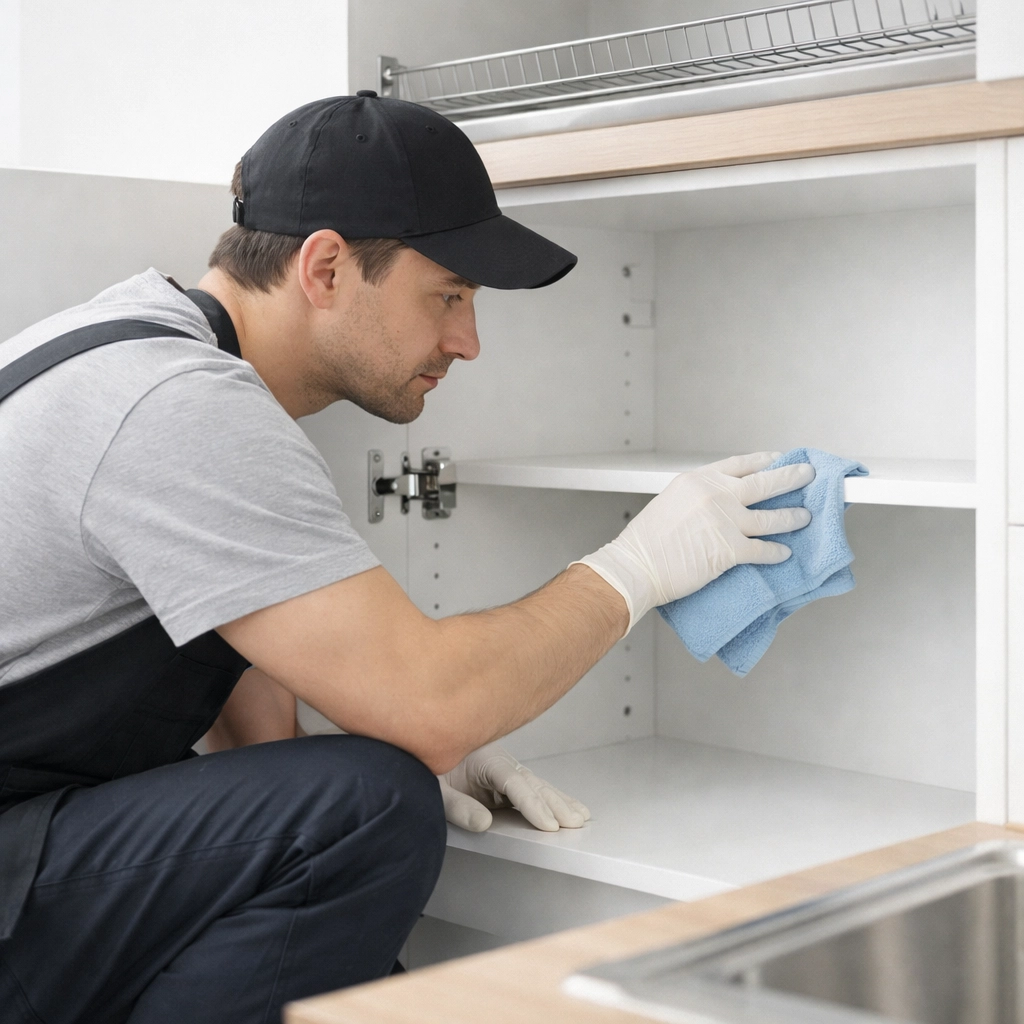
- Inside all cabinet drawers – Crumbs, sticky residue, and old shelf liner
- Cabinet door hinges – Grease and grime buildup that makes doors stick
- Top of cabinets – The dust layer no one sees until they're tall enough
- Garbage disposal splash guard – Seriously gross and often overlooked
- Dishwasher door gasket – Mold and mildew hideout
- Microwave vent and turntable track – Food splatter accumulation zone
- Under sink cabinet floor – Water stains, rust rings, and cleaning product residue
- Light fixture covers in the kitchen – Dead bugs and grease film
Bathroom: 15 Deep-Clean Essentials
- Toilet base bolts and caps – Grime collects where the toilet meets the floor
- Behind the toilet tank – Dust, hair, and mystery gunk
- Bathroom exhaust fan cover and blades – Dust buildup affects ventilation
- Shower door tracks – Soap scum and mildew central
- Showerhead aerator – Mineral buildup that affects water pressure
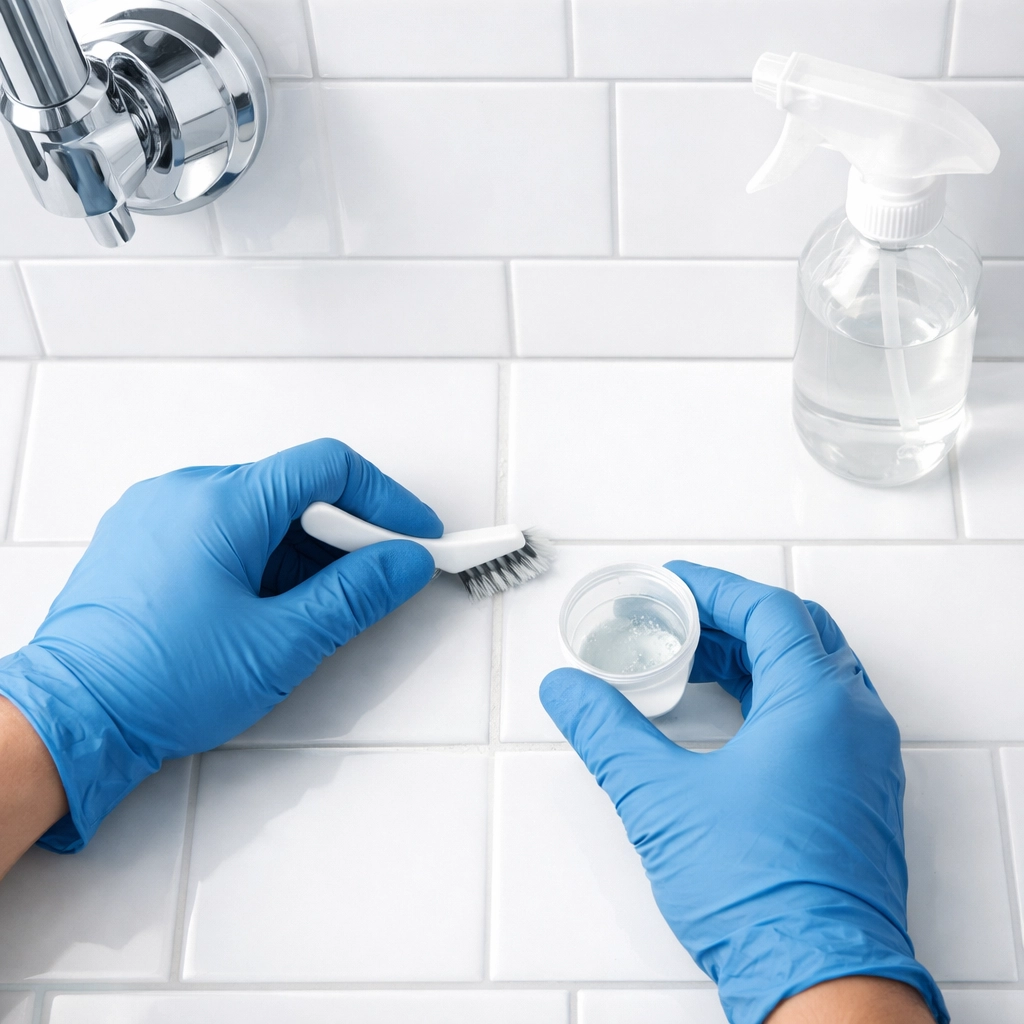
- Grout lines in tile – Discolored grout makes everything look dirty
- Caulking around tub and sink – Old caulk gets moldy and gross
- Bathroom cabinet hinges and handles – Hair product residue and grime
- Mirror edges and clips – Toothpaste spray and dust
- Under the sink pedestal – Hair, dust, and product drips
- Toilet paper holder mounting – Grime buildup where it attaches to the wall
- Towel bar mounting brackets – Often overlooked during wipe-downs
- Light fixtures around vanity – Hairspray residue and dust
- Bathroom door edge and top – Dust and grime at eye level
- Medicine cabinet shelves and door edges – Sticky residue and dust
Living Areas: 11 Commonly Missed Spots
- Baseboards throughout – Dust, scuff marks, and grime at floor level
- Window tracks and sills – Dead bugs, dust, and moisture stains
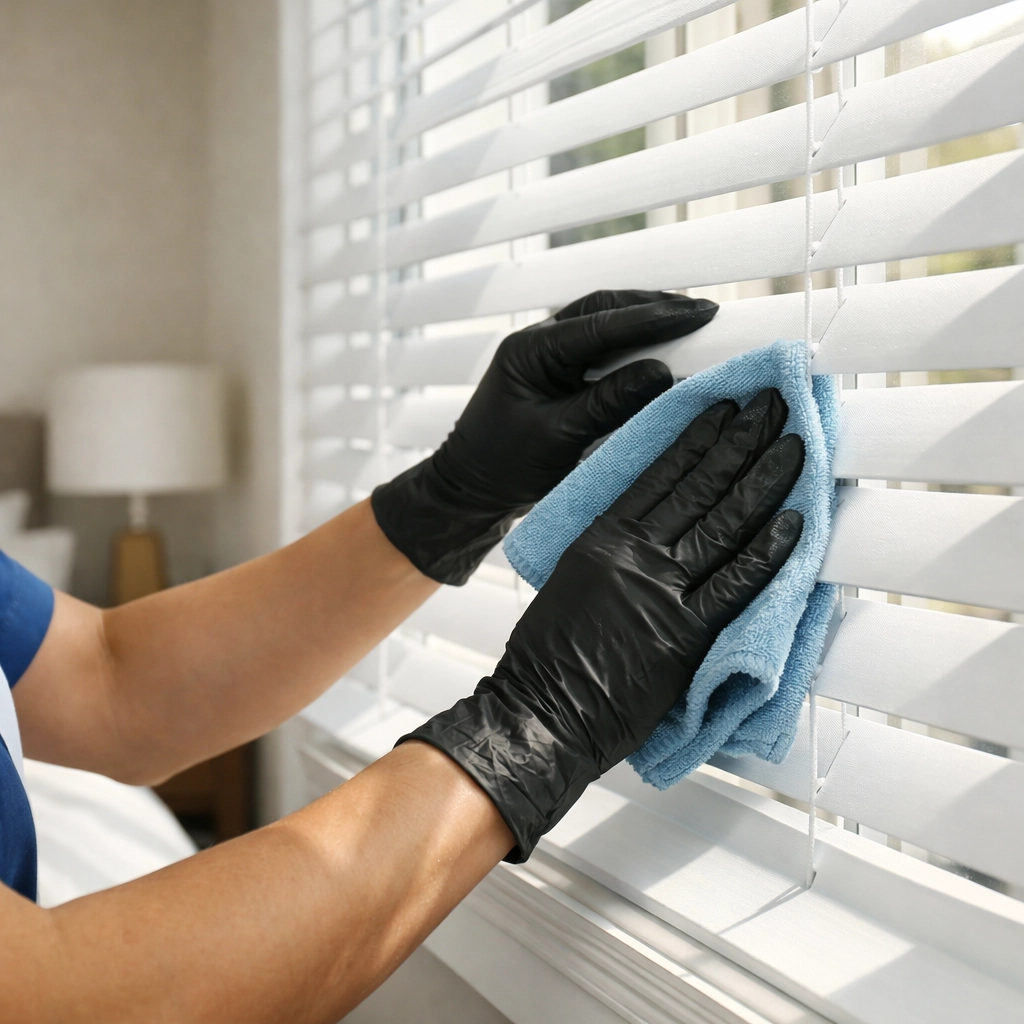
- Blinds (both sides) – Dust accumulation that shows in sunlight
- Light switch plates – Fingerprints and grime around edges
- Door frames and tops – Dust layer that's invisible until you look up
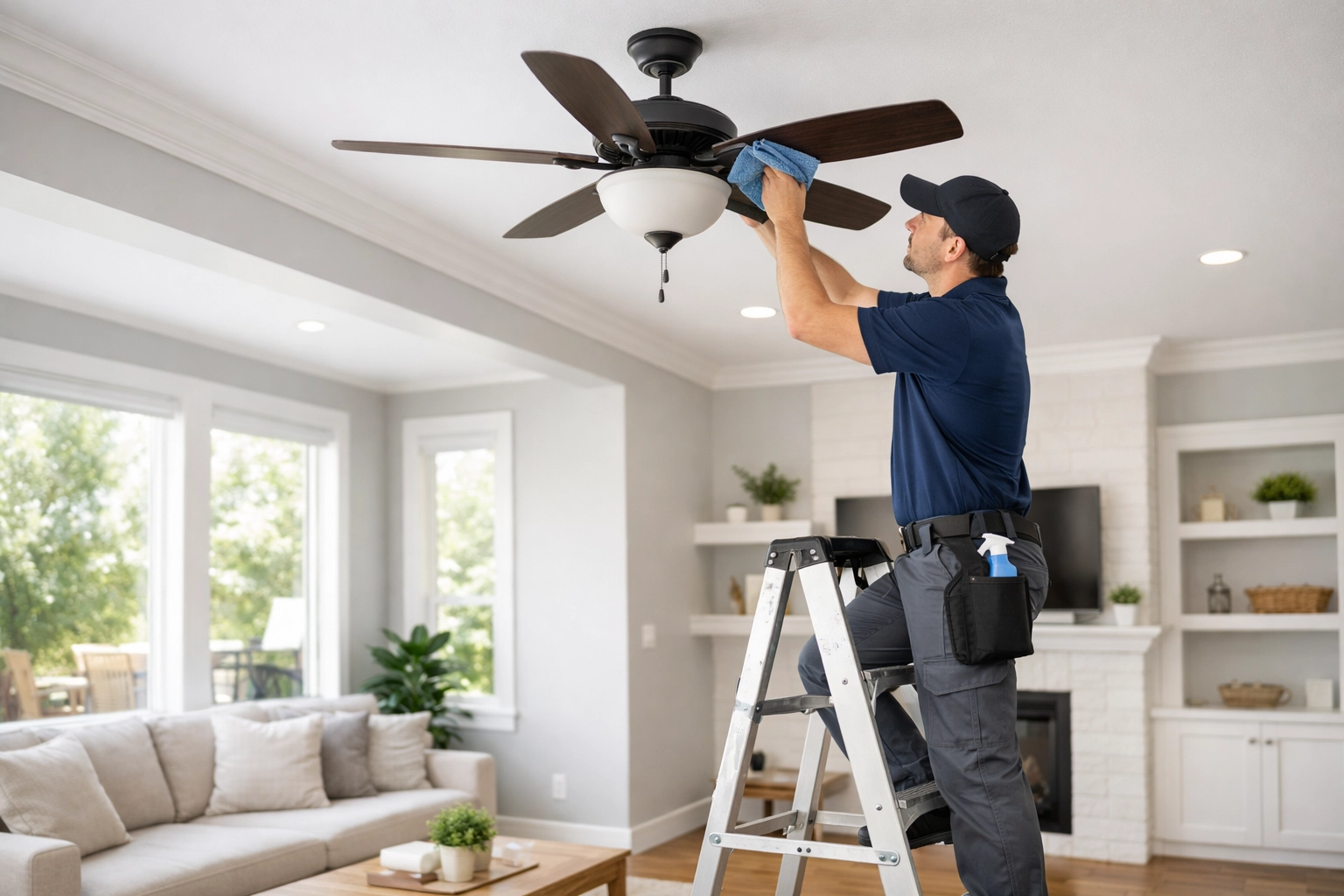
- Ceiling fan blades (top and bottom) – Major dust collectors
- Air vents and return grills – Dust buildup affects air quality
- Sliding door tracks – Dirt, hair, and debris that makes doors stick
- Window locks and hardware – Grime that affects functionality
- Thermostat housing – Dust and grime around edges
- Behind radiators or baseboards heaters – Dust city
- Corner cobwebs at ceiling level – Obvious to new tenants
Bedroom and Closet: 8 Detail Items
- Inside closet shelves and rods – Dust and mysterious stains
- Closet door tracks and hardware – Dust and grime affect smooth operation
- Under built-in shelving – Dust and previous tenant's forgotten items
- Light fixtures in closets – Often completely forgotten
- Bedroom door hardware – Fingerprints and grime on handles
- Window treatment hardware – Dust on curtain rods and brackets
- Outlet and switch covers – Grime around edges and screw holes
- Climate control vents – Dust that blows back into the room
Why These Details Actually Matter
Look, we get it. Your team is busy, and these might seem like small things. But here's the reality: prospective tenants notice. They're looking for reasons to say no, and a grimy vent or moldy caulk gives them that reason.
Professional cleaning teams work systematically through units because they know these details impact three things you care about:
Speed-to-market – Clean units show better and rent faster. Period. When everything looks and feels fresh, tenants commit quicker.
Vacancy costs – Every extra day you spend "touching up" cleaning is lost revenue. Pros get it right the first time.
Tenant quality – Clean units attract tenants who'll treat the space well. It sets expectations from day one.
The Professional Difference
Here's what separates professional make-ready cleaning from standard maintenance cleaning: checklists and accountability.
Professional crews work from detailed task lists. Nothing gets skipped because someone was tired or rushed. They document completion with photos. They have quality control processes.
Your maintenance team is excellent at repairs and unit prep. But they're juggling work orders, emergencies, and daily operations. Deep cleaning every vent and light fixture isn't their priority: because it can't be.
What Property Managers Should Know
Professional make-ready services aren't about replacing your maintenance team. They're about complementing them. Here's how smart property managers make it work:
- Maintenance handles repairs and prep work – Painting, fixtures, repairs, and functionality checks
- Professional cleaners handle deep cleaning – Everything on this list gets systematically addressed
- Final inspection confirms quality – Your team walks through a truly rent-ready unit
This tag-team approach consistently gets units to market faster than trying to do everything in-house.
Common Questions About Make-Ready Cleaning
How long does professional make-ready take?
Most standard apartments take 4-6 hours for a thorough make-ready clean. Larger units or those requiring extra attention might need a full day.
Is professional cleaning worth the cost?
Consider this: If professional cleaning costs $300 and gets your unit rented three days faster, you've saved money. At $50-$100 per day in vacancy costs, the math works itself out.
Can't our maintenance team just use a better checklist?
They can, but professional cleaners have specialized tools, products, and training. They're also not getting pulled away for emergency repairs or other urgent tasks.
Getting Started With Professional Make-Ready
If you're managing multiple properties, establishing relationships with professional cleaning services creates consistency across your portfolio. You know what to expect, tenants know what they're getting, and your turnovers become predictable.
The key is finding services that understand property management timelines. You need crews who show up on schedule, work efficiently, and communicate clearly about any issues they find during cleaning.
Start with a test unit. Use a professional service for one make-ready and compare the results to your standard process. Document the time difference, the quality difference, and the feedback from prospects viewing the unit.
The Bottom Line
These 47 items aren't just a cleaning checklist: they're the difference between good enough and rent-ready. They're what separates units that linger on the market from units that lease quickly at asking price.
Professional make-ready cleaning isn't an expense; it's an investment in faster turnovers and better tenant placement. When you're losing $50-$100 per day on vacancy, speed matters.
Your maintenance team handles the big stuff. Professional cleaners nail the details. Together, they get your units back to revenue-generating faster than either could alone.
Need help streamlining your make-ready process? Check out our commercial cleaning solutions designed specifically for property management portfolios.