


Winter is tough on professional spaces. Snow removal crews leave behind salt trails. Employees and visitors track slush through lobbies. Entry mats get overwhelmed after a few freeze-thaw cycles. And by late winter, you're staring at dull floors, gritty corners, corroded thresholds, and “mystery” stains that make the space feel neglected.
For office & commercial managers, winter isn’t just about safe walkways outside—it’s about protecting the interior surfaces your tenants, staff, and guests judge every day. In Midwest markets (think Chicagoland and similar climates), salt and grit damage doesn’t wait for spring. It builds up between December and March, and the cleaning cadence that worked in October won’t hold in February.
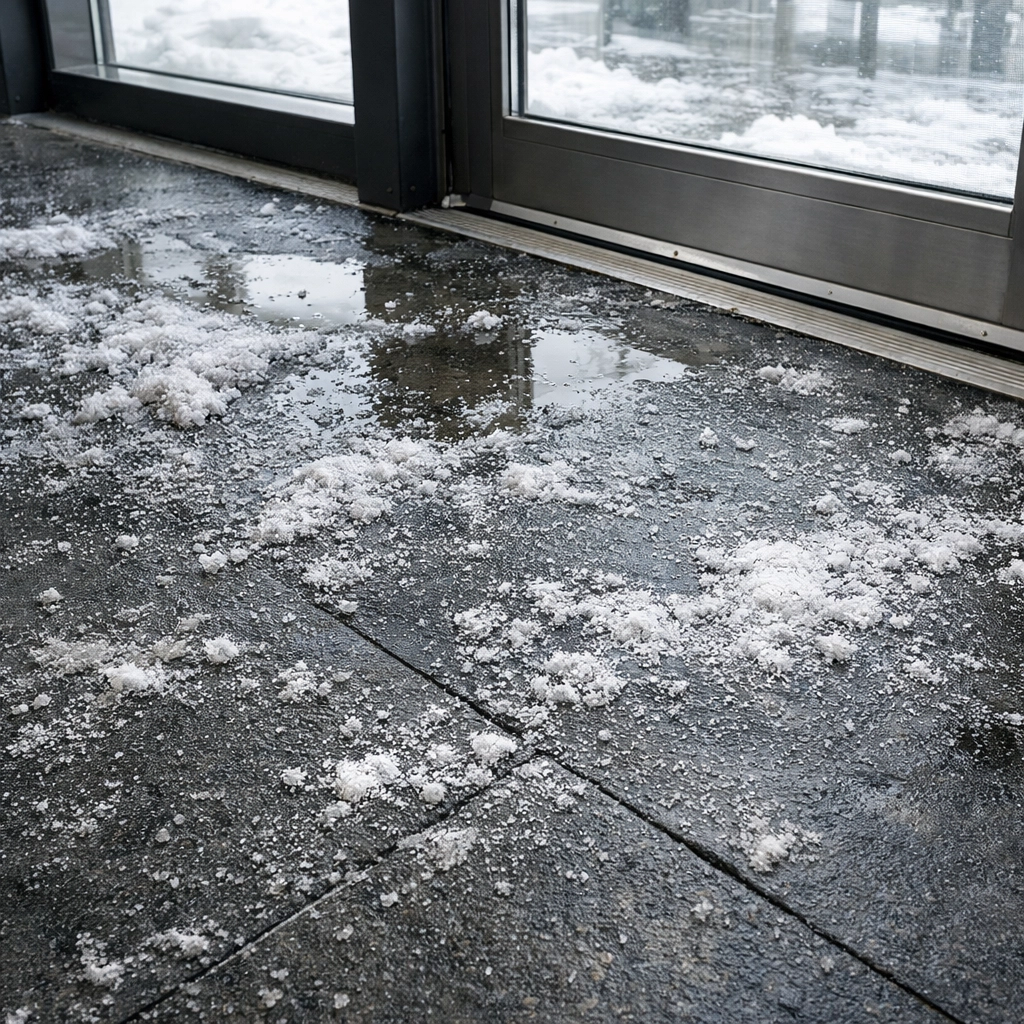
The Real Cost of Salt and Slush (for Offices)
Rock salt (sodium chloride) is cheap and effective at melting ice. It’s also corrosive to concrete, metal fixtures, and many flooring finishes. When it gets tracked indoors, it doesn’t “dry up and go away.” It settles into grout lines, embeds in textured flooring, and leaves a residue that keeps spreading with foot traffic.
In office and commercial environments, the winter impact usually shows up in four places:
- Lobby and entry flooring: white haze, sticky residue, and slip risk when meltwater mixes with fine grit.
- Elevators and stairwells: salt dust collects along edges and corners, making “daily cleaning” look incomplete.
- Thresholds and door hardware: salt accelerates oxidation on metal, especially near exterior doors.
- High-traffic corridors and break areas: grit abrasion acts like sandpaper on tile, LVT, laminate, and sealed concrete—wearing down the finish faster than planned.
Outside surfaces matter too: concrete walks and loading areas are vulnerable when salty water penetrates small cracks and then freezes and expands overnight. But the operational pain point for most office managers is simple: tracked-in slush and grit makes a professional space look worn out long before winter ends.
Prevention: Smarter Materials + “Front Door Controls” (Midwest-Proof)
The best winter strategy starts before the first storm. For office & commercial managers, prevention is less about fancy products and more about controlling what gets tracked inside.
1) Use concrete- and metal-friendlier deicers where possible. Calcium chloride ice melt is generally gentler on concrete and metal than traditional rock salt, works at lower temperatures, and often leaves less gritty residue. Where traction—not melting—is the main goal (covered entries, ramps): use sand or gravel that can be swept up routinely.
2) Upgrade the entry “capture zone” (outside → vestibule → lobby). A single mat won’t cut it in Midwest winter. Aim for:
- Outside scraper mat to knock off grit
- Vestibule scraper/absorber (if you have a vestibule)
- Inside absorbent runner long enough to catch meltwater (high foot traffic needs longer coverage)
3) Protect high-traffic finishes before winter. Traffic-rated sealants/coatings on concrete (exterior and interior where applicable) help reduce salt infiltration and make routine cleaning more effective. Do this in fall, before consistent hard freezes.
These steps reduce complaints, reduce slip-risk conditions, and keep your space looking like a workplace—not a snow-melt staging area.

Maintenance: The Winter Cleaning Playbook (Office & Commercial)
Even with good prevention, winter requires a different playbook than the rest of the year. Salt doesn’t come up with a quick mop. Slush turns into a thin film, grit grinds into finishes, and corners build up fast—especially in Midwest conditions.
Daily (or every open day)
- Spot clean entrances and lobbies by mid-morning and mid-afternoon. That’s when tracking is worst.
- Vacuum/sweep grit before any wet mopping. Wet-mopping over grit can grind residue into the finish.
- Check mats and runners. If they’re saturated, they’re not capturing anything—swap, hang-dry, or replace.
Weekly
- Edge/detail work in high-traffic zones: baseboards near entrances, corners in vestibules, elevator thresholds, stair nosings.
- Targeted floor refresh: use the right cleaner for the surface (tile/LVT/sealed concrete) and prioritize removing salt film over “making it smell clean.”
After storms
- Increase frequency for 24–48 hours. The “storm hangover” is when slush and salt migrate deeper into the building.
- Inspect thresholds and door frames. Salt buildup here is where corrosion and staining start.
Operationally, winter cleaning succeeds when it’s scheduled like a repeatable process—not treated as an occasional deep clean.
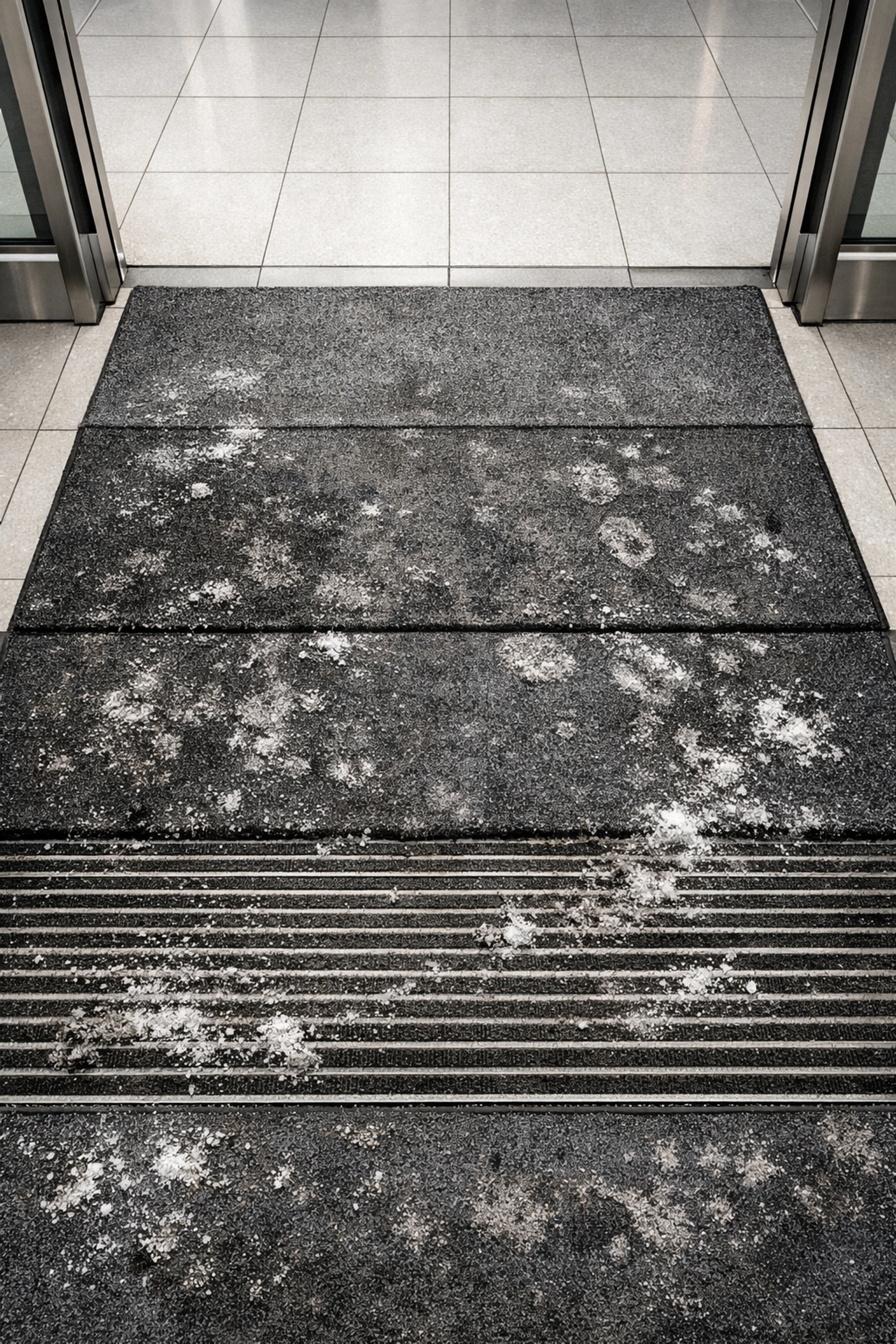
The Seasonal Reset: Why February and March Matter for Offices
In office and commercial properties, late winter is when “small issues” become reputational issues. Salt film dulls floors. Corners collect grit. Entry glass looks constantly smeared. And if you’re managing multiple suites or shared common areas, the inconsistency is what tenants notice most.
A Midwest seasonal reset should include:
- Floor salt-film removal (not just mopping). The goal is to remove residue that’s bonding to the surface, especially in entrances, hallways, and near break areas.
- Detailed edge work: baseboards, corners, elevator thresholds, stairwells, and transition strips where grit collects.
- Thresholds and door frames: wipe and inspect for early corrosion or staining, particularly at exterior doors.
- Glass and touchpoint refresh in entries: doors, handles, and surrounding framing (focus on visible grime and streaking, not “disinfection” claims).
- Matting system clean/swap: reset the capture zone so it can work for the rest of winter.
If you’re in a Midwest market with frequent freeze-thaw cycles, plan this reset for February and again near the end of the season. It’s one of the simplest ways to keep your space looking sharp while reducing finish wear.
The MaidHop Standard: Reliable Winter Resets for Commercial Properties
Winter cleaning isn’t optional. It’s operational. For office & commercial managers, the hard part isn’t knowing what “good” looks like—it’s getting it done consistently through storms, schedule changes, and heavy daily traffic.
MaidHop connects customers with vetted cleaning service providers who understand the difference between routine cleaning and a Midwest winter reset. MaidHop Pros focus on the real trouble spots—salt film, slush tracking, gritty edges, entry buildup—so your space stays presentable and your floors last longer.
Every service is backed by our 24-hour return policy: If something isn't right, we return within 24 hours to address it. In winter, that reliability matters, because small misses show up fast in lobbies, corridors, and shared spaces.
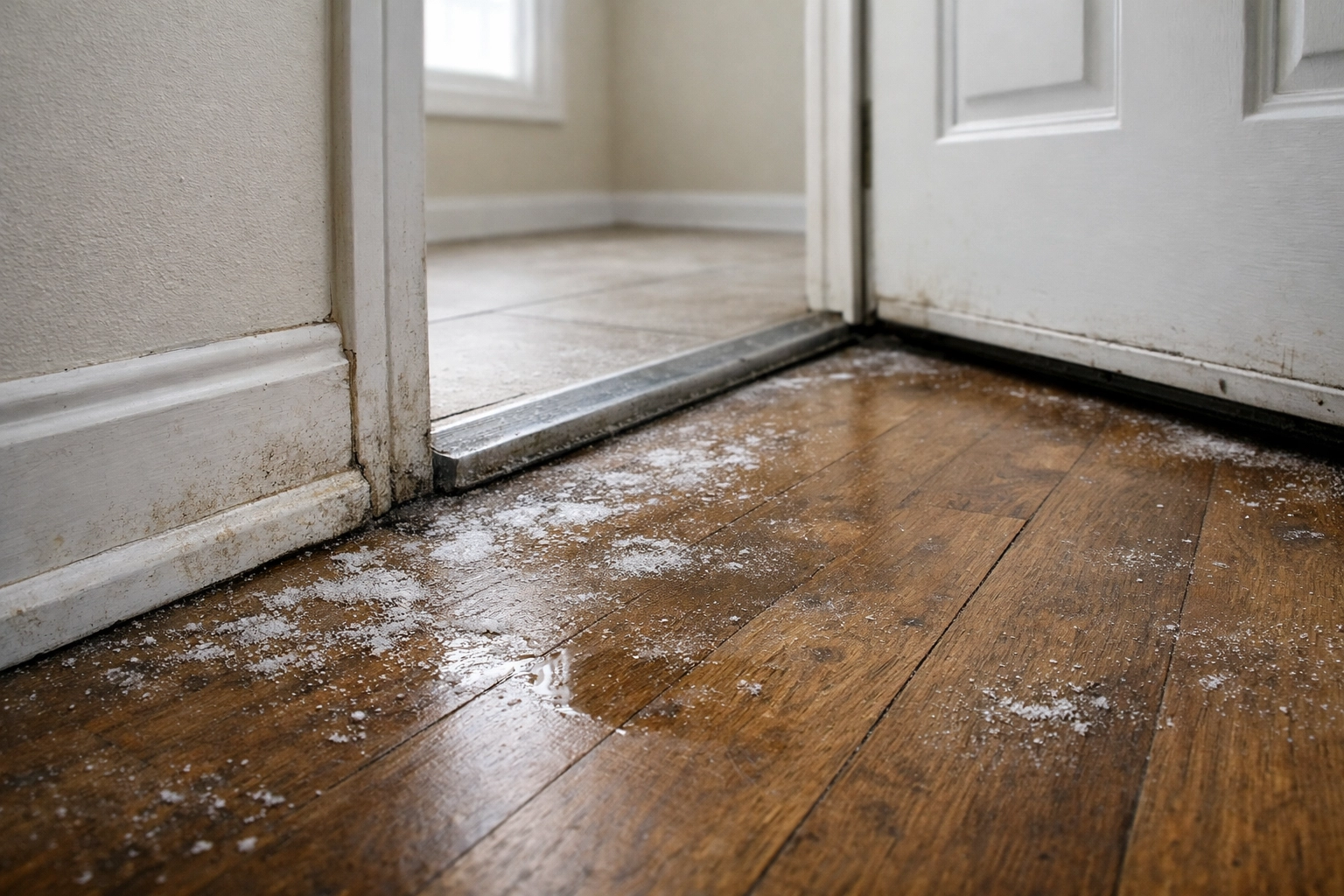
Action Steps for Office & Commercial Managers (Midwest)
If you manage professional spaces in cold-weather markets, these five steps reduce winter wear and keep your building looking sharp:
- Set an entry-control standard. Define the outside/vestibule/inside mat layout and who owns swaps and cleaning.
- Audit deicing materials and staging. Use friendlier deicers where possible and keep traction materials and tools staged for quick response.
- Increase frequency where tracking actually happens. Focus on entrances, elevator bays, stairwells, and corridors—not just open office areas.
- Schedule a February seasonal reset. Plan a focused floor/edge/detail reset when winter grime peaks.
- Partner with providers who can execute consistently. Winter is when reliability shows—especially for commercial properties with daily foot traffic.
Winter is not the time to cut corners on cleaning or delay surface repairs. The properties that maintain their condition and market readiness through February and March are the ones that win lease renewals and reduce capital expenditure surprises in April.

Protect the Asset, Protect the Brand Experience
Salt, slush, and grit compound quietly. What looks like “just winter” in January becomes dull floors, worn finishes, and a space that feels less professional by March. Commercial managers who treat winter cleaning as a repeatable operating process—not a reactive scramble—protect their surfaces, reduce complaints, and keep the building presentation consistent.
The winter reset isn’t about perfection. It’s about controlling tracking, removing salt film before it bonds, and having service providers who show up when the weather is messy and expectations stay high.
If your current cleaning plan isn’t built for Midwest winter conditions, it’s time to recalibrate.
Want a practical winter-reset checklist for offices and commercial properties? Subscribe at https://maidhop.com/newsletter.