


Category: Property Management
Here's something that keeps property managers up at night: every day a unit sits vacant, you're losing money. Not just potential rent: you're also burning cash on utilities, insurance, and that mortgage payment that doesn't care whether anyone's living there or not.
The industry average for apartment make-ready? Somewhere between 7-10 days. That's over a week of lost revenue per unit. Multiply that across your portfolio, and you're looking at serious money left on the table.
But what if you could cut that time down to 72 hours without sacrificing quality? Not by rushing through jobs or skipping steps, but by working smarter with a proven framework.
Let's break it down.
Why 72 Hours Is Your Sweet Spot
Most property managers think faster turnovers mean cutting corners. Here's the truth: speed comes from eliminating the gaps between tasks, not from doing the tasks faster.
The typical 7-10 day turnaround isn't because the work takes that long. It's because of:
- Waiting for vendors to show up
- Back-and-forth scheduling nightmares
- Tasks happening in the wrong order
- No clear ownership of the timeline
- Poor communication between teams
A 72-hour framework forces you to get organized. And when you're organized, quality actually improves because nothing gets overlooked or rushed at the last minute.

The Framework: Hour by Hour
Day 1 (Hour 0-24): Assessment and Deep Clean
Morning (Hours 0-4):
Your make-ready clock starts the moment keys are returned. Within the first few hours, you need boots on the ground for a complete walkthrough. This isn't a casual look-around: this is a detailed assessment with photos.
Document everything:
- Wall damage beyond normal wear
- Appliance condition
- Flooring issues
- Lighting fixtures
- HVAC filter status
- Any odors or pest signs
Here's the key: this assessment determines your 72-hour timeline. If you discover major issues (broken appliances, significant damage), you need to know NOW, not on day three.
Afternoon (Hours 4-12):
Deep cleaning begins immediately. This is where having a reliable cleaning partner makes or breaks your timeline. Your cleaning crew should tackle:
- Kitchen: degreasing all surfaces, cleaning inside all appliances, scrubbing grout
- Bathrooms: descaling fixtures, deep cleaning tile and grout, sanitizing everything
- All rooms: baseboards, window tracks, ceiling fans, light fixtures
- Floors: vacuuming, mopping, or preparing for carpet cleaning
Pro tip: if carpet cleaning is needed, schedule it for end of day one. This gives it maximum drying time before final inspection.
Evening (Hours 12-24):
While cleaning wraps up, your maintenance team or vendors should be handling quick fixes:
- Changing air filters
- Replacing burned-out bulbs
- Tightening loose handles and fixtures
- Minor caulking repairs
Order any parts or materials needed for day two. If you wait until tomorrow morning, you've already blown your timeline.

Day 2 (Hour 24-48): Paint, Repair, Replace
This is your heavy lifting day. Everything that requires drying time, curing, or professional work happens now.
Morning (Hours 24-32):
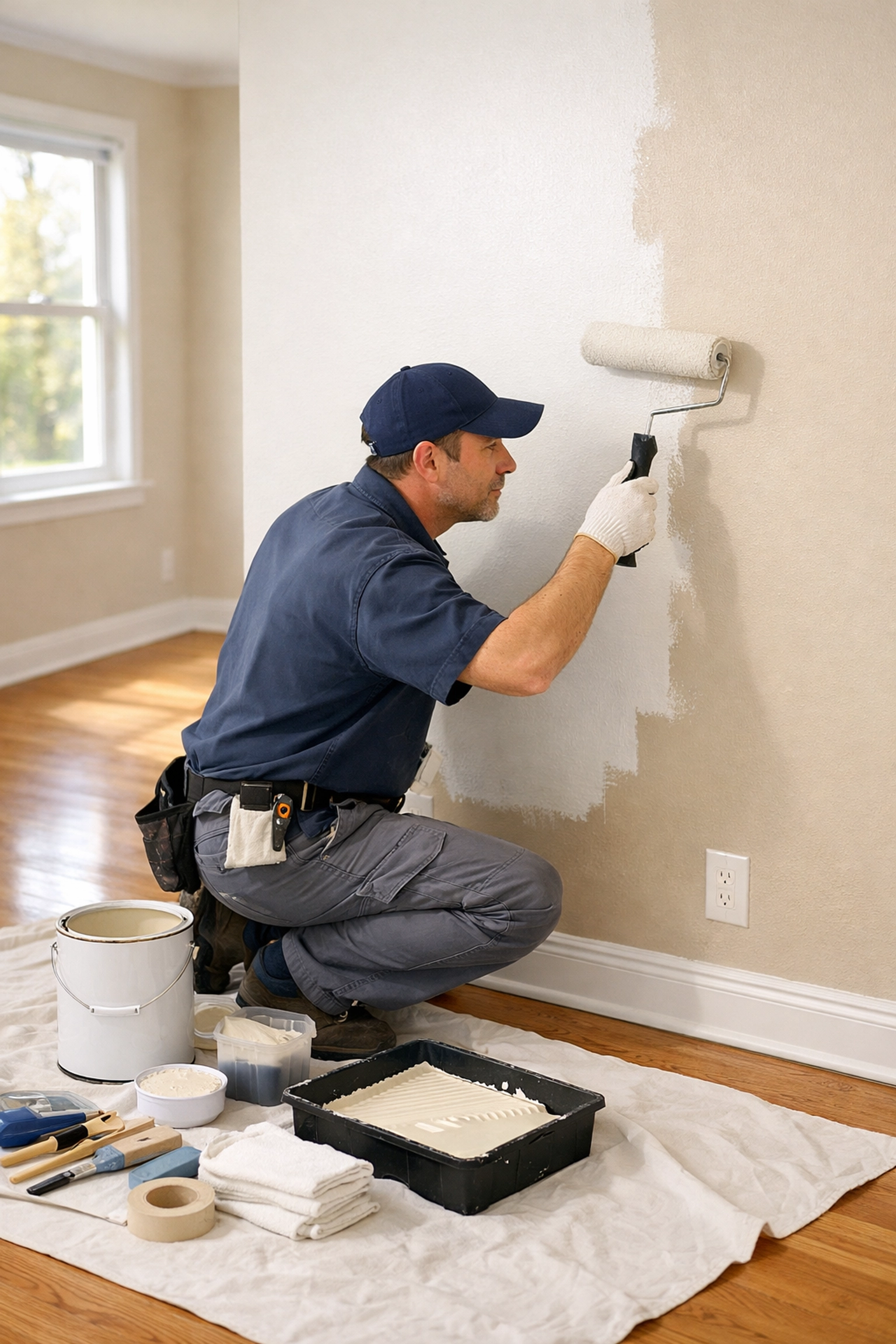
Painting starts first thing. With the right crew, a standard two-bedroom can be painted in 4-6 hours. Focus on:
- High-traffic areas that show wear
- Any walls with damage from picture hooks or scuffs
- Touch-ups around light switches and door frames
If you're doing full repaints, make sure your team knows the approved color palette and has supplies ready. No mid-day runs to the hardware store.
Afternoon (Hours 32-44):
While paint dries, tackle:
- Appliance repairs or replacements
- Plumbing fixes
- Electrical work
- Flooring repairs (patching, plank replacement)
- Cabinet or countertop issues
This is where your vendor relationships matter. You need people who answer the phone, show up on time, and do quality work. If you don't have those relationships yet, start building them now.
Evening (Hours 44-48):
Second coat of paint if needed. Final maintenance checks. Install any new fixtures or hardware. The unit should be 90% ready by the end of day two.
Day 3 (Hour 48-72): Final Details and Quality Check
Morning (Hours 48-60):
Final cleaning pass. This isn't a deep clean: it's catching paint drips, dust from repairs, and making sure everything sparkles. Your cleaning team should:
- Wipe down all surfaces again
- Clean windows and mirrors
- Vacuum or mop floors one last time
- Check that all appliances are gleaming
Midday (Hours 60-68):
Quality inspection time. Walk through with your checklist and actually test things:
- Run all faucets and check for leaks
- Test all appliances
- Check all lights and outlets
- Open and close all windows
- Flush toilets, check water pressure
- Test HVAC in heating and cooling modes
Take photos of everything. These protect you and show prospects the unit is move-in ready.
Afternoon (Hours 68-72):
Final touches:
- Replace HVAC filter with a fresh one
- Place welcome materials if you use them
- Set thermostat to comfortable temperature
- Do a final walk-through
Unit is now ready to show and ready for move-in.
What Makes This Framework Actually Work
You can't just decide to do 72-hour turnovers tomorrow. Here's what you need in place:
1. Pre-Qualified Vendor Network
You need painters, plumbers, electricians, and cleaners who can move fast. Vet them now, negotiate rates, and make sure they understand your timeline expectations.
2. Standard Operating Procedures
Everyone needs to know exactly what "make-ready" means in your portfolio. Create detailed checklists for every role. No guessing, no variations.
3. Inventory Management
Keep common supplies stocked: paint, light bulbs, air filters, cleaning supplies, basic hardware. Running out of something stupid shouldn't blow your timeline.
4. Clear Communication System
Whether it's property management software, a shared app, or even a group chat, everyone involved needs real-time updates. When the painter finishes early, the cleaner needs to know immediately.
5. Realistic Assessment Skills
Know when a unit can't hit 72 hours. Major appliance replacement, significant damage, or flooring overhauls might need more time. The framework is your target, not a prison.
Common Mistakes That Kill Your Timeline
Starting Late: Waiting until the day after move-out to begin. Every hour counts.
Sequential Instead of Parallel: Having vendors wait for each other instead of working simultaneously when possible.
No Accountability: When everyone's responsible, no one's responsible. Assign a point person for each turnover.
Skipping the Photo Documentation: You'll waste hours dealing with questions about what was done and what wasn't.
Poor Quality Control: Rushing the final inspection means tenants move in and immediately find issues. Then you're scheduling vendors to come back, and your "quick" turnover becomes a disaster.

The Real Cost of Vacancy
Let's put this in perspective. Say your average rent is $1,500 per month. Every day vacant costs you $50. A 10-day turnover costs $500 in lost rent. A 72-hour turnover? $150.
Across 20 units per year, that's $7,000 in recovered revenue just from speed. And that doesn't count the benefit of having units available during peak leasing season or the improved cash flow.
Speed to market isn't just about efficiency: it's about competitive advantage. When you can turn units in three days, you can be more selective with tenants, time your move-ins better, and reduce the stress on your team.
Getting Started
You don't have to transform your entire operation overnight. Start with one unit. Use it as a pilot to identify bottlenecks, test your vendors, and refine your process.
Track everything: time spent on each phase, costs, issues that came up, and how you solved them. After a few turnovers, you'll have a system that works for your specific portfolio and market.
The 72-hour framework isn't about working harder: it's about working smarter. With the right systems, the right partners, and a commitment to quality, you can turn units faster without cutting a single corner.
Your vacancy costs are waiting to be recovered. The only question is: when will you start?