

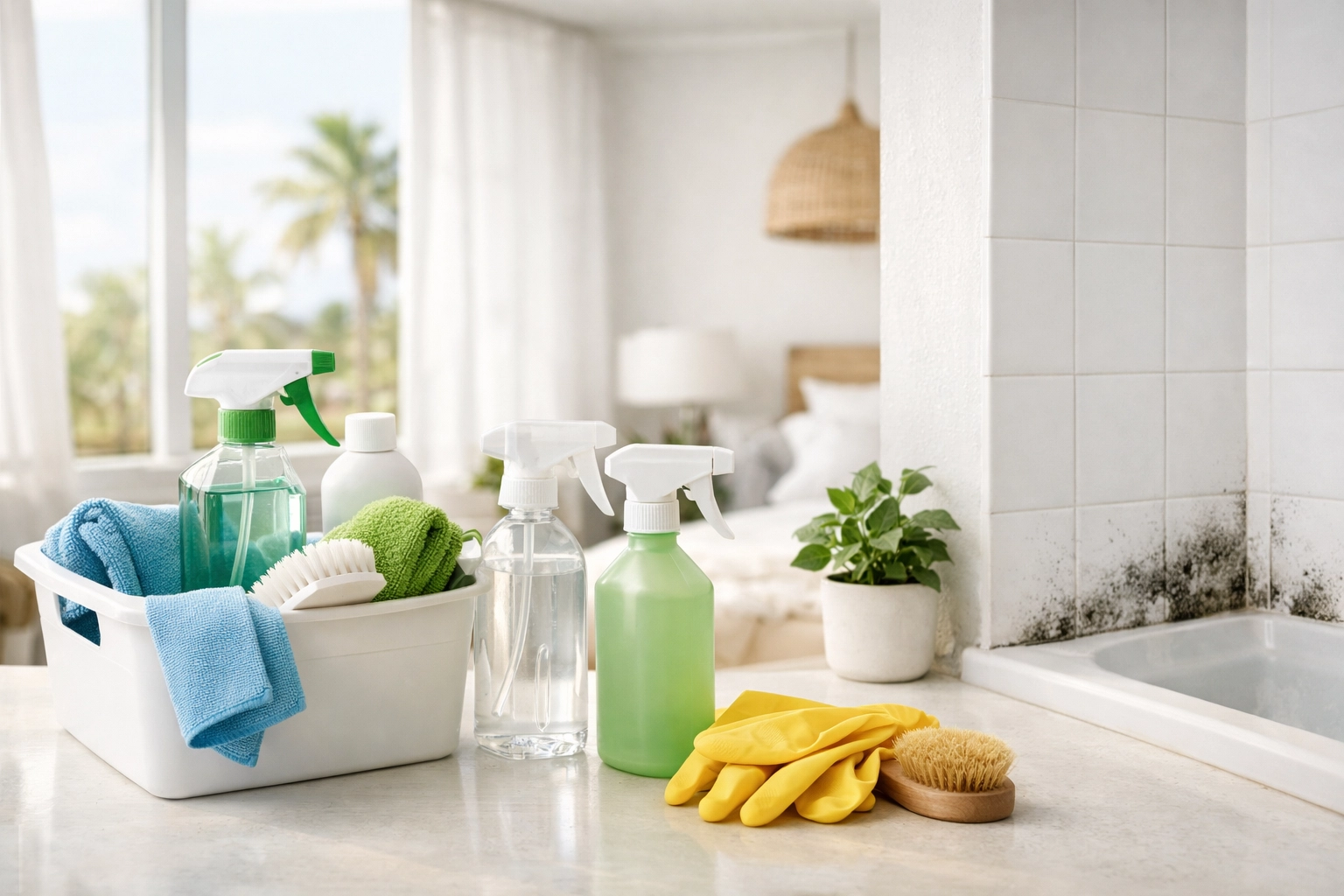
Humidity doesn’t just make the air feel heavy: it creates real, repeatable problems for both homes and managed properties. Mildew regrowth, musty odors, resident complaints, and faster wear on paint, grout, and caulk all trace back to one thing: moisture that wasn’t managed as part of the clean. In high-humidity climates, the window between “clean unit” and “mildew problem” can close in days, not weeks.
This is especially true across the Southeast (SE): long cooling seasons, afternoon storms, damp closets, and frequent turnovers create perfect conditions for mildew to come back fast if drying and airflow aren’t handled correctly.
The good news? You don’t need to gamble on whether your turnover (or reset) cleaning will hold up. A proactive, moisture-aware approach during and after cleaning helps protect finishes, keeps units move-in ready longer, and reduces the costly cycle of complaints, callbacks, and re-cleans.
Why Humidity Hits Homes and Property Operations Harder Than You Think
In a climate where outdoor humidity regularly sits above 70%, every door opening, every HVAC cycle, and every shower introduces moisture indoors. Standard cleaning protocols (often built for drier climates) don’t account for the reality that wet surfaces in humid environments stay wet longer.
That extended drying time is exactly how mildew gets a foothold: grout lines, caulk, window sills, AC closets, and behind appliances. What starts as a faint smell becomes a maintenance issue, then a resident complaint, then a turnover delay that can cost real time.
For multifamily and property management portfolios, this isn’t a one-off. It’s systemic. And for residential customers, it’s the “Why does it smell musty again?” problem that keeps coming back after a normal clean.
SE note: In places like coastal Florida, the Carolinas, and the Gulf states, the combination of humid outdoor air + cold indoor air makes condensation show up in the same repeat spots (window tracks, supply vents, and corners with low airflow). If your cleaning plan doesn’t include moisture steps, you’re basically cleaning on a countdown timer.
The Right Sequence: Remove Water First, Then Control the Air
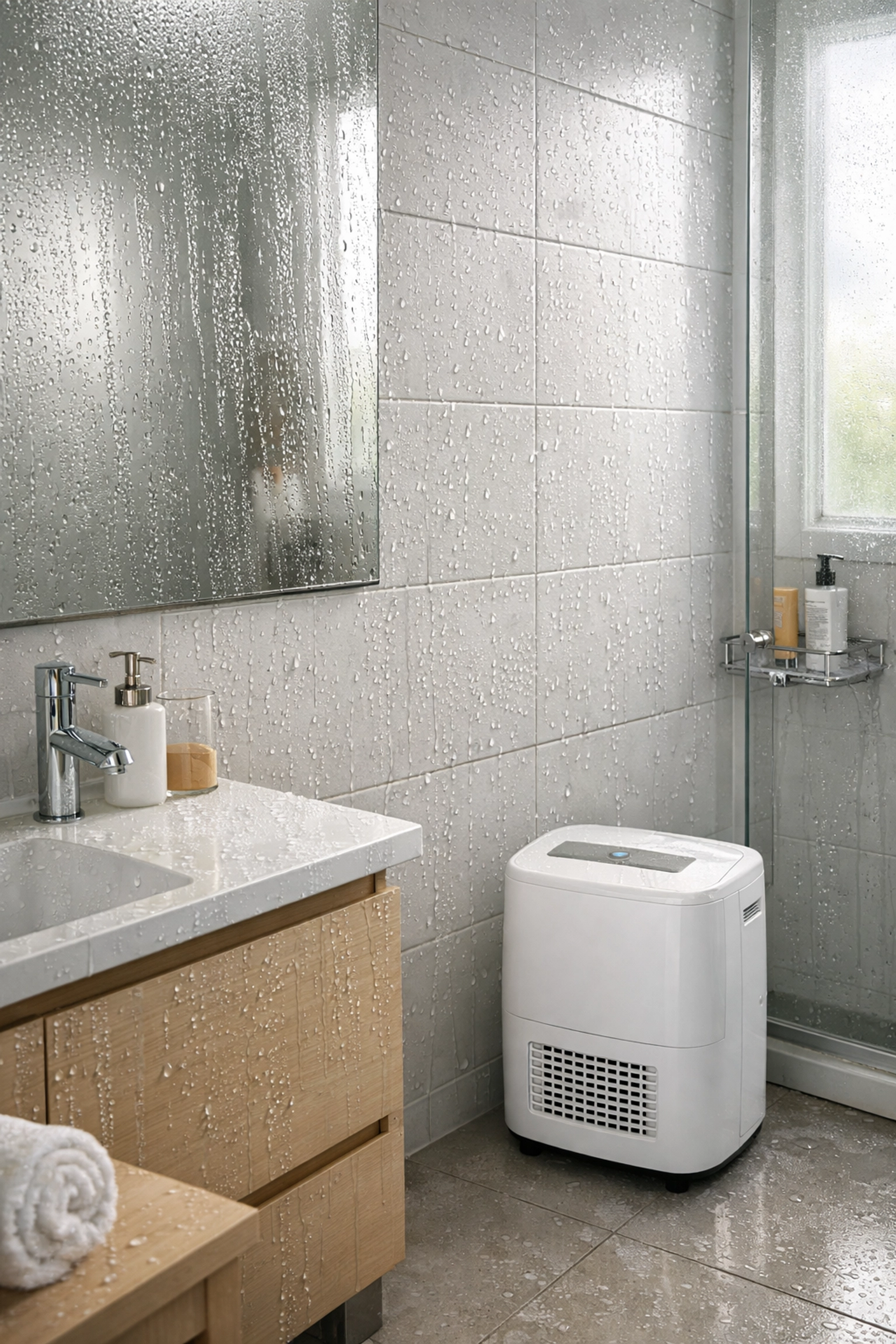
The most effective humidity strategy starts before you even think about fans or dehumidifiers. The priority is mechanical water removal: squeegees, wet vacs, and absorbent tools to physically pull water off surfaces and push it down drains. It’s the fastest way to reduce “free water,” which is what keeps mildew active.
Why this matters: a floor left with a thin film of water in 85°F heat and 75% humidity won’t dry quickly, even with fans running. The air is already saturated and can’t absorb much more moisture. But a floor that’s been squeegeed down to damp? That dries way faster, shrinking the window for mildew to take hold.
After mechanical removal, ventilation + dehumidification take over. They’re supporting tools, not the main solution. If a provider skips the squeegee/wet vac step and relies on “air it out,” you’re paying for longer dry times and higher mildew risk—especially in SE summer conditions.
Dehumidifiers Aren’t Optional in High-Moisture Markets (Especially SE)
In climates where outdoor air routinely exceeds 70% relative humidity, standard HVAC systems and box fans often can’t keep up during turnovers. When the air is already full of moisture, it can’t absorb much more from wet surfaces. That’s why portable dehumidifiers become a practical requirement for humid-region cleaning: not a nice-to-have.
Condensation dehumidifiers work by cooling air to condense moisture out of it, which makes them a strong fit for warm, fluctuating environments. Deploy them strategically:
- At entryways and hallways where warm outdoor air mixes with cooler indoor air
- In bathrooms and kitchens where water use is concentrated
- Near repeat problem zones like sliding glass doors, laundry areas, and corners with poor airflow
- By HVAC closets / returns when units tend to smell “damp” even after a clean
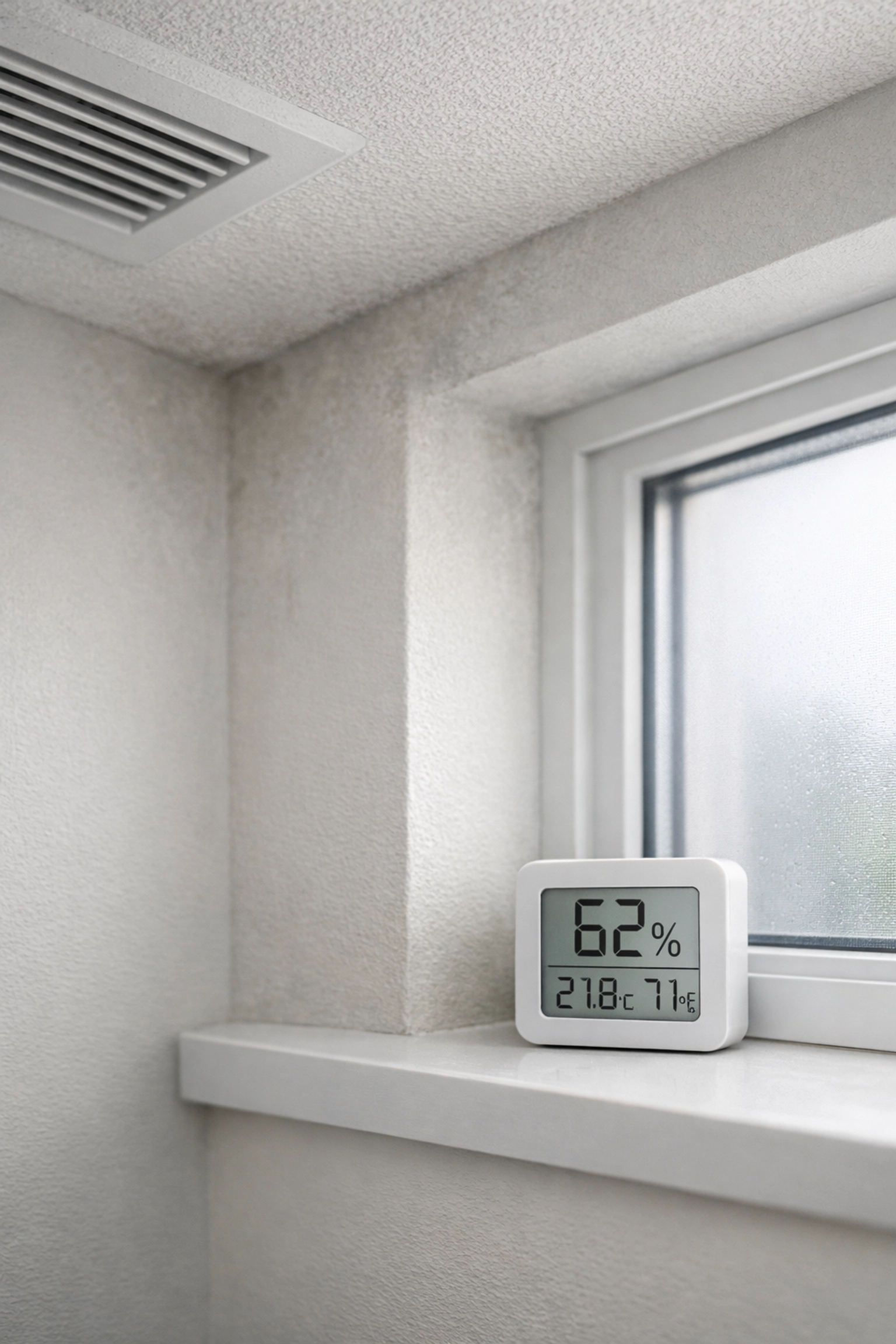
Aim for 45–50% relative humidity to reduce mildew risk. A basic hygrometer lets teams verify conditions in real time instead of guessing.
SE note: “Open the windows to dry it out” can backfire when it’s 80% humidity outside. In many Southeast markets, it’s better to keep windows closed during peak humidity and use controlled dehumidification plus exhaust fans.
The “Deep Clean Reset” Strategy for Seasonal Moisture Buildup
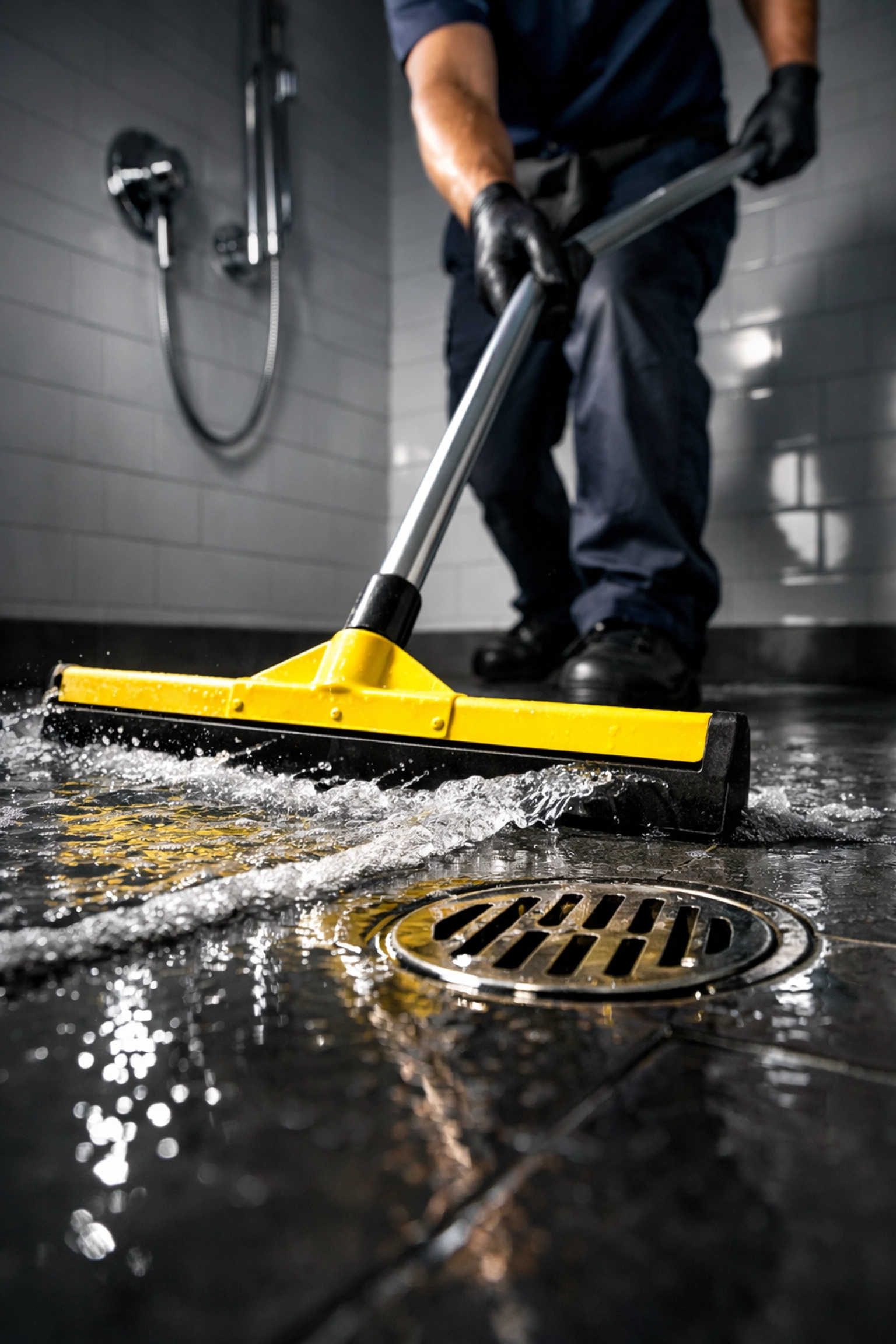
Even with solid turnover protocols, high-moisture markets benefit from periodic deep-clean resets—especially after peak summer months when moisture exposure is highest. These aren’t standard cleans. They’re targeted, detail-heavy resets designed to remove buildup where mildew likes to return.
A proper reset includes:
- Grout and caulk inspection: Check for discoloration, softness, or visible mildew. Treat with appropriate products (avoid bleach on colored grout) and flag areas that may need re-caulking/resealing by maintenance.
- High-humidity bathroom detailing: Shower doors/tracks, niches, under-rim areas, and exhaust fan covers (dust + moisture becomes odor fast).
- Window track and sill detailing: Condensation collects here, and it’s often missed in routine cleans.
- Behind-appliance cleaning: Pull fridges/washer-dryer (when safe/allowed) to address hidden moisture + lint + grime zones.
- Closets and corners: Humidity rises and stagnates in low-airflow spaces. Check upper corners, closet ceilings, and walls behind furniture.
- Airflow support checks (coordination item): If filters are overloaded or vents are blocked, cleaning alone won’t solve the “musty returns.” Flag it early so maintenance can act.
For multifamily portfolios, scheduling these resets annually (or twice annually in the most humid conditions) keeps small moisture issues from turning into unit-wide complaints. It’s predictable maintenance instead of reactive fire drills.
Air Quality Is the Fastest “Quality Signal”
Residents (and home buyers/tenants) notice air quality faster than almost anything. A unit can look clean and still feel off if it smells musty or the air feels “heavy.” In high-humidity markets, air quality management isn’t cosmetic—it’s a core part of the turnover outcome.
Beyond dehumidifiers, consider:
- Ventilation timing: Run exhaust fans during and after cleaning, but keep windows closed during peak humidity hours when outside air will raise indoor RH.
- Odor elimination, not masking: Skip heavy fragrances that cover musty smells for an hour and then fade. The goal is removing the moisture source and the residue that holds odor.
- Common SE offender spots: under-sink cabinets, AC closets, laundry nooks, and any room with a closed door and weak return airflow.
For property managers, better air quality shows up as fewer move-in complaints and fewer “it smells damp” tickets. For residential customers, it’s the difference between “looks clean” and “feels clean.”
The 24-Hour Return Standard: Practical Coverage for Humid-Climate Surprises
Even with strong moisture-management steps, humid climates introduce variables that are hard to predict. A unit might look perfect at final walkthrough, then pick up a musty note two days later after a humidity spike. That’s not always a “bad clean”—it’s a climate reality.
This is where accountability matters. If something isn’t right, we return within 24 hours to address it. For property managers juggling tight turns, that reduces the stress of wondering whether a callback will derail a move-in.
It’s not about promising perfection. It’s about running a repeatable process—and backing it up—so small issues don’t turn into resident complaints.
Make Humidity Work for Your Operations, Not Against Them
Intent (Value): Give property managers and homeowners a repeatable, climate-aware cleaning playbook that reduces mildew/odor callbacks and protects turnover timelines in high-moisture markets (with SE-specific notes).
High humidity doesn’t have to mean accepting mildew smells, repeat complaints, and slower turns as “just part of the market.” With the right sequence—mechanical water removal, controlled dehumidification, smart ventilation timing, and periodic deep-clean resets—you can keep units (and homes) feeling fresh even when the weather refuses to cooperate.
The difference between a vendor and a partner is whether they build for real-world conditions. MaidHop connects customers with vetted cleaning service providers, and in high-moisture regions we push proactive habits that hold up better in humid conditions: focusing on water removal, targeted detailing in repeat mildew zones, and clear closeout expectations that reduce surprise issues after the walkthrough.
Want more humidity-proof turnover and home care checklists? Subscribe to our newsletter for practical property ops guidance, seasonal maintenance reminders, and updates on how MaidHop Pros support reliable outcomes nationwide (including high-moisture SE markets).
Social Caption (keyword CTA): Humidity makes “clean” tricky. If you manage units (or just hate that musty comeback), here’s the moisture-first turnover playbook we see work best in the Southeast. Keyword: NEWSLETTER for checklists + seasonal reset reminders. https://maidhop.com/newsletter
Image prompt (no text on image): Photo-real, bright natural light, modern apartment bathroom in a Southeast coastal style, a portable dehumidifier running near a shower with subtle condensation on glass, clean minimalist surfaces, no people, no faces, no logos, no text, high-resolution, shallow depth of field.