


Category: Property Management
Every day a unit sits vacant costs you money. Like, real money. We're talking $50-100+ per day in lost rent, depending on your market. If your average make-ready takes 15 days and you could cut that to 7? You just saved thousands per turnover.
The difference between properties that turn units in 5-7 days versus 15-20 days isn't luck. It's systems. And the good news? Most of these systems are simpler than you think.
Why Speed Actually Matters (Beyond the Obvious)
Sure, faster turnovers mean less vacancy loss. But here's what most property managers miss: speed-to-market is your competitive advantage. When a prospective tenant searches for apartments, they're seeing listings from last week, yesterday, and this morning. Guess which ones get the applications?
The properties hitting the market first after a tenant moves out are capturing prospects while your competition is still scheduling paint jobs. By the time your unit finally lists two weeks later, those quality tenants have already signed leases elsewhere.
Speed isn't just about money saved. It's about money earned.
Start With the Pre-Move-Out Inspection
Here's where most property managers lose the game before it even starts. They wait until the tenant moves out to assess what needs fixing. By then, you're already behind.
The single biggest time-saver? Conduct your move-out inspection 14 days before the tenant leaves. Not the day they hand over keys. Two weeks earlier.

Walk through while they're still living there. Document everything that'll need attention. Take photos. Make notes. Yes, you'll do a final walkthrough later, but this early inspection lets you:
- Order replacement parts immediately (no waiting 3-5 days for that specific faucet handle)
- Schedule contractors while the unit is still occupied
- Identify big-ticket items that need vendor quotes
- Start lining up your team before the keys are even turned in
When a tenant moves out and you discover you need new countertops? That's a 1-2 week delay right there. When you already knew about it and have the installer scheduled for move-out day? You're miles ahead.
Create Your Digital Unit Profile
Every minute your maintenance team spends figuring out "what kind of paint did we use here?" or "which HVAC filter fits this unit?" is wasted time. Properties using digital systems are reducing vacancy by 50% or more, and it starts with knowing your units inside and out.
Build a simple digital file for each unit that includes:
- Paint colors and brands used in each room
- Flooring type and installation date
- All appliance models and serial numbers
- Fixture specifications (that weird shower handle isn't standard, remember?)
- Complete maintenance history
Your team should be able to pull this up on their phone, instantly know what supplies to grab, and order exact matches without guessing. When your contractor asks "what's the grout color?" you're not playing detective. It's documented.
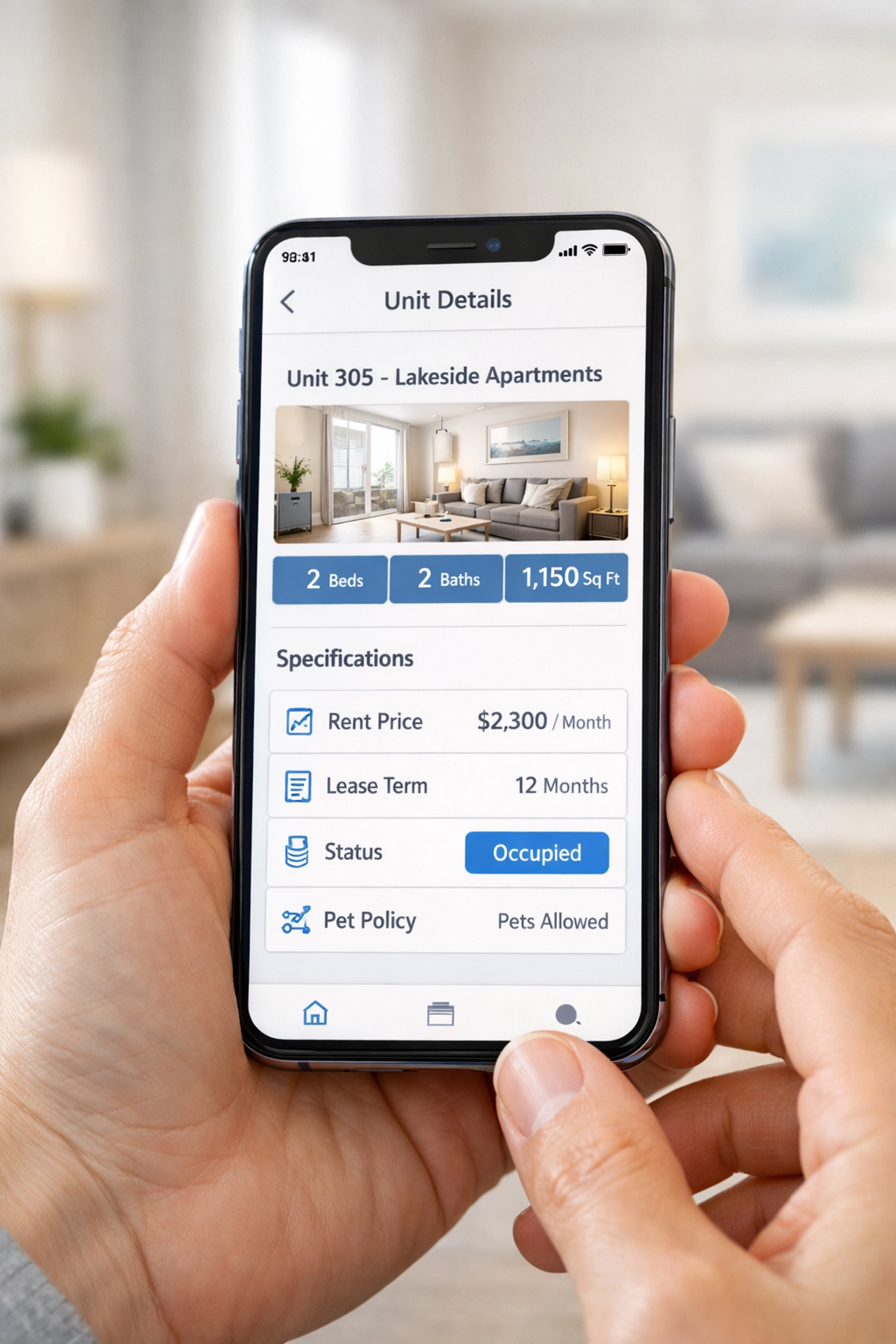
This alone can shave 2-3 days off your turnover time. No more trial-and-error. No more buying the wrong supplies and making return trips. Just efficient execution.
The Standardized Checklist Changes Everything
Look, everyone thinks they know what needs to happen during a turnover. But "everyone knows" is how things get missed. And missed items mean callbacks, delays, and unhappy new tenants.
Create one master make-ready checklist that every single person uses. Your staff, your contractors, your vendors, everyone follows the same list in the same order.
Why does order matter? Because having your flooring contractor show up before the painter creates chaos. Your cleaning crew can't deep clean around the appliance installer. Coordination means speed.
Your checklist should flow logically:
- Heavy demolition/replacement work first
- Painting next
- Flooring repairs/replacement
- Deep cleaning
- Final touches and inspections
When everyone knows the order and what's expected, there's no standing around waiting for clarity. Your contractors aren't tripping over each other. Nobody's redoing work that got messed up by the next trade.
Automate Your Work Orders
Here's a time-suck nobody talks about: the manual follow-up game. You do an inspection, jot down notes, then spend an hour sending emails to different vendors, following up, checking if they scheduled the work, confirming they showed up…
Stop doing that.

Use an inspection system that automatically generates work orders. Take a photo of the chipped countertop, check a box, and boom, work order sent to your contractor with the photo attached, priority level set, and deadline assigned.
No manual data entry. No forgotten tasks. No "oh I thought you were handling that" conversations. The system tracks everything and alerts you if something's running behind.
Your brain isn't a filing cabinet. Let technology handle the tracking while you focus on keeping things moving.
Lock Down Your Vendor Relationships
Switching contractors every turnover is killing your speed. When you work with different vendors each time, you're essentially training new people on your expectations, your properties, your quirks. Every. Single. Time.
Build a solid roster of reliable vendors and stick with them. Yeah, you might save $50 using someone cheaper occasionally, but you're losing days in speed and consistency.
Trusted vendors who know your properties will:
- Show up on time (they value your repeat business)
- Already know your expectations and standards
- Work faster because they're familiar with your units
- Respond quicker when you need emergency help
Plus, long-term relationships mean you can negotiate better rates anyway. The guy who does 20 turnovers a year for you is more likely to give you priority scheduling and volume discounts than a one-off contractor.
Track Your Numbers (Or You're Flying Blind)
You can't improve what you don't measure. And most property managers are guessing about their actual performance.
Start tracking these basics:
Speed metrics:
- Average days from move-out to ready
- Time from move-out notice to listing
- How long each task type takes (painting, cleaning, repairs)
Cost metrics:
- Total turnover cost per unit
- Where you're going over budget and why
Quality metrics:
- First-time pass rate on move-in inspections
- Maintenance callbacks within 30 days
- New tenant satisfaction scores

When you track this stuff, patterns emerge. Maybe painting always takes 4 days when it should take 2. Maybe Unit 302 always costs more to turn because of that temperamental dishwasher that needs replacing. Maybe your Friday move-outs take longer because contractors don't want to work weekends.
Data shows you where the bottlenecks are. Then you fix them.
The Make-Ready Command Center Approach
Here's how this all comes together in real life:
Day -14: Pre-move-out inspection completed. Digital profile updated. Work orders auto-generated. Vendors scheduled. Parts ordered.
Day 0: Tenant moves out. Final walkthrough takes 15 minutes because you already know what to expect. Contractors start immediately: they've already been scheduled and know what to do.
Days 1-3: Heavy work happens. Painting, flooring repairs, appliance replacement. Everyone follows the standardized checklist in order.
Day 4: Deep cleaning happens while final repairs wrap up.
Day 5: Final inspection. Unit photos taken. Listing goes live.
Day 7: New tenant moves in.
That's the goal. Not every turnover will hit it perfectly, especially when you're dealing with damage or major repairs. But when you have systems in place, this timeline becomes realistic for standard turns.
The Bottom Line
Cutting your make-ready time in half isn't about working harder or pushing your team to exhaustion. It's about eliminating the wasted time that comes from poor coordination, missing information, and reactive problem-solving.
Start with one thing. Maybe it's the pre-move-out inspection. Maybe it's finally documenting your unit specifications. Maybe it's building that standardized checklist everyone follows.
Pick one, implement it this month, and measure the impact. Then add the next piece. Six months from now, your turnovers will look completely different.
Because every day you shave off is money back in your pocket and a competitive edge in your market. And that's worth the effort to build these systems.
Time to get moving.
Need help getting your make-ready process dialed in? Visit MH JaniJournal to learn how professional cleaning services can speed up your turnovers.