


Category: Property Management
Every day a unit sits vacant, you're losing money. Not just the obvious rent – we're talking about the compound effect of lost revenue, utilities you're still paying, and the opportunity cost of not having that unit generating income. For most property managers, the average turnover takes 2-3 weeks. But what if you could cut that in half?
Here's the thing: faster turnovers aren't about rushing or cutting corners. They're about having a system that works. Let's break down exactly how to do it.
The Real Cost of Slow Turnovers
Before we dive into solutions, let's talk about what slow turnovers are actually costing you. A two-bedroom unit renting for $1,500/month costs you $50 per day in lost rent alone. Add utilities, and you're looking at $60-70 per day going down the drain.
But the bigger hit? Speed-to-market. The longer your unit sits empty, the more dated your listing becomes. Fresh listings get more attention, better quality applicants, and often command higher rents. A unit that takes 21 days to turn versus 10 days isn't just losing 11 days of rent – it's potentially starting the next lease cycle at a lower rate.

Step 1: Start Before the Move-Out
The biggest mistake property managers make? Waiting until keys are turned in to start the turnover process. By then, you're already behind.
Schedule your pre-move-out inspection two weeks before the lease ends. This walkthrough tells you exactly what you're dealing with: Does the carpet need replacing? Are there holes in the walls? Is the kitchen a disaster?
With this intel, you can line up contractors, order materials, and schedule the work to start literally the day after move-out. No waiting around trying to figure out what needs to be done.
Step 2: Build Your Turnover Dream Team
You need a tight roster of vendors who can move fast. We're talking about:
- A cleaning team that specializes in make-ready work (not just regular maintenance cleaning)
- A handyman or contractor who can knock out repairs quickly
- A painter who understands the difference between spot-touch and full repaint
- A flooring specialist on speed dial
The key word here is "specializes." Make-ready cleaning is different from routine maintenance cleaning. You need teams who understand that every surface needs to be move-in ready, not just visibly clean.

Step 3: Create Your Non-Negotiable Checklist
Standardization is your secret weapon. Every single turnover should follow the same process, in the same order. This eliminates decision fatigue and ensures nothing gets missed.
Your checklist should look something like this:
Day 1-2: Deep Clean
- Walls wiped down (every single one)
- Baseboards cleaned
- Windows inside and out
- Kitchen deep clean (inside cabinets, appliances, behind appliances)
- Bathroom sanitization
- Floors cleaned thoroughly
- Air vents cleaned
Day 3-4: Repairs and Paint
- Patch and paint walls
- Fix any door/window issues
- Replace hardware if needed
- Address any plumbing or electrical issues
Day 5-6: Flooring and Final Touches
- Carpet cleaning or replacement
- Floor refinishing if needed
- New air filters
- Touch-up paint where needed
Day 7: Final Walk and Photos
- Quality check every room
- Take listing photos
- List the unit
Notice we're talking 7 days, not 21. That's the power of having everything lined up and ready to execute.
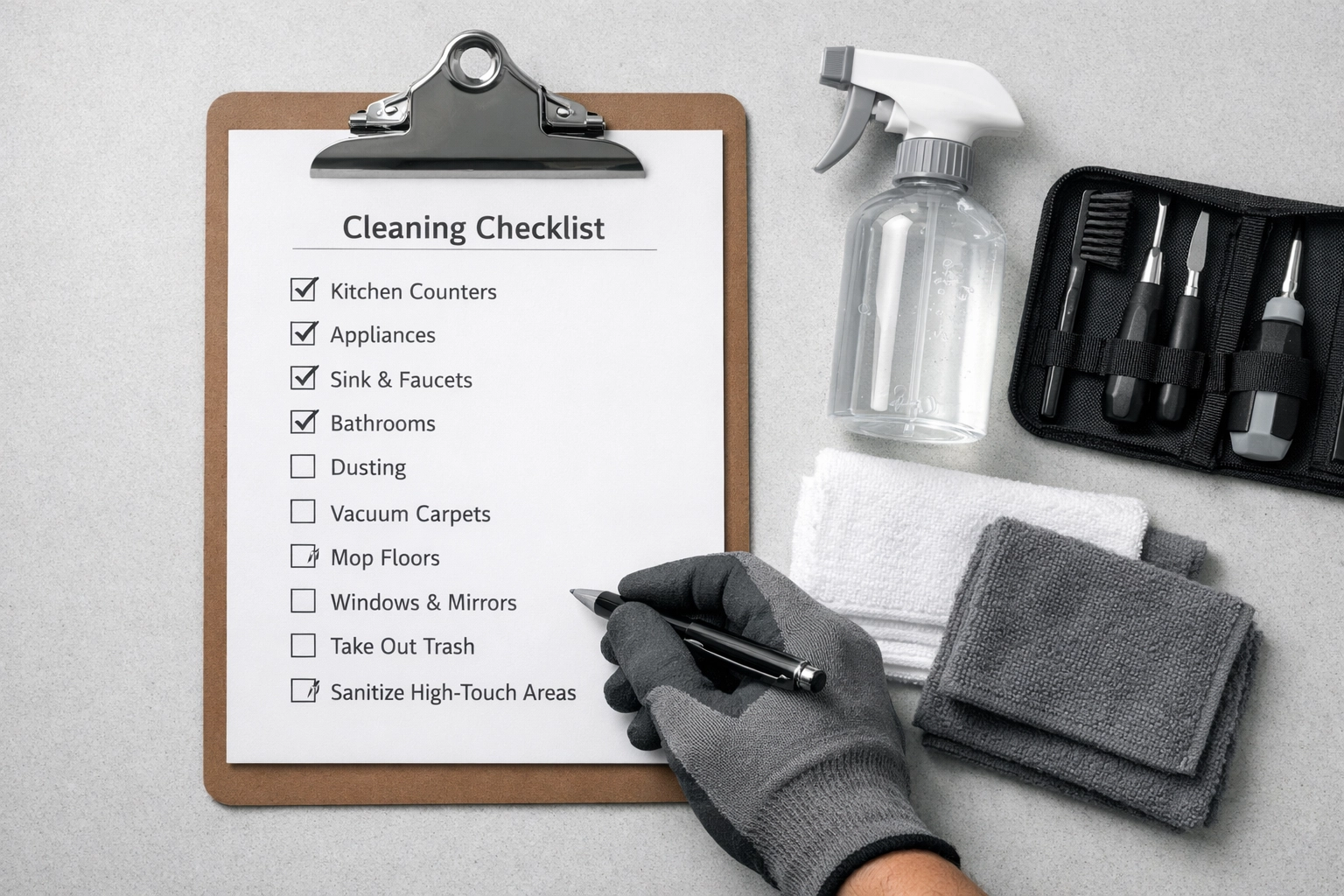
The Make-Ready Cleaning Secret
Here's where most turnovers slow down: inadequate cleaning. You think the unit is clean, list it, show it to prospects, and then they notice the grime in the shower grout or the dust on the ceiling fan. Now you're scrambling to re-clean, and you've just added 3-5 days to your timeline.
Professional make-ready cleaning isn't just about making things look clean – it's about making them move-in ready. That means:
- Cleaning inside all cabinets and drawers
- Scrubbing grout lines
- Degreasing range hoods
- Cleaning light fixtures
- Wiping down all switch plates and outlet covers
- Cleaning inside the oven, refrigerator, and dishwasher
If you're trying to save money by having maintenance staff handle cleaning, you're probably costing yourself more in extended vacancy time. Specialized cleaning teams can knock out a full apartment in 4-6 hours. Your maintenance team? Probably 2-3 days.
The Overlap Strategy
Want to really accelerate things? Start some turnover work before the tenant completely moves out (with proper notice and cooperation, of course).
If a tenant is moving out on the 30th but will be mostly packed and gone by the 28th, see if they'll allow your cleaning team to start work on bathrooms and kitchen on the 29th. Even getting one day ahead makes a huge difference in your overall timeline.

Streamline Your Process With Tech
Stop coordinating turnovers with phone calls and text messages. Use a project management tool where everyone can see:
- What needs to be done
- Who's responsible
- When it's scheduled
- When it's completed
This transparency keeps everyone accountable and prevents the "I thought you were doing that" delays that add days to your turnover.
The Quality Check That Saves Time
This sounds counterintuitive, but adding a thorough quality check actually speeds up your overall process. Before you list the unit, do a white-glove inspection yourself.
Check everything: open every cabinet, run every faucet, test every light switch, look for dust in corners, inspect the grout, smell for any odors.
Finding issues now takes 15 minutes. Finding them after a prospect tours? That's another 3-4 days added to your vacancy.
When to Upgrade vs. Turnover
Sometimes the fastest turnover is the one that includes strategic upgrades. Sounds expensive, but hear me out.
If your unit has builder-grade fixtures from 2008, you're going to spend time and money making it "clean enough." Or you could spend a bit more upfront to replace those dated fixtures with modern ones, command a higher rent, and attract better tenants faster.
Fresh paint, new cabinet hardware, updated light fixtures, and modern faucets can transform a unit in 1-2 days and often lead to faster leasing at higher rates. Do the math on your specific market, but don't assume the cheapest turnover is the fastest or most profitable.
The Real Speed Secret: Prevent Turnovers
The absolute fastest way to reduce turnover time? Have fewer turnovers. Every tenant who renews is a turnover you don't have to do.
Quick retention strategies:
- Respond to maintenance requests within 24 hours
- Offer small renewal incentives (even $50 off one month's rent is cheaper than vacancy)
- Keep communication open and professional
- Do preventative maintenance so tenants aren't dealing with emergency repairs
A tenant who stays another year is worth way more than the time you save on an efficient turnover.
Your 7-Day Action Plan
Ready to implement this? Here's your week-one game plan:
- Today: Create your standardized turnover checklist
- Tomorrow: Research and contact 3 make-ready cleaning companies
- Day 3: Review your current vendor list and identify gaps
- Day 4: Set up a project management system for tracking turnovers
- Day 5: Schedule pre-move-out inspections for any upcoming vacancies
- Day 6: Walk through your last turnover and identify what slowed it down
- Day 7: Document your new process and train your team
The difference between a 21-day turnover and a 10-day turnover? About $700-800 per unit in lost rent. Multiply that by however many turnovers you handle per year, and you're looking at serious money back in your pocket.
The property managers who win aren't the ones who work harder during turnovers – they're the ones who have systems that work smarter. Build your system once, and every turnover gets faster, more consistent, and more profitable.
Need help streamlining your turnover process with professional make-ready cleaning? Check out how we help property managers across the country get units rent-ready faster.