


Category: Property Management
Every day an apartment sits empty costs you money. Like, serious money. We're talking $50-100 per day in lost rent, sometimes more depending on your market. If your average turnover takes 14 days, that's up to $1,400 in lost revenue per unit. Multiply that across multiple turnovers per year, and you're looking at thousands of dollars disappearing into the vacancy black hole.
The good news? Most property managers can cut their turnover time in half by following a systematic approach. Here's the framework that's helping PMs across the country get units rent-ready faster without sacrificing quality.
Why Speed-to-Market Actually Matters
Before we dive into the framework, let's talk about why turnover speed isn't just about saving a few days. Every 24 hours that unit stays vacant, you're losing rental income you'll never get back. Unlike other business expenses, you can't make up for lost rent days.
But it's not just about the money (okay, it's mostly about the money). Fast turnovers also mean:
- Less time for vandalism or unauthorized entry
- Fewer carrying costs for utilities and maintenance
- Better resident satisfaction when moves are on schedule
- More competitive positioning in your market
- Improved team morale when processes run smoothly
Think of turnover time like an Uber ride. Nobody wants to wait around wondering when their driver will show up. Your prospective residents feel the same way about move-in dates.

Step 1: Pre-Turnover Inspection & Planning
Here's where most property managers lose time: they wait until move-out day to figure out what needs to happen. By then, you're already behind.
Start your turnover process 30 days before move-out. Schedule a pre-inspection with your current resident (if possible) or do a quick walkthrough during a routine maintenance visit. You're looking for:
- Wall damage that needs patching or painting
- Carpet stains or damage requiring replacement
- Appliance issues
- HVAC problems
- Plumbing leaks or concerns
Create your scope of work now, not later. Order any materials you'll need. If you need flooring replaced, get it ordered. Need a specific paint color? Make sure it's in stock. Bulk purchasing common supplies saves time and money.
The goal is simple: the moment that resident hands over the keys, your team should already know exactly what needs to happen and have everything ready to go.
Step 2: Dedicated Make-Ready Team Assignment
Stop asking your maintenance team to juggle turnovers with emergency repairs and routine maintenance. It doesn't work. When someone's water heater breaks, guess which job gets priority? (Hint: it's not your turnover.)
Designate specific people for turnover work. This doesn't mean you need to hire a whole new team. It means:
- Assigning one maintenance tech to focus exclusively on turnovers during peak season
- Partnering with a reliable make-ready cleaning company that specializes in apartment turnovers
- Creating a dedicated "turn team" schedule separate from your regular maintenance rotation
When someone focuses only on turnovers, they get faster. They know the checklist. They're not constantly context-switching. They develop a rhythm.
Think about it: if you had to switch between cooking, accounting, and car repair every hour, you'd be slower at all three. Your maintenance team is the same way.

Step 3: Trade Sequencing & Coordination
This is where most turnovers completely fall apart. Your maintenance team patches walls on Monday. Then the unit sits empty until the painter can come on Thursday. Then it sits again until Friday when the carpet cleaner shows up. Before you know it, a week has passed and you're only halfway done.
Proper trade sequencing means scheduling all vendors back-to-back with zero gaps. Here's the optimal order:
Day 1: Major repairs (plumbing, electrical, HVAC)
Day 2: Patch and prep (wall repairs, caulking, hardware replacement)
Day 3: Paint (entire unit)
Day 4-5: Flooring (carpet cleaning or replacement, floor refinishing)
Day 6: Deep cleaning (full make-ready clean)
Day 7: Final touches (blinds, fixtures, appliance cleaning)
Notice there are no gaps. The painter doesn't start until patching is done. The cleaners don't come until paint is dry. Everything flows.
Pre-book your vendors. Have standing relationships with reliable contractors who know your properties and can move quickly. Don't be scrambling to find a carpet cleaner on day 5.

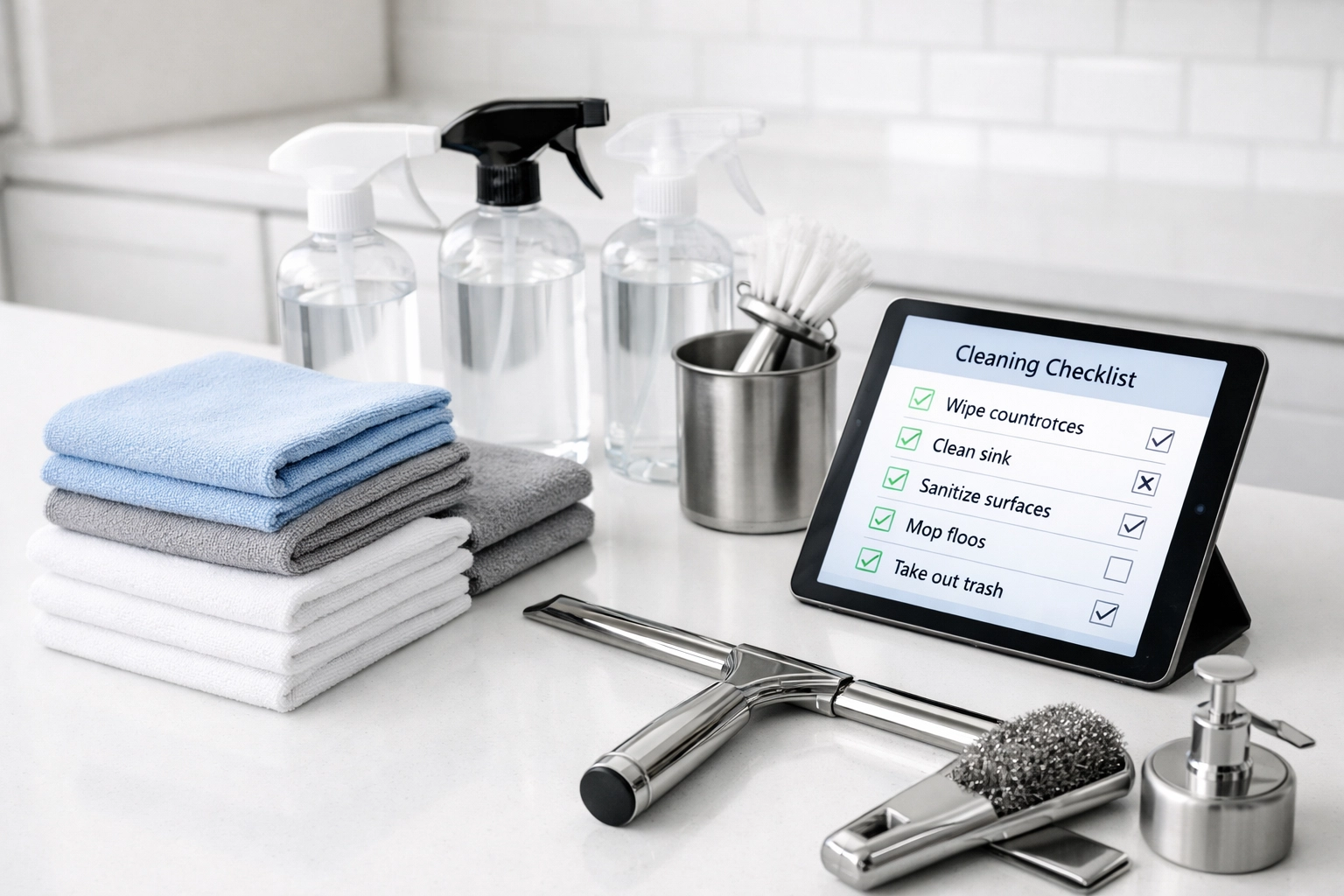
Step 4: Standardized Cleaning Checklist
Your make-ready clean needs to be the same quality every single time. That only happens with a standardized checklist that covers everything.
Your checklist should include:
Kitchen:
- Deep clean inside and behind all appliances
- Degrease range hood and exhaust fan
- Clean and sanitize countertops and backsplash
- Scrub sink and fixtures until they shine
- Clean inside all cabinets and drawers
Bathrooms:
- Remove all hard water stains and soap scum
- Clean and disinfect toilet inside and out
- Scrub tile grout and re-caulk if needed
- Polish all fixtures and mirrors
- Clean inside vanity cabinets
Living Areas:
- Dust all surfaces including baseboards and window sills
- Clean windows inside and out
- Vacuum and clean all flooring
- Wipe down light switches and outlets
- Clean closet shelves and rods
General:
- Replace HVAC filters
- Test all smoke detectors
- Check and replace light bulbs
- Clean light fixtures
- Remove all debris and trash
A professional make-ready cleaning company will have this dialed in. They'll use the same checklist every time, which means consistent results and no surprises.
Step 5: Final Walk-Through & Quality Check
Never skip the final walk-through. This is your last chance to catch issues before marketing the unit or handing keys to new residents.
Do your walk-through with your checklist in hand. Turn on every appliance. Run every faucet. Test every light switch. Open every cabinet door. Look for:
- Missed cleaning spots
- Paint touch-ups needed
- Items that weren't completed
- Damage that appeared during the turnover process
Take photos of the completed unit. This documents the condition and gives your leasing team great marketing photos for listing the unit.
If you find issues, address them immediately: don't put the unit on the market yet. It's faster to fix things now than to have a prospect walk through and see problems.
The Reality Check: What Takes Time
Even with this framework, some things just take time. Paint needs to dry. Carpet adhesive needs to cure. Some repairs require parts that take days to arrive.
The goal isn't to rush through quality work. It's to eliminate wasted time between tasks. Most turnovers don't take long because the work is slow: they take long because the unit sits empty waiting for the next phase to start.
Getting Started This Week
You don't need to overhaul your entire operation tomorrow. Start with one change:
Pick your next turnover and implement just the pre-inspection step. Schedule it 30 days out, create your scope of work, and order materials in advance. See how much smoother it goes.
Then add trade sequencing for the turnover after that. Build the system one piece at a time.
The property managers who master fast turnovers aren't doing anything magical. They're just being systematic. They're planning ahead. They're eliminating gaps. They're treating turnover time like the revenue killer it actually is.
Your next vacant unit is coming. The only question is whether you'll lose 14 days of rent or 7. The difference is having a framework and sticking to it.
Want help implementing a professional make-ready cleaning process? Visit MH JaniJournal to learn how we help property managers nationwide get units rent-ready faster with consistent, high-quality turnover cleaning.