


Every day a unit sits vacant, you're losing money. It's that simple.
If your average rent is $1,500/month, that's $50 per day you're not collecting. A turnover that takes 15 days instead of 7? That's $400 straight out of your pocket. Multiply that across multiple units, and you're looking at thousands in lost revenue every quarter.
The biggest culprit? Cleaning mistakes that seem minor but add days: sometimes weeks: to your turnover timeline.
Let's fix that.
Mistake #1: Skipping Photo Documentation
Here's what happens: Your new tenant moves in, lives there for a year, and moves out claiming the carpet stains were already there. Without proof, you're stuck eating the replacement cost.
The real cost: Beyond the security deposit headache, this mistake creates trust issues with incoming tenants. When prospects walk through and ask about existing damage, you have no paper trail. That uncertainty can kill a lease signing on the spot.
The fix: Before any cleaning starts, photograph everything. Scuff marks on walls. Carpet condition. Cabinet interiors. Those weird stains near the bathroom sink. Everything. Takes 15 minutes, saves you hundreds in disputes, and gives your cleaning crew a clear "before" benchmark to beat.

Mistake #2: Thinking Vacuuming = Clean Carpets
We get it. Professional carpet cleaning costs money. But here's the thing: so does replacing carpets every 3 years instead of every 7.
The real cost: Dirty carpets are the first thing prospects notice during showings. They extend vacancy because quality tenants walk away. And when you finally do place someone, they're often negotiating for lower rent because "the place needs work."
The fix: Budget for professional carpet cleaning in every turnover. If you're managing multiple units, negotiate a bulk rate with a reliable service. Want to save money? Include mandatory professional cleaning in your lease terms: tenant pays before move-out, provides receipt, or it comes from the deposit. Either way, those carpets get properly cleaned.
Mistake #3: Only Cleaning What You Can See
Your cleaning crew knocked it out in 4 hours. Everything looks great at first glance. Then your new tenant texts you three days later about the dusty ceiling fan, grimy light fixtures, and mysterious smell from the air vents.
The real cost: These callbacks eat up your time and damage your professional reputation. Worse, they give new tenants ammunition for maintenance complaints throughout their lease. First impressions matter, and "missed spots" during move-in set a bad precedent.
The fix: Create a checklist that includes the forgotten zones:
- Ceiling fans (top and bottom)
- Light fixtures and switch plates
- Inside cabinets and drawers
- Air vents and return grilles
- Window tracks and blinds
- Behind and under appliances
These areas take an extra hour but prevent those annoying day-three complaints.

Mistake #4: Baseboards? Who Looks at Baseboards?
Literally everyone looking at your property looks at baseboards. They're at eye level when prospects are checking outlet placement. They're what tenants see when they're envisioning their furniture layout.
Dirty baseboards and door frames scream "shortcuts were taken here."
The real cost: This is a showing-killer. When the baseboards are grimy, prospects assume everything else was half-cleaned too. It plants doubt. And doubt extends your days on market.
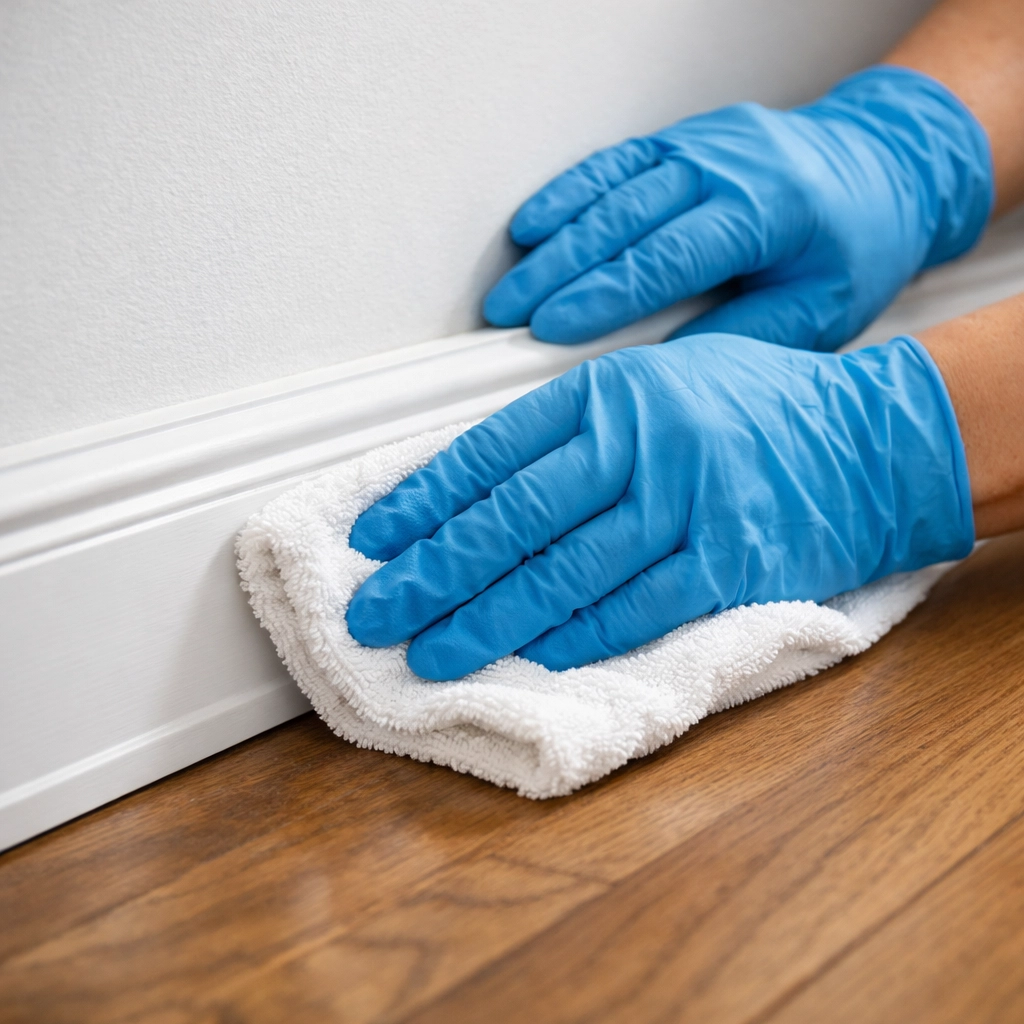
The fix: Add 30 minutes to your turnover cleaning for baseboard and door frame detail work. Use a damp microfiber cloth with warm water. Hit all baseboards, door frames, and window sills. This tiny time investment dramatically improves the unit's overall appearance and shows attention to detail.
Mistake #5: "We'll Deal with That Mold Later"
No. You won't. You'll deal with it now.
The real cost: Beyond the obvious health risks and legal liability, mold issues discovered after lease signing can void your agreement or force you into immediate remediation while the tenant is living there. That's a nightmare scenario that tanks your reputation and potentially triggers fair housing complaints.
The fix: Check every moisture-prone area during your initial walkthrough:
- Under sinks
- Around toilets and tubs
- Window seals
- AC units and drip pans
- Basement/crawl spaces
Found mold? Stop everything and remediate before any other work continues. This isn't optional. It's the foundation of a legally sound, safe turnover.

Mistake #6: The "Good Enough" Toilet Clean
Your cleaner scrubbed the bowl. Great. But what about the base? The hinges? The tank? The wall behind it?
The real cost: Bathrooms sell (or don't sell) apartments. A partially clean toilet gives the same impression as a dirty one: this unit wasn't really prepared for me.
The fix: Deep clean means deep clean. Bowl, seat, lid, hinges, base, tank, and the surrounding floor and walls. Toilets spray microscopic particles when flushed, so those surfaces need attention too. This is non-negotiable for quality turnovers.
Mistake #7: The Rainbow Paint Problem
You've got eggshell white in 3A, Swiss coffee in 3B, and some mystery beige in 3C because you found a deal on leftover paint three years ago.
The real cost: Every touch-up becomes a matching nightmare. Every turnover requires custom paint ordering. Your maintenance team wastes time hunting for the right can. And partial wall painting looks terrible because you can never quite match the color.
The fix: Pick one neutral paint color and stick with it across all units. Buy it in bulk. Store extra gallons in your maintenance area. Now every turnover is faster, every touch-up is cleaner, and your properties have a consistent, professional appearance.
The Speed-to-Market Formula
Here's what separates profitable turnovers from money pits: systemization.
Day 1: Complete walkthrough and photo documentation. Flag all repairs and cleaning needs. Order any parts or materials needed.
Day 2-3: Major repairs (plumbing, electrical, appliance replacement). These can't wait.
Day 4-5: Painting, minor repairs, and deep cleaning happen simultaneously with different crews.
Day 6-7: Final inspection, photos, and listing goes live.
Seven days. That's your target. Every day beyond that is $50+ in lost rent.
When to Call in the Pros
Here's the honest truth: Trying to save money by having your maintenance person handle turnover cleaning rarely works. They're great at fixing things. They're probably not great at deep cleaning to showing standards.
Professional cleaning teams know how to work fast and thorough. They have the equipment, the products, and the systems to turn a unit in hours, not days. And because they do this every day, they catch the details your team might miss.
The math is simple: If a professional crew costs $300 but saves you three vacancy days, you just made money. If your maintenance person saves you $200 but adds five days to turnover, you just lost $50.

The Real Takeaway
Every one of these mistakes has the same root cause: trying to save small money while losing big money.
A few hundred dollars spent on proper cleaning, documentation, and systems can save you thousands in extended vacancy, lost deposits, and tenant disputes. Your choice is simple: invest in turnover excellence now, or pay for shortcuts later.
The properties that stay at 95%+ occupancy aren't doing anything magical. They're just avoiding these seven mistakes consistently, every single turnover.
Ready to cut your turnover time in half? Start with a comprehensive checklist, budget for professionals where it matters, and treat every turnover like you're preparing for the most selective tenant you've ever met.
Because guess what? You probably are.
Looking for professional turnover cleaning that keeps your properties moving? Learn more about our nationwide commercial cleaning services at MH JaniJournal.