


Let's talk real numbers. Every day a unit sits empty costs you money. The average property loses between $50-$150 per day in vacancy costs: and that's before you factor in the maintenance team's time, utilities, and the pressure from ownership to get that unit leased.
Here's the thing: most turnovers take way longer than they should. Not because your team isn't working hard, but because they're working inefficiently.
After managing hundreds of turnovers across commercial properties, I've seen what separates the pros from everyone else. It's not about working faster: it's about working smarter. These five cleaning hacks will shave hours off your turnover time and get units market-ready faster.
Hack #1: Build Your Bulletproof Turnover Checklist
You know that sinking feeling when you get a call that the new tenant found a dirty baseboard or a grimy shower door? It happens because someone's memory failed, not because they didn't care.
Stop relying on memory. Create a room-by-room checklist that covers everything, and I mean everything.

Break it down by area:
Living Areas: Dust ceiling fans and light fixtures, wipe down baseboards, clean windows inside and out, vacuum or mop floors, check outlets and switches for grime.
Kitchen: Deep clean appliances (inside the oven, behind the fridge), scrub cabinet interiors, wipe down all surfaces including the tops of cabinets, clean sink and faucet until they shine, check for any lingering food odors.
Bathrooms: Disinfect toilet, tub, and shower, scrub tile grout, polish mirrors and fixtures, clean exhaust fan, replace any worn caulking, ensure drains flow freely.
Floors: Vacuum carpets thoroughly (consider steam cleaning if needed), sweep and mop hard floors, address any scuff marks on walls near floor level.
The beauty of a solid checklist? Your team doesn't have to think about what comes next. They just execute. This consistency means every unit gets the same attention to detail, whether it's your lead cleaner or a new hire on the job.
Plus, you can hand this checklist to any cleaning vendor and know exactly what you're paying for. No more "I thought you were going to do that" conversations.
Hack #2: The Cleaning Caddy That Saves Hours
Here's a simple truth: if your cleaning crew spends 15 minutes per unit walking back and forth to grab supplies, that's 15 minutes of lost productivity. Multiply that across 20 units in a month, and you've wasted 5 hours of labor.
The solution? A fully stocked, portable cleaning caddy for each unit.
Load it with:
- Multiple microfiber cloths (color-coded for different areas)
- All-purpose cleaner
- Disinfectant spray
- Glass cleaner
- Scrub brushes and sponges
- Rubber gloves
- Trash bags
- Paper towels
Your team walks into the unit once with everything they need. No trips to the supply closet. No searching for the right product. Just straight cleaning from start to finish.
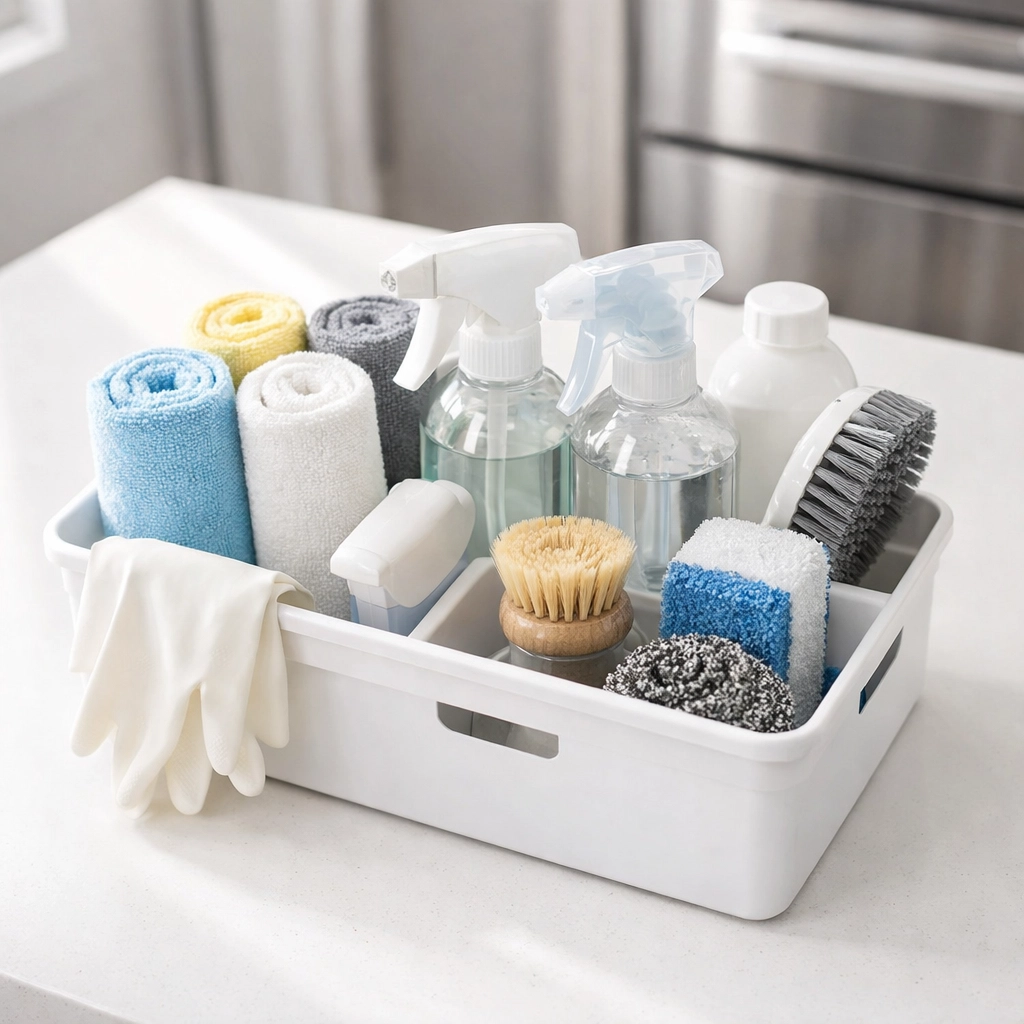
Pro tip: Keep backup caddies ready to go. When one's in use, another is being restocked. This assembly-line approach means you never have downtime between turnovers.
Hack #3: Top-to-Bottom, Every Single Time
Random cleaning patterns are the enemy of efficiency. When your team bounces around a unit: kitchen to bedroom to bathroom back to kitchen: they waste time and often miss spots.
Train everyone on the same systematic approach: always clean from top to bottom, and never backtrack.
Start by walking into the unit and immediately stripping any linens. Toss them in the washer if you're handling laundry, or bag them for pickup. Getting this going first means laundry's running while you clean everything else.
Then work this sequence:
- Ceilings and upper walls: Dust ceiling fans, light fixtures, air vents, and the tops of door frames
- Mid-level surfaces: Wipe counters, clean appliances, polish mirrors and windows
- Low surfaces: Baseboards, cabinet bottoms, lower walls
- Floors last: Always, always clean floors last because all the dirt and dust from above settles down
Work room by room. Finish one space completely before moving to the next. This prevents the mental drain of "what should I do next?" and keeps momentum high.
The kitchen and bathrooms should get priority attention since these spaces take the longest and matter most to prospective tenants.
Hack #4: High-Touch Surfaces Are Your Priority
Not all surfaces are created equal. When a prospective tenant walks through your property, they're unconsciously checking specific spots. These high-touch areas tell them whether the unit is truly clean or just looks clean.
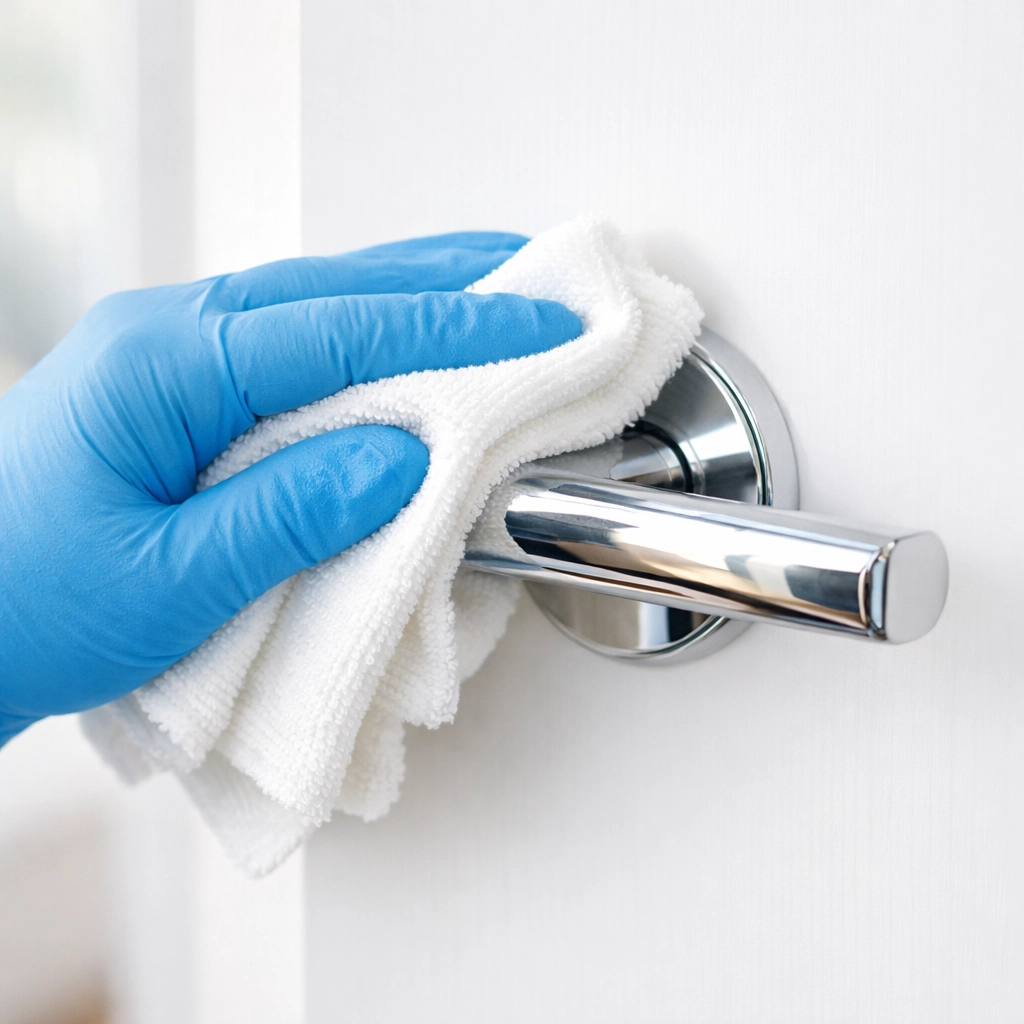
Focus extra attention on:
- Door handles and knobs (including closets and cabinets)
- Light switches (these collect grime fast)
- Faucets and fixtures (water spots are dead giveaways)
- Cabinet handles
- Countertops (especially near sinks and cooking areas)
- Appliance handles (refrigerator, oven, dishwasher)
- Thermostat controls
- Remote controls (if you provide them)
Here's why this matters for your bottom line: these are the exact spots prospective tenants will touch during showings. If a door handle is sticky or a light switch is grimy, they notice. It creates doubt about the overall cleanliness and maintenance of the property.
A unit might be 95% clean, but if those high-touch surfaces are neglected, it reads as dirty. Meanwhile, a unit that's 85% clean but has spotless high-touch surfaces reads as move-in ready.
Priority cleaning isn't about cutting corners: it's about being strategic with your time and attention.
Hack #5: The Right Tools Cut Time in Half
Look, I get it. Property management budgets are tight, and every dollar matters. But the right cleaning tools aren't an expense: they're an investment that pays for itself in reduced turnover time.
Microfiber cloths are non-negotiable. They capture dirt and dust instead of pushing it around like paper towels do. Plus, they're reusable. Buy a dozen, rotate them through the wash, and they'll last for months.
Handheld steam cleaners are game-changers for bathrooms and kitchens. They sanitize without harsh chemicals and cut through soap scum and grease in seconds. What used to take 20 minutes of scrubbing now takes 5.
Robot vacuums might seem excessive, but hear me out. Set one running in the bedroom while your team tackles the bathroom. By the time they're done, the floors are vacuumed. It's like having an extra set of hands.
Extension pole cleaners let you reach ceiling fans and high windows without a ladder. No setup time, no safety concerns, just faster cleaning.
The math is simple: if better tools save you 30 minutes per turnover, and you're paying $20/hour for labor, that's $10 saved per unit. Do 15 turnovers a month, and you've saved $150 in labor costs alone. Most of these tools pay for themselves in the first month.
The Real Cost of Slow Turnovers
Let's circle back to why all of this matters. Speed-to-market is everything in property management. The difference between a 7-day turnover and a 3-day turnover is real money:
- 4 extra days of vacancy at $100/day = $400 lost revenue
- Rushed maintenance because cleaning took too long = corners cut elsewhere
- Frustrated ownership wondering why units sit empty
- Your leasing team unable to show available units to hot prospects
When you streamline your cleaning process, everything else gets easier. Maintenance has more time for repairs. Leasing has more ready-to-show units. Ownership sees faster lease-ups and better NOI.
These five hacks aren't revolutionary: they're just smart, systematic approaches that eliminate wasted time and effort. Implement even two or three of them, and you'll see the difference in your next turnover cycle.
Your competition is fighting for the same tenants. The property that's clean, ready, and available first wins. Make sure that's yours.
Need help getting your turnover process dialed in? Check out our commercial cleaning solutions designed specifically for property managers who refuse to leave money on the table.