


Category: Property Managers
Every day an apartment sits empty costs you money. Like, real money. We're talking $50-$150 per day in lost rent, depending on your market. A unit that takes 14 days to turn? That's potentially $2,100 walking out the door before your new tenant even gets the keys.
The good news? Most property managers are losing days in their turnover process that they don't need to lose. And it usually comes down to how they handle the make-ready cleaning phase.
I've talked to property managers running portfolios from 20 units to 2,000+ units, and the ones crushing their speed-to-market numbers all do these five things. No fancy equipment required. Just smarter systems.
Hack #1: The "Top-to-Bottom in Zones" Method
Here's what kills turnover time: your cleaning crew bouncing around the unit randomly. Bathroom, then kitchen, back to bathroom because they forgot something, then living room, back to kitchen.
All that backtracking adds up.
The zone method is stupid simple: divide every unit into four zones (typically bathroom, kitchen, bedrooms, living areas). Assign one person per zone if you have a crew, or tackle one complete zone at a time if you're solo.
The key? Each zone gets completed 100% before anyone moves to the next one. Top to bottom. Ceiling vents and light fixtures down to baseboards and floors. No jumping around.
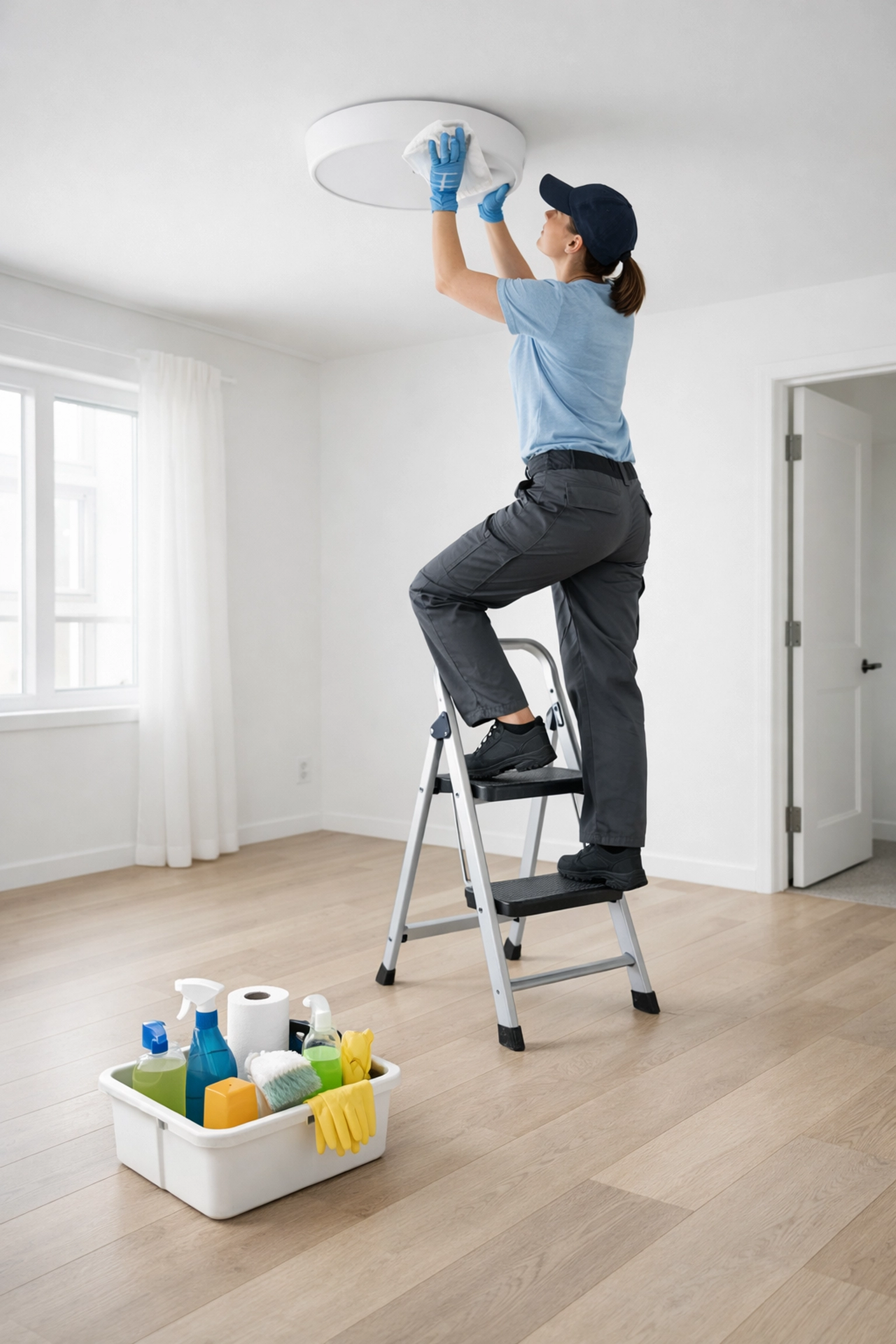
One property manager in Chicago told me this single change cut her average cleaning time from 6 hours to 3.5 hours per unit. Same crew. Same apartments. Just better sequencing.
The reason it works? Your brain isn't constantly switching contexts, and you're not wasting physical steps retracing your path through the unit.
Hack #2: Pre-Kit Your Cleaning Caddies by Room Type
This sounds basic, but most cleaning crews waste 20-30 minutes per unit hunting for the right products and tools.
Set up dedicated caddies:
- Kitchen caddy: degreaser, stainless steel polish, oven cleaner, scrub brushes
- Bathroom caddy: tile cleaner, toilet bowl cleaner, glass cleaner, grout brush
- General caddy: all-purpose cleaner, microfiber cloths, dusting tools
Everything your team needs for that room lives in that caddy. No more "where's the degreaser?" or running back to the supply closet five times.
Better yet? Use a caddy with compartments so small items don't get buried. Your crew shouldn't spend turnover time playing hide-and-seek with scrub brushes.
Pro tip: put a laminated checklist on the inside lid of each caddy showing exactly what should be in there. Makes restocking brain-dead simple.
Hack #3: The "Two-Pass" Floor System
Here's a time-suck nobody talks about: cleaning the floors, then walking across them during the rest of the turnover, then having to clean them again for move-in.
The two-pass system fixes this.
First pass (during turnover): Get the floors clean enough to work on. Vacuum, sweep, basic mop. This happens early in the process while you're still doing repairs, painting touch-ups, whatever.
Second pass (final 90 minutes): Complete deep clean and final polish. This is your move-in ready pass. And here's the key, once this happens, the unit is DONE. No one goes back in except to do the final walkthrough.
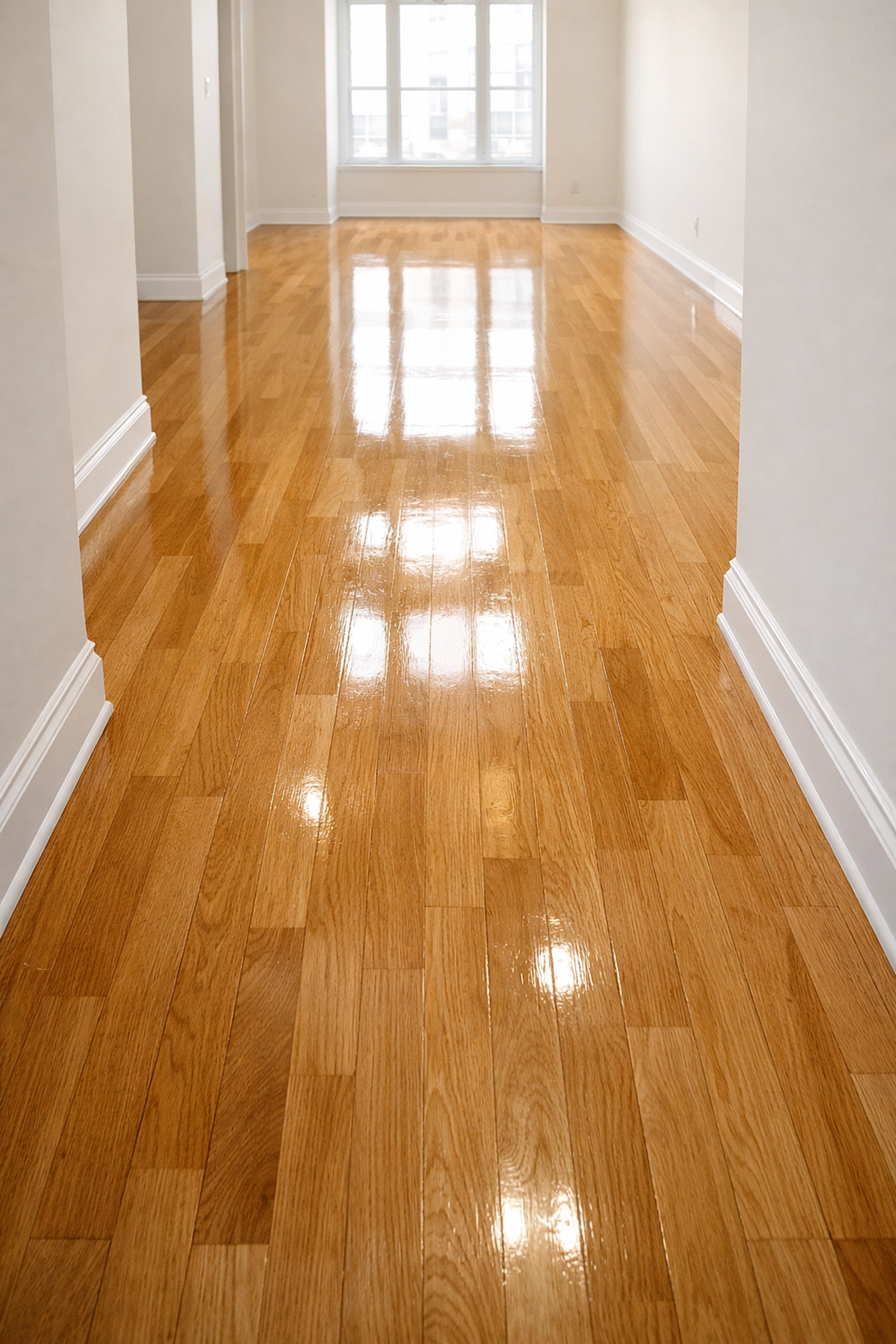
This means coordinating your vendors and maintenance team to finish everything before that second floor pass. But when you nail the timing, you eliminate redundant work and that frustrating "wait, someone tracked dirt through the living room" moment.
Hack #4: Speed-Clean Appliances with the "Heat and Steam" Trick
Ovens and microwaves can eat up an hour of turnover time if they're crusty. Here's what property managers who run tight turnovers do:
For ovens: spray with cleaner, turn the oven to 200°F for exactly 10 minutes, turn it off, let it sit for 5 more minutes. The heat activates the cleaner and loosens everything. When you wipe it down, the gunk comes off in half the time.
For microwaves: bowl of water with lemon or vinegar, microwave on high for 3-5 minutes. The steam does the work. Then just wipe down the interior, everything comes off easily.
For refrigerators: if they're not super dirty, hit them with a solution of warm water and a few drops of dish soap. For tough spots, a magic eraser works wonders and doesn't require heavy scrubbing.
This isn't revolutionary science. It's just using basic chemistry (heat, steam, dwell time) to do the heavy lifting instead of your elbow grease.
The time savings? Instead of scrubbing an oven for 30-40 minutes, you're spending maybe 15 minutes total, and most of that is passive waiting time you can use to clean something else.
Hack #5: Create a "Last 30 Minutes" Punch List
This is the one that separates good turnovers from great ones.
In the final 30 minutes before a unit is considered move-in ready, your team should be running through a specific punch list that hits the stuff tenants notice first:
- Wipe down all door handles and light switches
- Check inside all cabinets and drawers (crumbs love to hide there)
- Clean mirrors and glass one final time
- Make sure bathroom grout lines are clean
- Remove any cleaning product residue from counters
- Check for cobwebs in corners
- Confirm all light bulbs work
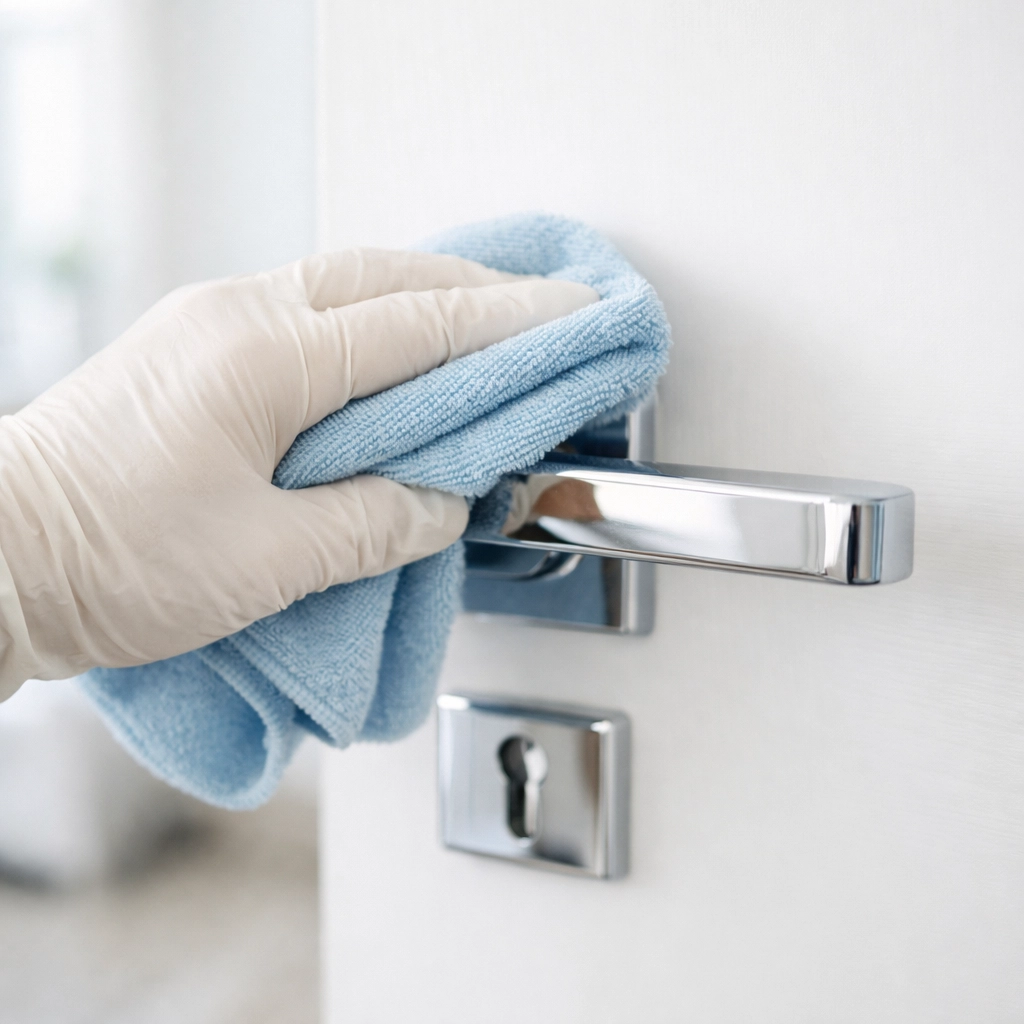
Why does this matter? Because these are the things your showing agent or new tenant will see within the first 60 seconds of walking through the door. A unit can be 95% clean, but if the door handles are sticky or there's streaks on the bathroom mirror, it reads as "not quite ready."
This punch list takes 20-30 minutes max, but it's the difference between "this is clean" and "wow, this is REALLY clean."
The Real Secret: It's About Systems, Not Sweat
None of these hacks require special equipment or some secret cleaning product that costs $200 a bottle.
What they require is thinking about your turnover process as a system that can be optimized, not just a checklist that needs to get done.
The property managers who consistently turn units in 5-7 days instead of 14-21 days aren't working harder. They're working smarter. They've eliminated the wasted motion, the redundant tasks, and the "we forgot to do this so now we have to go back" moments.
And here's the thing about cutting your turnover time in half: it's not just about those lost rent days (though yeah, that's huge). It's about your reputation in the market. When you can promise a lease start date and actually hit it, word gets around. Your renewal rates go up because tenants trust you. Your occupancy rates stay higher because you're not scrambling to fill units.
The math is simple: faster turnovers = less vacancy = more revenue = more competitive property.
Getting Started Tomorrow
Pick one of these hacks and implement it on your next turnover. Just one.
The zone method is probably the easiest place to start because it doesn't require buying anything or changing your supplies: just changing how your team moves through the unit.
Once you see the time savings on that first unit, the other hacks become a lot easier to commit to.
Your vacant units are costing you money right now. The faster you get them rent-ready, the faster that money starts flowing back in.
If your current cleaning process isn't getting you where you need to be, or you're looking for a team that already uses these systems, check out what we do. We work with property managers nationwide who need reliable, fast turnovers that don't sacrifice quality.
But even if you're handling it in-house, these five hacks will get you moving in the right direction. Start with one. Measure your results. Then add the next one.
Speed to market isn't magic. It's just better systems.