

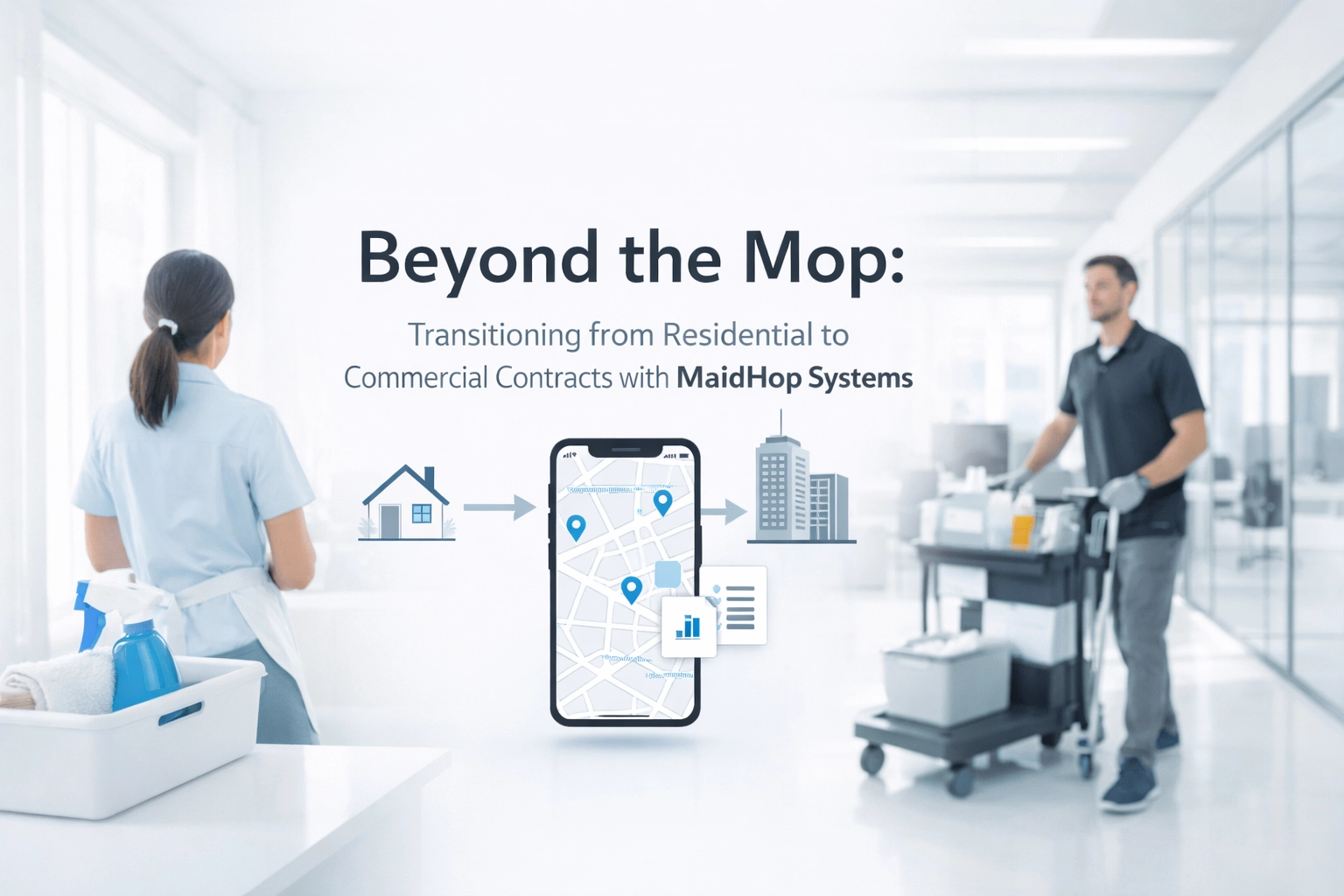
You've built a solid residential cleaning business. Your clients trust you, your team shows up on time, and the reviews keep rolling in. But lately, you've been eyeing those commercial contracts, office buildings, retail spaces, property management accounts, and wondering if it's time to level up.
Here's the truth: transitioning from residential to commercial cleaning isn't just about bigger buildings and longer hours. It's a strategic shift that requires new systems, different pricing models, and a completely different approach to client relationships. The good news? MaidHop Systems is designed to support exactly this kind of growth.
Let's break down what it actually takes to make the jump, and how to do it without losing your shirt.
Why Commercial Contracts Change Everything
Residential cleaning and commercial cleaning might seem like cousins, but they're more like distant relatives who only see each other at weddings.
Commercial work operates on a different clock. Most businesses want their spaces cleaned after hours or on weekends, which means your team's schedule flips upside down. No more 9-to-5 shifts. You're looking at evening crews, overnight teams, and weekend rotations.
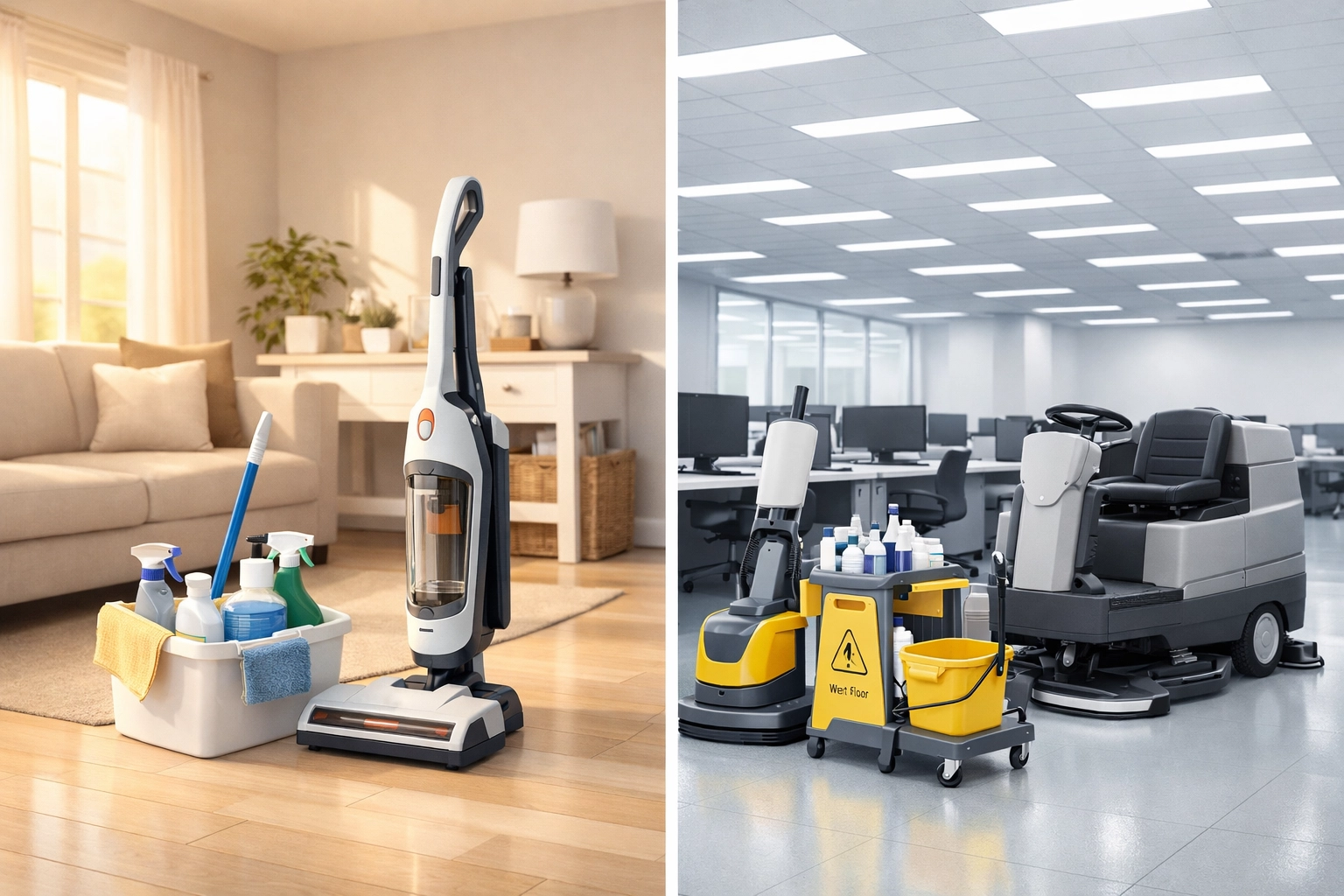
The scope is broader. Residential clients care about kitchens, bathrooms, and living spaces. Commercial clients need floor care, restroom maintenance, high-touch surface disinfection, trash removal, and sometimes specialized services like carpet cleaning or window washing. You're not just cleaning, you're maintaining a facility.
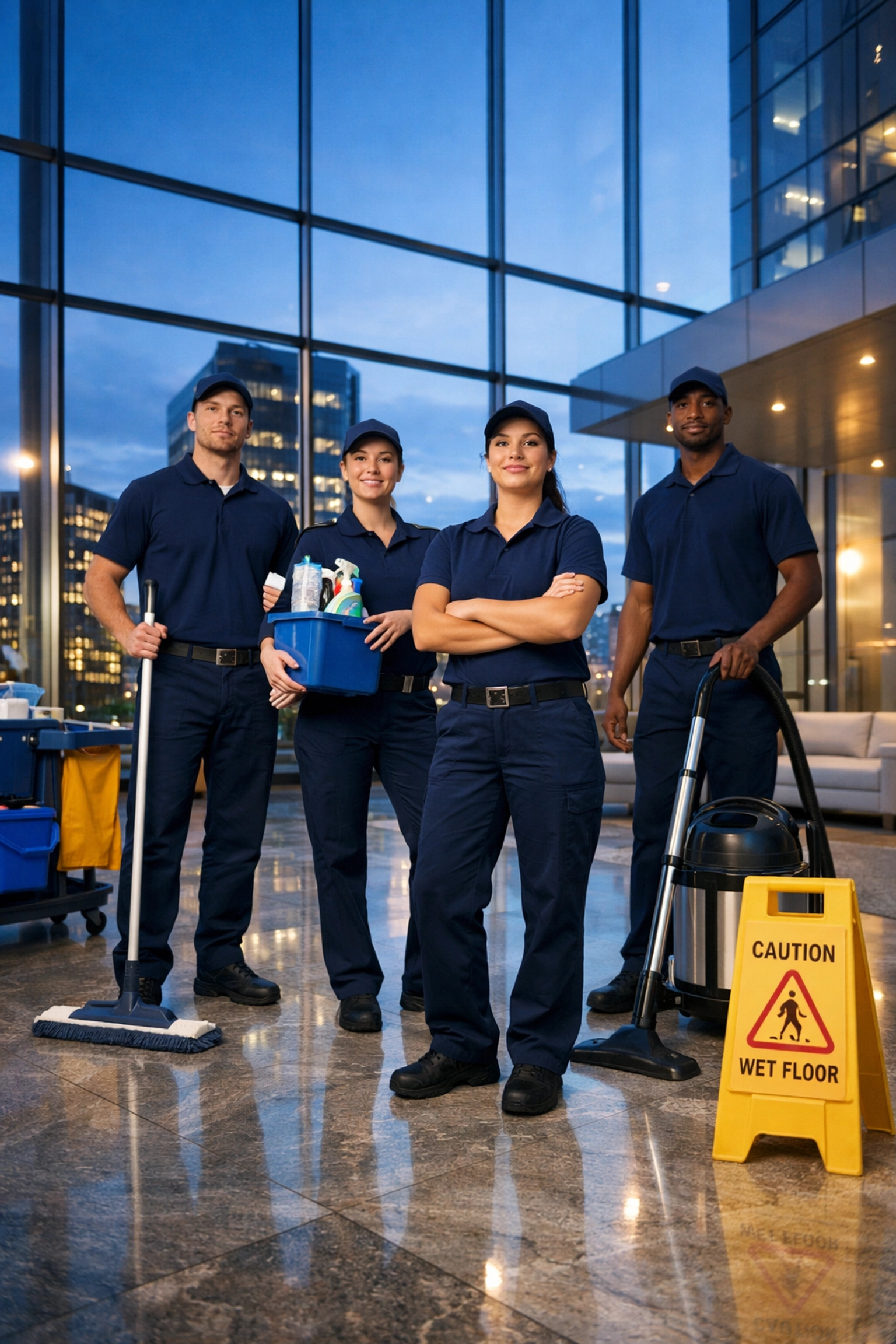
Quality standards are stricter. A missed spot in a home is annoying. A missed spot in a medical office or retail space? That's a contract violation. Commercial clients often have detailed checklists, inspection protocols, and quality metrics built into their agreements.
And here's the kicker: commercial contracts require specific licenses and certifications depending on your market. Some states demand bonding, insurance minimums that dwarf residential coverage, and specialized training for handling certain chemicals or equipment.
But the payoff? Commercial contracts mean recurring revenue, larger ticket sizes, and relationships with decision-makers who control multiple properties. One property manager can become a gateway to ten buildings. One facility manager can refer you to three other companies in their network.
The Operational Shift You Can't Ignore
Making the leap to commercial isn't just about saying "yes" to bigger jobs. It requires rethinking your entire operation.
Your pricing model changes. Residential cleaning is often priced per visit or per room. Commercial work? It's based on square footage, frequency, and scope of work. A 5,000-square-foot office might get three cleanings per week, with pricing broken down by each service line, trash removal, floor care, restroom sanitation, and so on.
You need to understand your costs per square foot, your labor efficiency rates, and how to build profit margins into multi-year contracts. Underbid a commercial job, and you're stuck losing money for 12-36 months.
Your team needs retraining. Residential cleaners are trained to work quickly and independently in homes. Commercial cleaners need to operate as part of a coordinated crew, follow facility-specific protocols, and often work around security systems, locked areas, and business operations.
MaidHop's platform connects over 600 vetted professionals nationwide, but the transition to commercial means you need to vet for different skills, floor machine operation, chemical handling certifications, and the ability to work unsupervised in large spaces.
Your client communication shifts. Residential clients might text you about rescheduling or leaving a key. Commercial clients expect formal invoicing, documented service reports, and regular check-ins with facility managers. You're no longer a service provider, you're a vendor partner.
This is where MaidHop's systems become critical. The platform isn't just a booking tool, it's built to manage recurring commercial contracts, track service completion, and maintain the kind of documentation that commercial clients demand.
How MaidHop Systems Support the Transition
MaidHop has already cleaned over 14,000 properties nationwide, serving both residential and commercial clients. But what makes the system valuable for operators making the jump to commercial is how it handles the complexity of B2B relationships.
Property manager connections. MaidHop explicitly serves real estate professionals and property managers with move-in/move-out cleanings and ongoing maintenance. That's your entry point. Property managers don't just need one-time cleanings, they need reliable partners who can handle tenant turnovers, regular maintenance, and emergency cleanups across multiple units or buildings.
Start by targeting move-in/move-out work through MaidHop's network. Prove your reliability. Then pitch ongoing contracts for the entire portfolio.
Nationwide reach with local execution. Because MaidHop operates across the country, you can use the platform to test commercial services in new markets without building an entirely new client base from scratch. If you're serving residential clients in three cities, you can start offering commercial services to property managers in those same markets through the existing network.
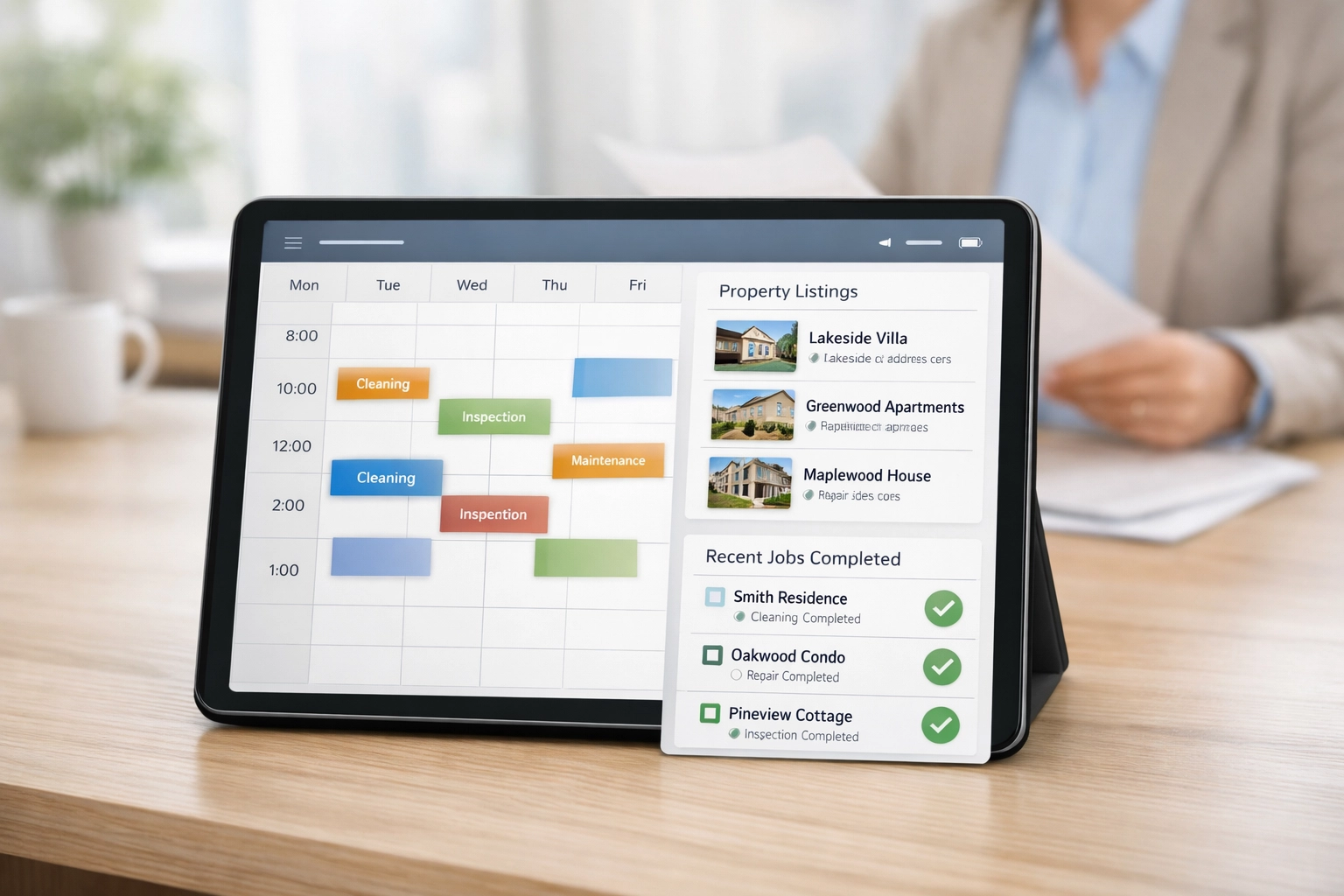
Standardized processes. One of the biggest challenges in commercial work is maintaining consistency across multiple sites and crews. MaidHop's platform helps you document service standards, track completion, and ensure that every location gets the same level of attention, critical when you're managing ten office buildings instead of ten homes.
Bidding, Pricing, and Finding Your First Commercial Clients
Let's get tactical. How do you actually land commercial contracts?
Start with your existing network. If you're already working with property managers through MaidHop's residential services, that's your warmest lead. Ask about their commercial needs, office cleaning for their own business, maintenance for retail tenants, or common area cleaning for apartment complexes.
Target Request for Proposals (RFPs). Commercial clients, especially government entities and large institutions, publish RFPs for janitorial services. Platforms like SAM.gov (for government contracts), BidNet, and GovWin are goldmines for commercial cleaning opportunities. Yes, the bidding process is more formal, but the contracts are bigger and longer.
Clarify your target market. Don't try to serve everyone. Decide whether you're going after offices, warehouses, retail, medical facilities, or educational institutions. Each has different needs, different margins, and different certifications required. Pick one or two verticals and become known for them.
Price aggressively: but not recklessly. Your first few commercial contracts might not be your most profitable, and that's okay. You're buying experience, building case studies, and proving you can operate at scale. But don't bid so low that you lose money. A good rule of thumb: calculate your true cost per square foot (labor + supplies + overhead), then add 20-30% margin for commercial work.

The Roadmap: Your First 90 Days
Here's how to actually make the transition without blowing up your residential business:
Days 1-30: Assess and Prepare
- Get your commercial insurance and bonding in place
- Identify 2-3 commercial verticals you want to target
- Retrain your best residential team members on commercial protocols
- Set up your pricing calculator for square footage-based quotes
Days 31-60: Test and Learn
- Reach out to property managers in your MaidHop network
- Bid on 5-10 small commercial jobs to test your systems
- Document everything: what works, what doesn't, where you're losing time
- Adjust your pricing based on real data
Days 61-90: Scale and Systematize
- Land 2-3 recurring commercial contracts
- Build out your commercial crew (separate from residential if possible)
- Create standardized checklists and quality control processes
- Start building your case studies and commercial portfolio
The Bottom Line
Transitioning from residential to commercial cleaning isn't for everyone. It requires more capital, more infrastructure, and a willingness to operate differently. But for operators ready to scale, commercial contracts represent predictable revenue, stronger margins, and relationships with decision-makers who control entire portfolios.
MaidHop Systems gives you the foundation: vetted professionals, property manager connections, and a platform designed for recurring B2B work. The rest is execution.
Start small. Test your systems. Learn the game. And in 12 months, you might be running a seven-figure commercial operation that started with a single property manager referral.
The mop is just the tool. The system is what scales.