

Turnover cleaning can make or break your property management operation. In Chicago, Indianapolis, and Detroit, where rental markets move fast and competition is fierce, a botched turnover means lost revenue, frustrated tenants, and inspection headaches.
We've seen property managers across the Midwest struggle with the same preventable mistakes: and we've also watched the smart ones turn their turnover process into a competitive advantage. Here's what's tripping up managers in our region, and how the best operators are fixing it.
Mistake #1: Booking Cleaning at the Last Minute
You know the drill. Lease ends Friday. You call a cleaner on Wednesday. Cross your fingers and hope for the best.
This is the biggest mistake we see in the Midwest market: and it creates a domino effect of problems. Rushed work means missed spots. Scheduling conflicts mean you might not get anyone at all. And there's zero buffer for re-cleaning if something goes wrong.
The Fix: Chicago and Indianapolis property managers who run tight operations book their turnover cleanings 10-14 days before move-out. This gives them flexibility to handle urgent fixes, schedule carpet or window treatments, and ensure the property is inspection-ready without the panic.
Think of it as insurance. You're not just buying a cleaning: you're buying time to handle whatever comes up.
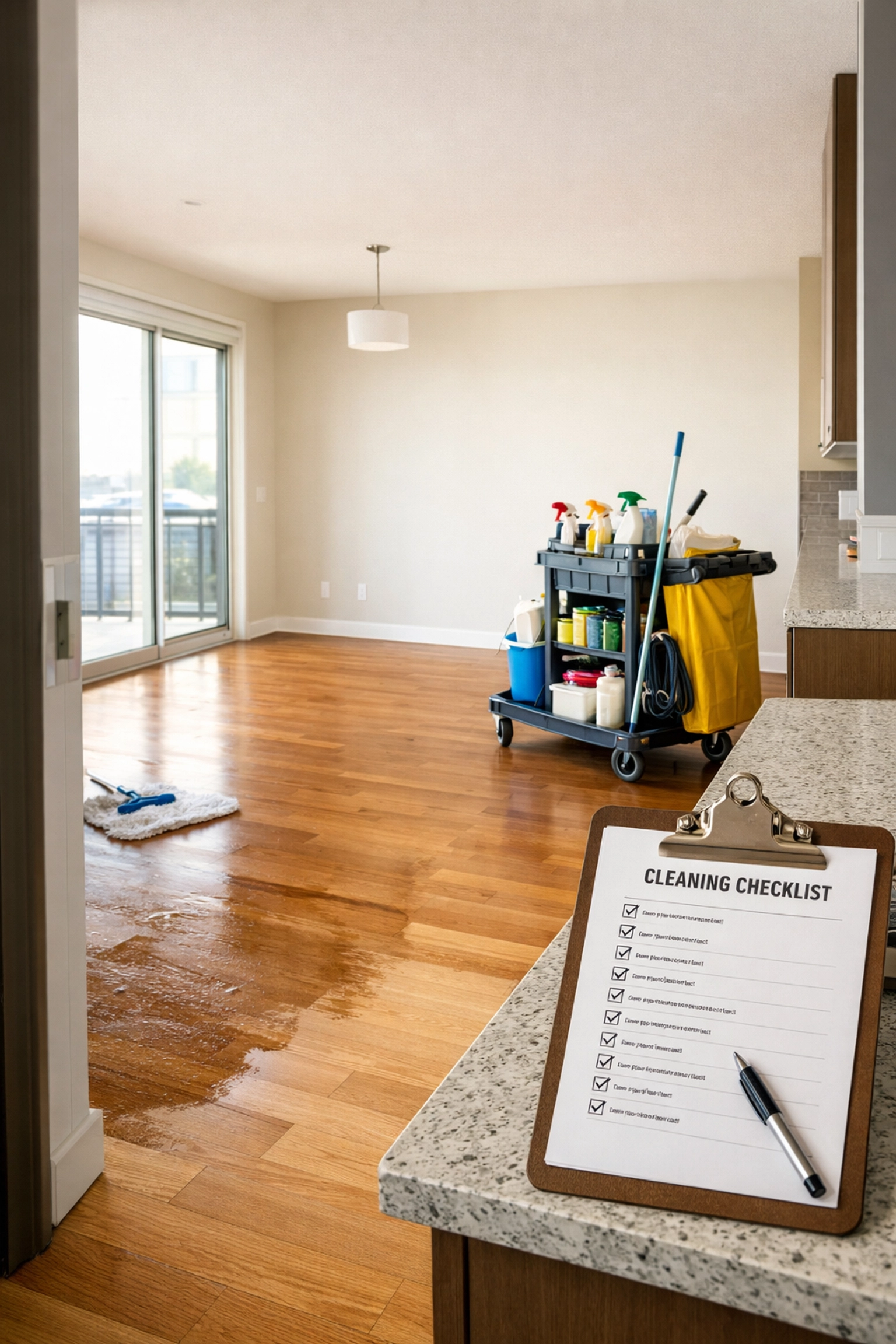
Mistake #2: Skipping Professional Cleaners to Save Money
We get it. Budgets are tight. Why pay a pro when your maintenance guy can run a vacuum and wipe down counters?
Here's why: because failed inspections cost more than professional cleaning. Because DIY turnover work takes twice as long. Because your maintenance team has actual maintenance to handle.
The Fix: Detroit and Chicago operators are treating professional turnover cleaning as a non-negotiable line item. They're working with vetted cleaning teams who understand inspection standards, know what property managers need, and deliver consistent results.
The smart play? Build relationships with 2-3 reliable cleaning services in your area. You get priority scheduling, consistent quality, and someone who actually shows up when you need them.
Mistake #3: Ignoring Special Requirements
Not every turnover is the same. Some units need carpet deep-cleaning. Others need oven degreasing or pressure-washed patios. If you're booking a "basic turnover clean" for every property, you're setting yourself up for failure.
The Fix: Midwest property managers are creating property-specific turnover checklists. Before booking cleaning, they walk the unit (or review photos) and flag any special needs:
- Carpet stains or odors that need professional treatment
- Built-up grease in kitchen appliances
- Windows that haven't been cleaned in years
- Outdoor spaces that need power washing
This isn't about being picky. It's about making sure the cleaner knows exactly what you need: and you're not scrambling to fix missed items two days before showing the unit.
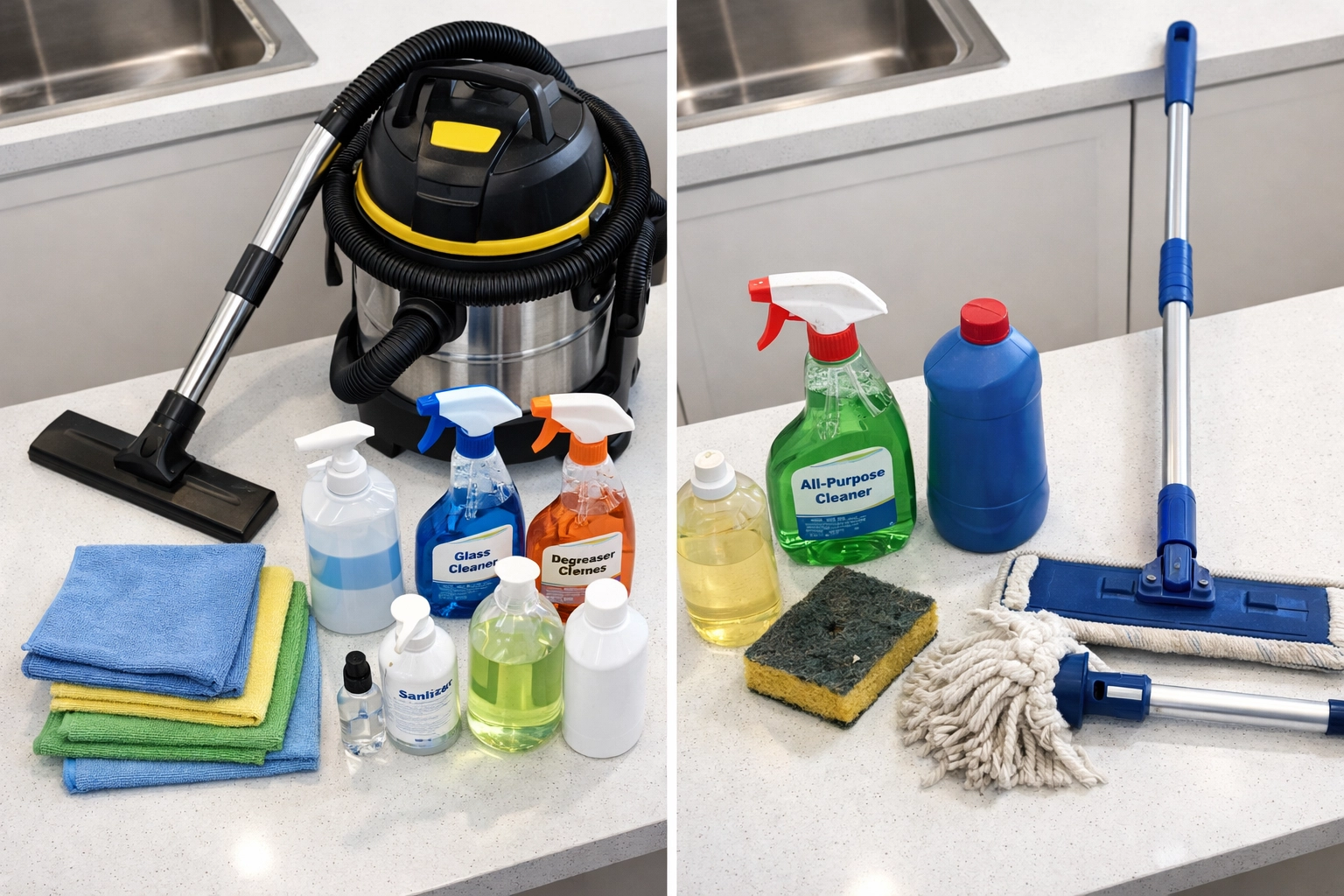
Mistake #4: Not Communicating Clear Instructions
Handing a cleaner the keys and saying "just make it look nice" is a recipe for disappointment. Your version of "clean" and their version might be completely different.
Without a detailed checklist, cleaners guess at priorities. They might spend 30 minutes scrubbing grout while completely missing dusty baseboards and greasy cabinet fronts.
The Fix: Indianapolis property managers are using detailed turnover checklists that leave nothing to interpretation. These aren't generic templates: they're customized lists that include:
- Specific areas that must be addressed (inside drawers, behind appliances, window tracks)
- Standards for what "clean" means (no streaks, no dust, no visible residue)
- Special instructions for problem areas in each unit
Pro tip: Take photos of what you expect the finished unit to look like. Visual standards eliminate confusion and set clear expectations.
Mistake #5: Poor Timing with Inspection Dates
Clean too early? Dust settles and the property looks neglected by inspection day. Clean too late? You're showing a unit that's not ready and losing prospects.
This timing mistake is especially costly in Chicago's fast-moving rental market, where qualified tenants don't wait around for you to get your act together.
The Fix: Schedule turnover cleaning 24-48 hours before showings or inspections. This keeps the property fresh but doesn't leave time for dust accumulation or new issues to pop up.
Midwest property managers are also building cleaning schedules backward from their inspection dates. If the inspector comes Thursday, cleaning happens Tuesday afternoon. If showings start Saturday, cleaning wraps up Friday morning.
It's not complicated: it just requires planning more than three days in advance.

Mistake #6: Failing to Document Property Condition
You hand over a spotless unit to new tenants. Six months later, they claim the stained carpet and scratched counters were already there when they moved in. Without documentation, you're stuck arguing about security deposits.
The Fix: Chicago property managers are treating move-in documentation like a legal requirement: because it basically is. They're taking time-stamped photos of every room from multiple angles, focusing on:
- Flooring condition
- Wall condition
- Appliance cleanliness
- Countertop condition
- Bathroom fixtures
These photos protect both parties. Tenants can't claim pre-existing damage, and property managers have proof the unit was delivered in proper condition.
Bonus: This documentation also holds your cleaning team accountable. If something gets missed, you have photos to reference.
Mistake #7: Missing the Details That Matter
Here's what tenants notice first when they walk into a unit: window sills, baseboards, cabinet interiors, and bathroom fixtures. These are also the areas most commonly overlooked during turnover cleaning.
A property might have spotless floors and fresh paint, but grimy window tracks and dusty baseboards signal neglect. These details impact tenant perception: and rental appeal.
The Fix: Detroit property managers are using what they call "detail sweeps" after standard cleaning is complete. This is a final walkthrough focusing exclusively on commonly missed areas:
- Window sills and tracks
- Door frames and handles
- Baseboard tops
- Inside drawers and cabinets
- Behind toilets and under sinks
- Light fixtures and ceiling fan blades
This takes an extra 20-30 minutes but makes a huge difference in how the property presents.

The Midwest Advantage: Building Systems That Scale
Property managers in Chicago, Indianapolis, and Detroit who've solved their turnover problems didn't just fix individual mistakes: they built repeatable systems.
They use the same checklists for every property. They book cleaning on the same timeline every time. They work with the same trusted cleaning professionals who understand their standards.
This consistency means fewer surprises, faster turnovers, and higher tenant satisfaction. It also means they can scale their operations without quality dropping off a cliff.
Start With One Fix
You don't need to overhaul your entire turnover process overnight. Pick the mistake that's costing you the most time or money right now, and fix that first.
If last-minute scheduling is killing you, start booking 10 days in advance. If failed inspections are eating into your margins, create property-specific checklists. If tenant disputes over security deposits are draining your time, start documenting with photos.
Small fixes compound. Property managers who implement even two or three of these solutions see immediate improvements in turnover speed, tenant satisfaction, and their own stress levels.
Turnover cleaning isn't glamorous. But in the Midwest rental market, it's the operational detail that separates property managers who thrive from those who scramble unit-to-unit putting out fires.
For more resources on professional cleaning standards and property management best practices, visit MH Janitorial.