

Managing commercial properties in Chicago means juggling a lot: tenant satisfaction, maintenance schedules, vendor reliability, and everything in between. Office cleaning often falls into that "set it and forget it" category until something goes wrong. A tenant complains. A walkthrough reveals dusty corners. Or worse, a prospective client tours a building that doesn't look as pristine as it should.
Property managers across Chicago, Indianapolis, and Detroit face unique challenges when it comes to maintaining office spaces. High tenant turnover, seasonal weather impacts, and the sheer volume of foot traffic in metropolitan buildings create specific pain points that generic cleaning contracts don't address.
Here are seven mistakes property managers make with office cleaning services: and practical fixes that work in real-world Chicago operations.
Mistake #1: Choosing Price Over Operational Reliability
The Mistake: Selecting the lowest bid without evaluating consistency, communication protocols, or the provider's track record with commercial properties.
When you manage multiple office buildings, the cost difference between cleaning quotes can be tempting. But cheap cleaning services often mean inconsistent crews, missed appointments, and zero accountability when things go sideways. In a competitive leasing market like Chicago's Loop or River North, one poorly maintained common area can cost you more than a year's worth of cleaning savings.
The Fix: Prioritize vetted cleaning service providers who demonstrate operational reliability. Ask specific questions: How do they handle crew changes? What's their protocol when someone calls in sick? Do they document service completion? Reliable providers maintain consistent quality through documented processes, not just good intentions.

Mistake #2: Ignoring Regional Weather Bottlenecks
The Mistake: Using the same cleaning frequency and protocols year-round, regardless of Chicago's brutal winter conditions or spring flooding risks.
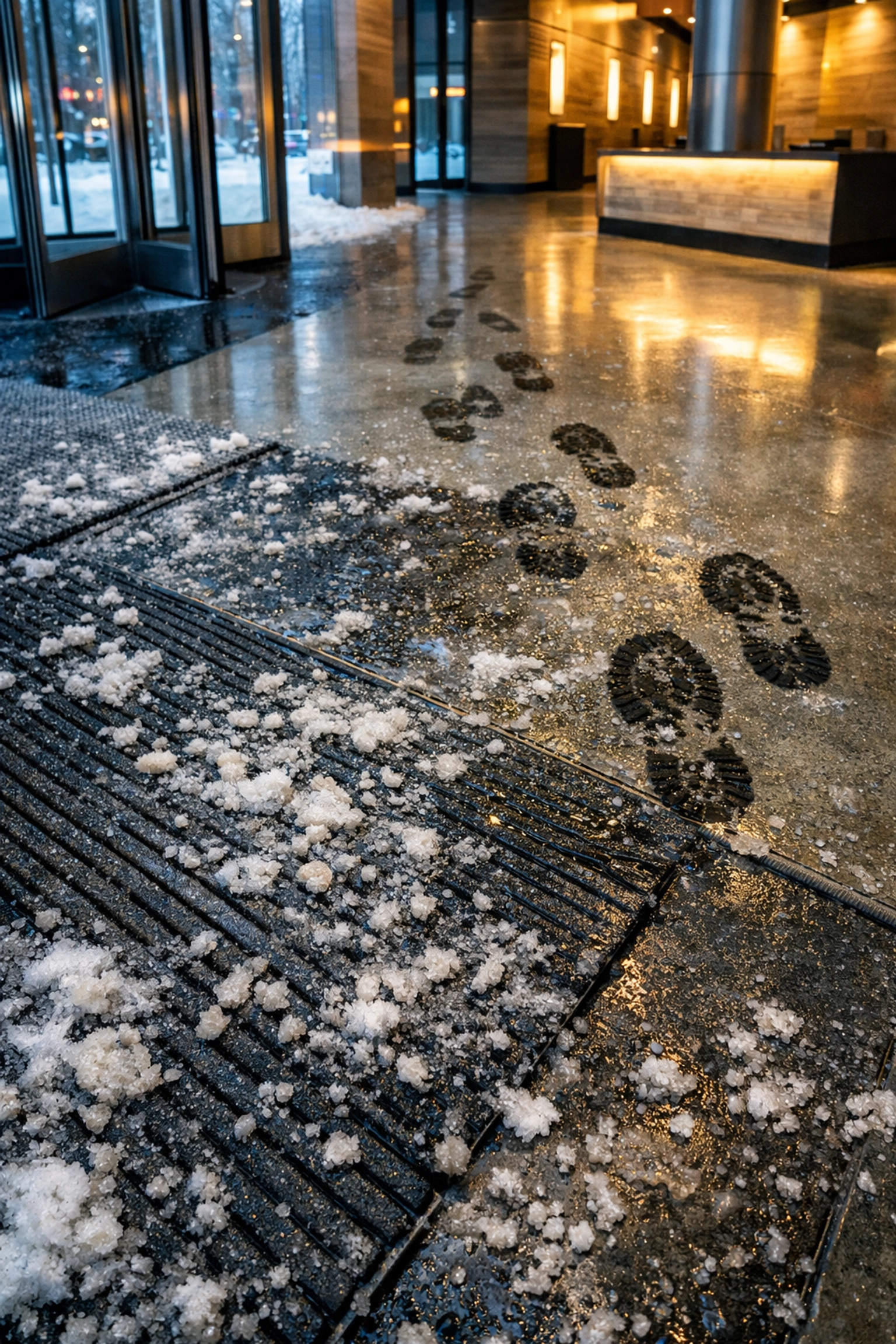
Chicago winters are no joke. From November through March, your building lobbies take a beating from salt, slush, and snow tracked in by hundreds of tenants daily. Property managers who don't adjust their cleaning protocols during these months end up with stained floors, corroded entry mats, and tenant complaints about dirty common areas.
The Fix: Work with cleaning service providers who understand Midwest weather patterns and adjust service intensity seasonally. During winter months, increase lobby and entry cleaning frequency. Ensure providers use appropriate floor treatments that can handle de-icing salt without damaging surfaces. Spring brings its own challenges with rain and mud: your cleaning schedule should flex accordingly.
Mistake #3: Failing to Document Cleaning Standards and Expectations
The Mistake: Operating on verbal agreements or vague contracts that leave room for interpretation about what "clean" actually means.
"Deep clean the conference rooms" means something different to everyone. Without documented standards, you're setting up both yourself and your cleaning provider for conflict. When a tenant complains that the restrooms aren't clean enough, you need a clear baseline to reference.
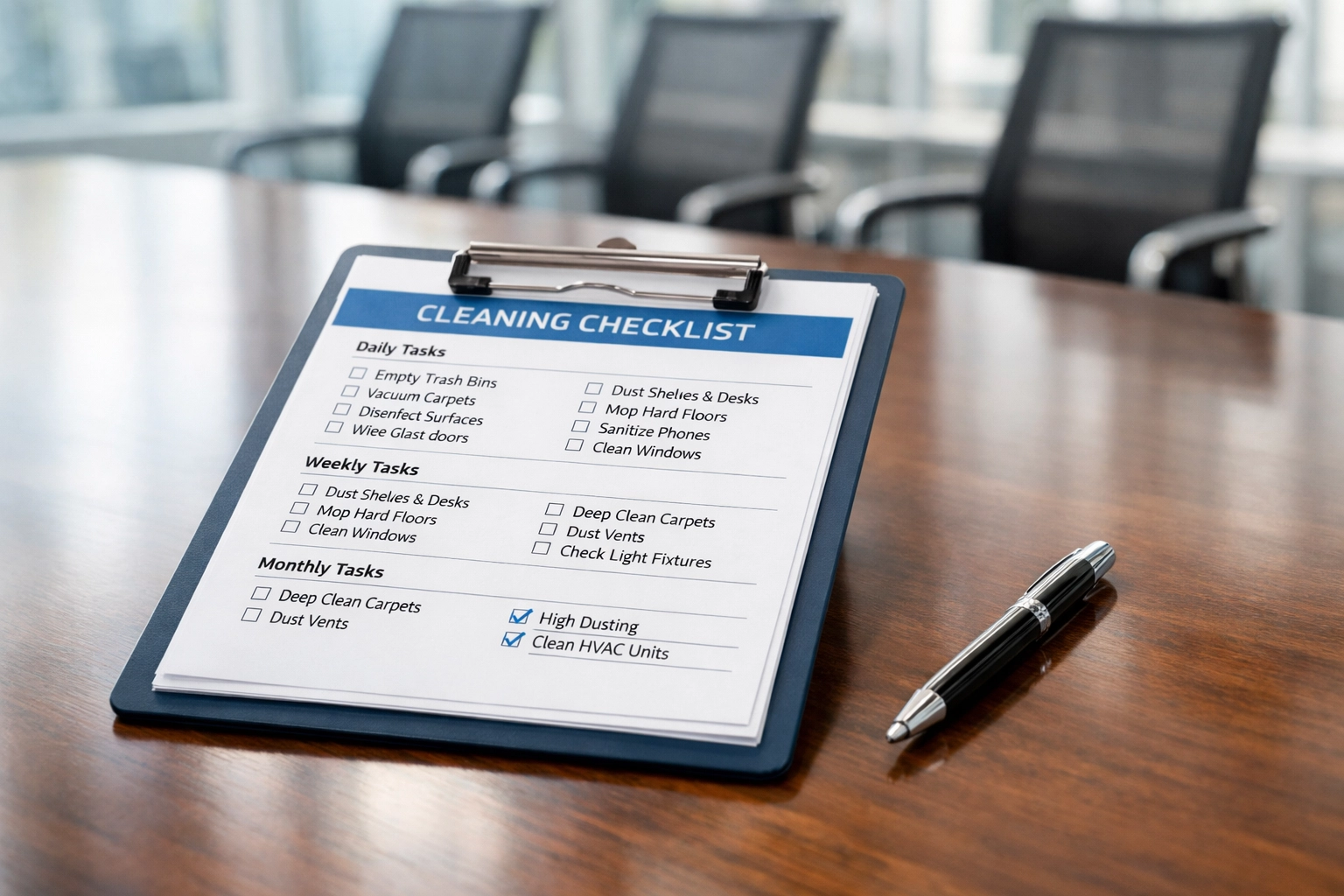
The Fix: Create a detailed scope of work document that specifies exactly what gets cleaned, how often, and to what standard. Include photos if possible. Document high-touch areas that need daily attention (door handles, elevator buttons, shared kitchen surfaces) versus weekly tasks (baseboards, light fixtures, window sills). This documentation protects both parties and eliminates the "I thought you meant…" conversations.
Mistake #4: Overlooking High-Touch Surface Protocols
The Mistake: Focusing on visible dirt while neglecting the surfaces people touch most frequently throughout the workday.
Office tenants care about visible cleanliness, but they notice high-touch surfaces even more: especially post-2020. Door handles, light switches, elevator panels, shared equipment, coffee makers, and copier screens accumulate germs and grime that impact tenant satisfaction and health.
The Fix: Establish specific protocols for high-touch surface cleaning. These areas need attention during every service visit, not just weekly deep cleans. MaidHop Pros serving Chicago office properties know that consistent high-touch surface maintenance directly correlates with tenant retention. Make this a non-negotiable line item in your service agreement.
Mistake #5: Not Planning for Tenant Turnover Cleaning
The Mistake: Treating tenant move-outs like regular cleaning appointments instead of comprehensive space resets.
When a tenant leaves, you have a limited window to turn that space for the next occupant. Many property managers discover too late that their standard cleaning service doesn't include the detailed work needed for a move-out: removing adhesive residue, cleaning inside cabinets, addressing ceiling vents, or properly treating flooring.
The Fix: Develop a separate tenant turnover cleaning protocol with clear timelines and deliverables. Schedule these appointments in advance when you know a tenant's lease is ending. Photograph the space before and after cleaning to document the baseline condition for incoming tenants. This protects you from disputes and shows prospects that you maintain your buildings properly.
Mistake #6: Ignoring Communication and Issue Resolution Protocols
The Mistake: Assuming everything is fine because you haven't heard complaints, or worse, not having a clear process when cleaning issues arise.
In multi-tenant office buildings, small problems become big problems fast. A missed cleaning appointment means tenants start their week frustrated. A poorly cleaned restroom at 8 AM impacts everyone's impression of your management. Without clear communication channels and resolution protocols, these issues fester.
The Fix: Establish regular check-ins with your cleaning service provider: not just when problems occur. Weekly or bi-weekly walkthroughs help you catch small issues before tenants do. More importantly, clarify the issue resolution process upfront. Quality providers should have a clear protocol: if something isn't right, they return within 24 hours to address it. This commitment to operational reliability matters more than perfect service 100% of the time.
Mistake #7: Neglecting Hard-to-Reach Areas Until They're Obvious
The Mistake: Focusing only on high-visibility areas while letting ceiling vents, light fixtures, window tracks, and baseboards accumulate months or years of dust and grime.
Property managers often discover this mistake during lease negotiations when prospective tenants tour spaces. That dusty ceiling vent or grimy window track might seem minor, but it signals to prospects that maintenance standards are inconsistent. In competitive Chicago office markets like the West Loop or Fulton Market, these details matter.
The Fix: Build quarterly or semi-annual deep cleaning appointments into your maintenance schedule. These sessions should specifically target areas that don't get attention during regular service: ceiling fans and vents, top of door frames, window tracks, behind and under furniture, interior door surfaces, and HVAC grilles. Document these deep cleans with photos so you can prove consistent maintenance standards to current and prospective tenants.

Getting Office Cleaning Right in Chicago
Managing office properties in Chicago requires a different approach than residential or retail spaces. The combination of high tenant expectations, weather extremes, and competitive leasing markets means your cleaning service needs to be a reliable operational partner, not just a vendor who shows up occasionally.
The property managers who maintain consistently high occupancy rates and tenant satisfaction scores don't necessarily spend more on cleaning: they spend smarter. They choose cleaning service providers who understand commercial property operations, communicate proactively, and adjust their approach based on real-world Chicago conditions.
Whether you're managing Class A office space in the Loop or multi-tenant buildings in Oak Brook, these seven fixes give you a framework for evaluating and improving your cleaning operations. MH Janitorial connects property managers with vetted cleaning service providers who understand the operational demands of commercial properties across Chicago, Indianapolis, and Detroit.
For property managers looking to improve their building operations and tenant satisfaction, reliable cleaning service is one of the highest-impact improvements you can make. Available in Chicago and throughout the Midwest region, MaidHop Pros deliver the consistent, documented, and communicative service that commercial properties require.
Ready to upgrade your office cleaning operations? Visit http://mhjanitorial.com to learn how vetted cleaning service providers can help you maintain the operational standards your tenants expect.