

Managing office cleaning across multi-unit buildings isn't just about keeping things tidy: it's about protecting property value, keeping tenants satisfied, and avoiding the headaches that come with inconsistent service. For property managers in Chicago, Indianapolis, and Detroit, where tenant expectations run high and buildings see heavy use year-round, a structured cleaning approach isn't optional.
This guide breaks down what actually works: the zones that need attention, the frequencies that prevent problems, and the professional standards that separate adequate service from the kind that keeps tenants renewing leases.
Zone-by-Zone Breakdown: What Needs Attention
Entrance and Common Areas: Your First Impression
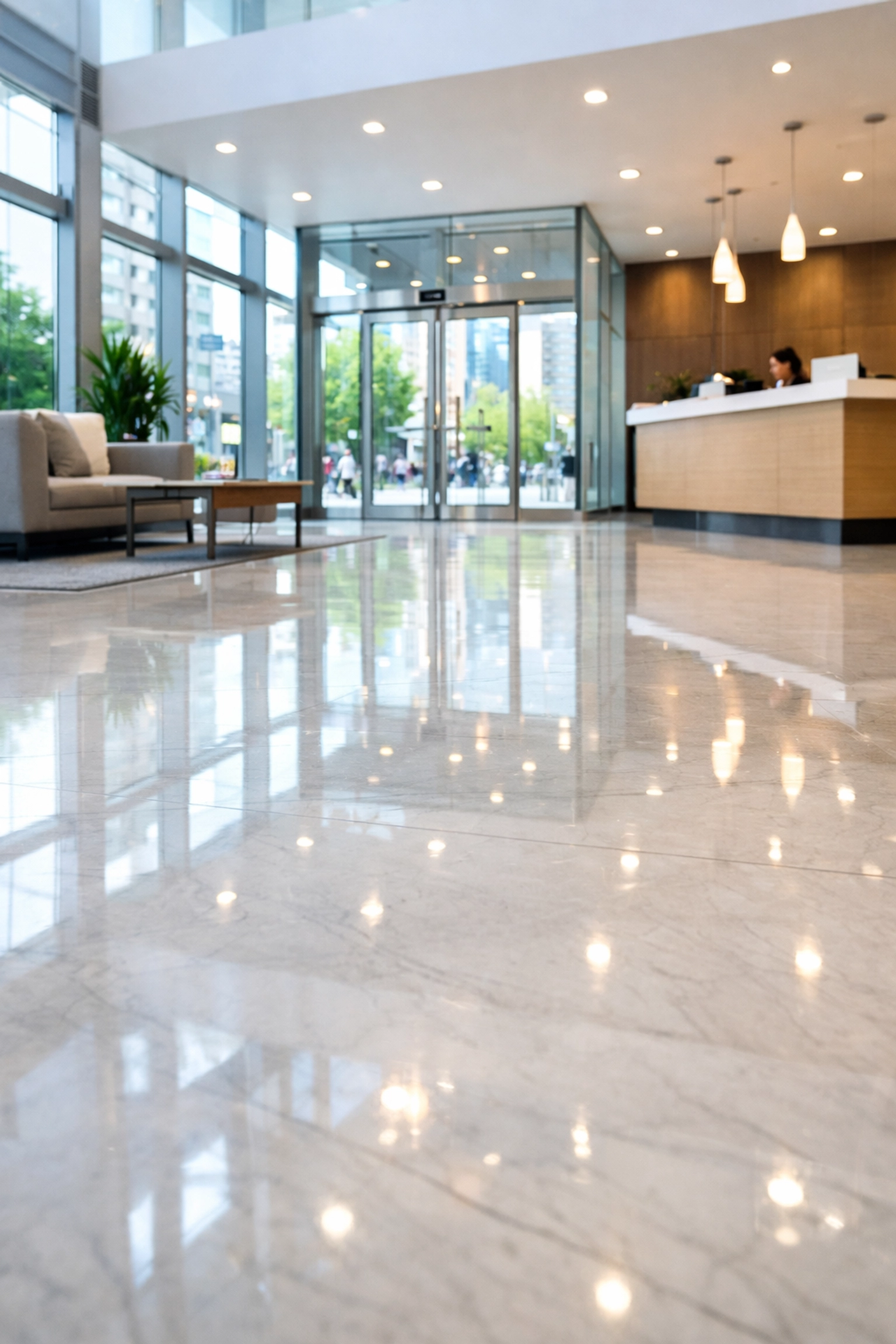
Lobbies and hallways take the brunt of daily traffic. In Chicago's Loop or Indianapolis's downtown core, that means tracked-in snow, salt residue, and mud during winter months: plus the usual dirt and debris the rest of the year. Sweep or vacuum these areas daily at minimum. Glass surfaces on entrance doors, directory boards, and lobby mirrors need regular attention with proper glass cleaner for streak-free results.
These common spaces directly impact tenant satisfaction and visitor impressions. A clean lobby signals professional management; a neglected one raises questions about the entire building.
Bathrooms: The Non-Negotiable Zone
Bathrooms require thorough cleaning at least once weekly, though high-traffic buildings may need service twice weekly or daily. The checklist should include:
- Thorough toilet and urinal scrubbing (including under rims and around bases)
- Shower, bathtub, and tile cleaning to remove soap scum and prevent mildew
- Disinfection of high-touch surfaces: door handles, faucets, mirrors, light switches
- Floor cleaning and grout maintenance
- Regular restocking of toilet paper, hand soap, and paper towels
Bathrooms harbor bacteria and get dirty quickly. Consistent service here prevents complaints and health concerns.
Kitchen and Break Rooms: Where Neglect Shows Fast
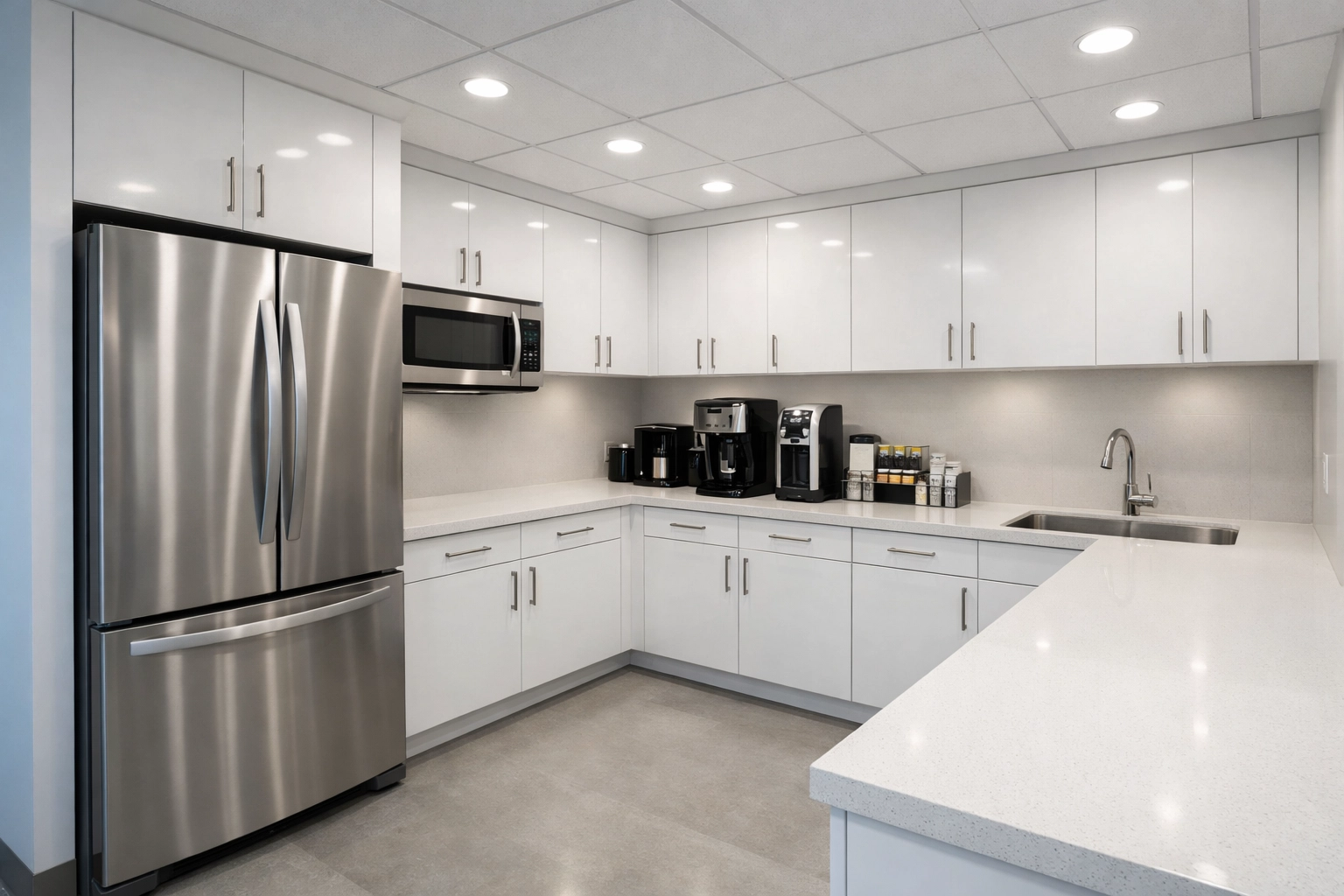
Shared kitchens and break rooms need weekly cleaning minimum, with daily attention to trash removal and spot-cleaning. Key tasks include:
- Cleaning and sanitizing appliances (microwaves, refrigerators, coffee makers)
- Wiping down countertops and removing food residue
- Scrubbing sinks, faucets, and drains to prevent odor buildup
- Cleaning refrigerator handles and shelves
- Emptying trash and recycling frequently
These areas directly impact employee satisfaction. A grimy break room microwave or overflowing trash sends the wrong message about building management.
Workspaces and Conference Rooms: High-Touch Territory
Conference rooms need thorough attention to high-touch surfaces: door handles, light switches, table surfaces, shared technology (remotes, conferencing equipment). In open workspace areas, focus on keyboard areas, phone zones, and desk surfaces without disturbing personal items or paperwork. Water fountains and common equipment also require regular disinfection.
Frequency Framework That Actually Works
Daily Tasks
- Trash and recycling removal from all areas
- Restroom sanitation and supply restocking
- High-touch surface disinfection (door handles, elevator buttons, handrails)
- Spot-cleaning in high-traffic zones
- Lobby and entrance maintenance
Weekly Tasks
- Floor mopping and hard surface cleaning
- Glass cleaning (interior windows, doors, partitions)
- Dusting (surfaces, furniture, fixtures)
- Kitchen and break room deep cleaning
- Conference room thorough cleaning
Monthly Tasks
- High dusting (ceiling fans, light fixtures, vents)
- HVAC vent and vent cover cleaning
- Baseboard detailing
- Deep cleaning of less-used spaces
- Carpet spot treatment
This framework provides consistency while adapting to actual building use patterns. A building in Detroit's downtown with 80% occupancy needs different frequency than a suburban Indianapolis property with scattered tenants.
Professional Standards vs. Corner-Cutting: Know the Difference
Property managers need to understand what separates professional cleaning from someone with a mop bucket. Professional cleaners bring specialized knowledge that protects your investment:
Chemical Knowledge and Application
Understanding pH levels in cleaning solutions, proper dwell times for disinfectants, correct dilution ratios, and surface-specific techniques isn't optional: it's foundational. Marble flooring requires entirely different care than porcelain tile. Using the wrong product can damage surfaces and create liability.
Commercial-Grade Equipment
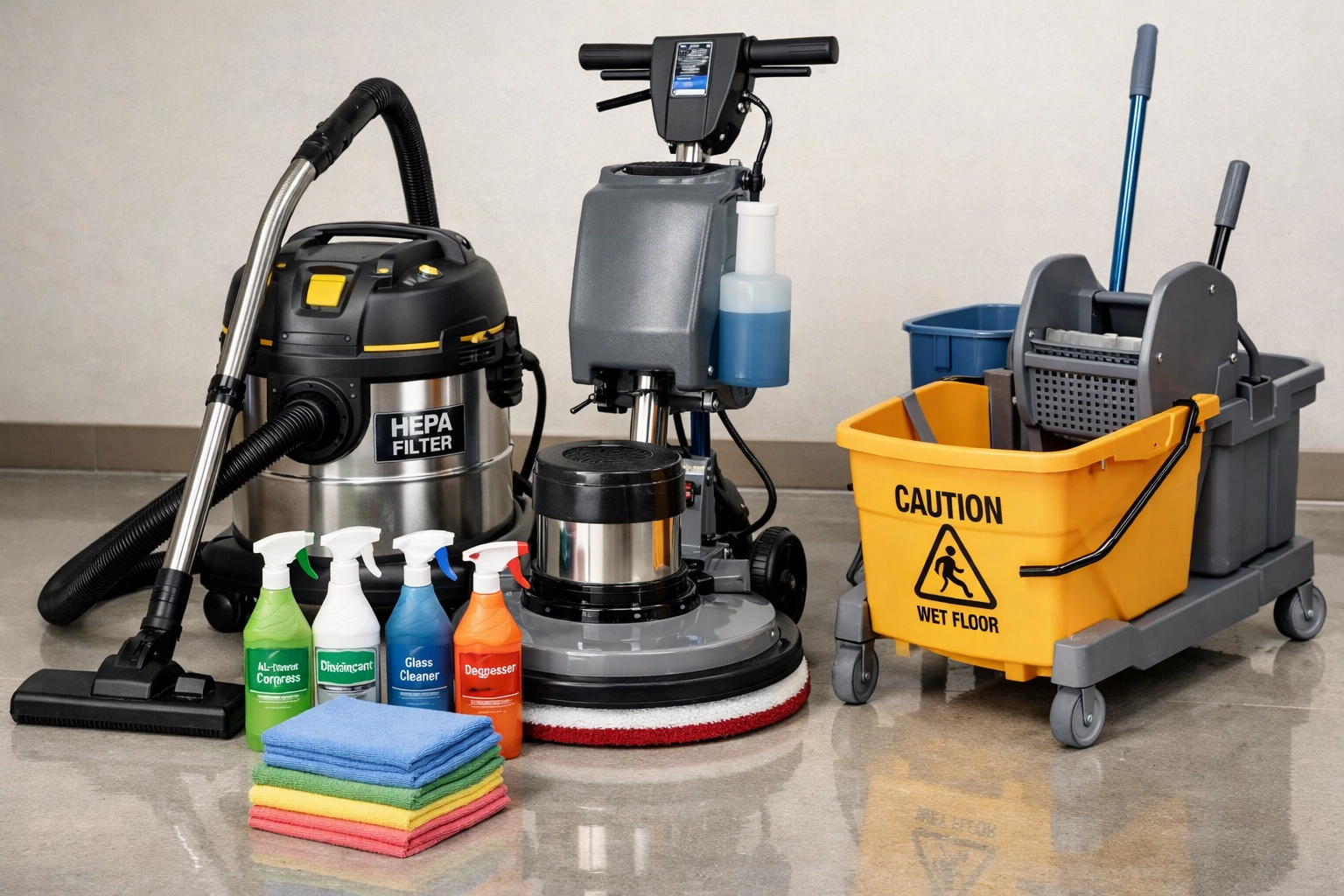
Professional services use vacuum cleaners with HEPA filtration (critical for indoor air quality), floor machines appropriate for specific surface types, and modern extraction equipment for carpets. Dollar-store spray bottles and household vacuums don't cut it in commercial settings.
Proven Products with Specifications
Verify that any cleaning service uses commercial-grade products with clear specifications and proven efficacy testing. Generic or household alternatives may look cheaper upfront but deliver inconsistent results and potentially damage surfaces.
Building Your Cleaning Program: The Management Side
Develop Comprehensive Schedules and Checklists
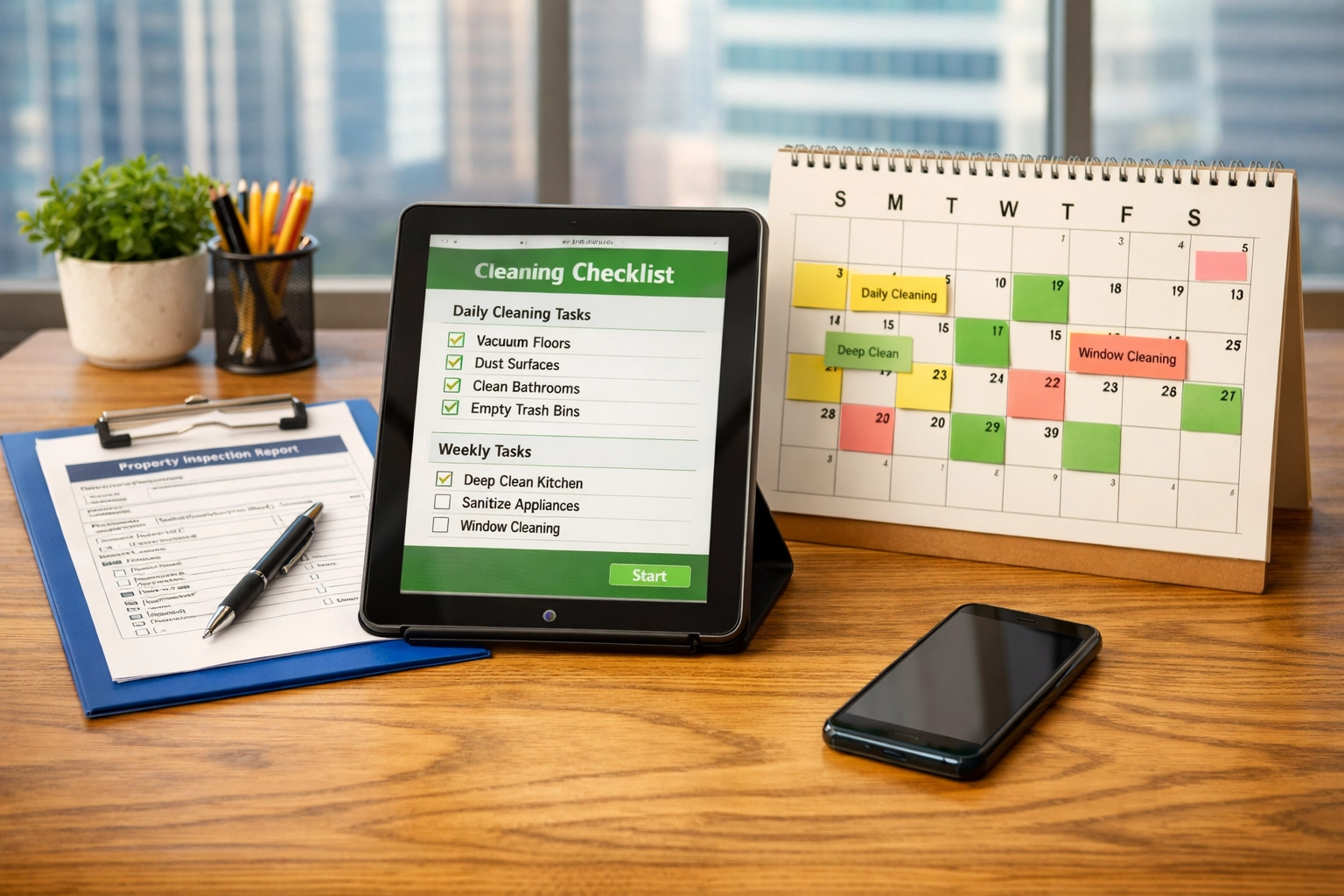
Create detailed checklists for each space with specific frequencies attached to each task. This documentation ensures consistency regardless of which team member performs the work and provides accountability when issues arise.
The schedule should account for:
- Building occupancy patterns
- Seasonal variations (Chicago winter tracking, spring pollen, fall leaf debris)
- Tenant mix (law firms vs. tech startups have different needs)
- Special events or high-traffic periods
Eco-Friendly Products: Expectations vs. Reality
Many tenants expect eco-friendly cleaning products, particularly in newer buildings or those pursuing LEED certification. Modern green products deliver effective cleaning while reducing chemical exposure. However, "eco-friendly" doesn't mean ineffective: verify actual performance data, not just marketing claims.
Deep Cleaning During Vacancies
Vacant periods between tenancies offer opportunities for thorough deep cleaning without disrupting business operations. This includes carpet extraction, high dusting, detailed window cleaning, and addressing neglected areas. A pristine space enhances the move-in experience for new tenants.
Vendor Management and Evaluation
Regularly evaluate cleaning service performance through:
- Tenant feedback (formal surveys and informal conversations)
- Periodic inspections using your detailed checklists
- Response time to special requests or issues
- Communication quality and professionalism
- Consistency across all building areas
Address concerns promptly and document both problems and resolutions. Property managers who wait until lease renewal season to address cleaning issues have already lost the battle.
Midwest-Specific Considerations
Seasonal Challenges
Chicago, Indianapolis, and Detroit face distinct seasonal cleaning demands. Winter brings salt, snow melt, and tracked-in debris that accelerates floor wear and creates slip hazards. Entry mats need daily attention and frequent replacement. Spring mud season requires increased frequency for entrance areas and lobby floors.
Building Age and Infrastructure
Many Midwest multi-unit office buildings date from earlier construction eras, meaning older HVAC systems, vintage finishes, and infrastructure quirks. Cleaning programs must account for these realities: 1970s terrazzo floors, original wood paneling, and aging carpet require different approaches than new construction.
Tenant Expectations by Market
Professional tenant expectations vary by metro. Chicago's downtown market expects institutional-grade service comparable to Class A towers. Indianapolis and Detroit markets may offer more flexibility but still demand consistent, reliable performance.
Additional Elements Worth Attention
Air Quality Maintenance
Clean HVAC vents and ducts regularly to remove accumulated dust, allergens, and debris that compromise indoor air quality. This matters particularly in older buildings with original ventilation systems common in Midwest markets.
Carpet Care Beyond Vacuuming
Professional carpet extraction removes stains and odors that regular vacuuming misses. Consider anti-allergen treatments, especially in buildings with known indoor air quality concerns.
Window Components
Clean window sills, frames, and blinds to remove accumulated dirt and dust. In urban settings like Chicago's Loop or downtown Indianapolis, exterior pollution accelerates buildup.
Making It Work Long-Term
Effective office cleaning in multi-unit buildings requires consistent execution, clear standards, and regular communication between property management, cleaning services, and tenants. Create feedback loops, address issues promptly, and maintain documentation that demonstrates your commitment to building quality.
Property managers who treat cleaning as an operational priority: not just a line item: protect property value, enhance tenant retention, and avoid the costly problems that come from neglect.
For property managers across Chicago, Indianapolis, and Detroit looking for reliable commercial cleaning partnerships, MH Janitorial provides structured service designed for multi-unit buildings. Learn more at mhjanitorial.com.