


Intent (Value): Provide a reference-ready, operations-first move-out cleaning standard for Midwest property and facilities teams to reduce days vacant and stabilize turnover quality in Chicago, Indianapolis, and Detroit.
Category tags: General Newsroom, Midwest, PM, MF, Office, Operations, Move Out Cleaning Standards, Turnover Efficiency
Why move-out cleaning is the fastest lever you control in vacancy turns (Midwest focus)
In Chicago, Indianapolis, and Detroit, the turnover clock doesn’t start when the lease ends: it starts when maintenance, leasing, and cleaning can move in without bottlenecks. You can’t always speed up paint dry-times, carpet replacement lead-times, or unit inspections. But you can standardize move-out cleaning so it’s:
- Predictable (same scope every time)
- Inspectable (clear pass/fail criteria)
- Schedulable (fits inside your turn window)
- Repeatable across buildings (portfolio-wide consistency)
For property managers (PM) and multifamily (MF) operators, the goal is simple: reduce rework and handoff friction so the unit hits “rent-ready” faster. For office and facilities teams managing relocations or suite resets in Chicago–Naperville–Elgin (CHI), Indianapolis–Carmel–Anderson (IND), and Detroit–Warren–Dearborn (DET), the same principle applies: cleaning should never be the critical path.
The Midwest Turnover Reality: what slows Detroit and Indy the most
Across IND and DET, the most common “cleaning-caused delays” we see from property operations teams are not big disasters: they’re small misses that trigger re-inspection, vendor return trips, and leasing pushbacks:
- Kitchen detail gaps (inside drawers, cabinet faces, range hood grease)
- Bathroom edges (toilet base, shower tracks, hard water line visibility)
- Floor finish inconsistency (sticky residue from the wrong mop chemical)
- Dust re-set (dusting after vacuuming, not before)
- Forgotten touchpoints (switch plates, doorknobs, closet rods)
- Trash/leftovers (under sinks, behind appliances, on balconies)
The fix is not “clean harder.” It’s clean in the right sequence with a defined standard: and confirm it with a fast inspection loop.
The Turnover Standard: a move-out cleaning scope built for speed (not guesswork)
The fastest turnovers use a single standard that works for both:
- Occupied move-outs (tenant still present until keys)
- Vacant unit turns (full access, faster, no obstacles)
Here’s the operations-ready framework to use across CHI, IND, and DET.
Step 1: Pre-clean setup (10–15 minutes that saves an hour later)
Before anyone starts “wiping,” lock the basics:
- Supplies staged in-unit: vacuum, broom, mop, microfiber cloths, glass cleaner, bathroom cleaner, degreaser, mild abrasive, concentrated all-purpose cleaner
- Open-and-check sweep: open every cabinet, closet, and appliance door to visually confirm what needs attention
- Start high, finish low: ceiling corners → walls → surfaces → floors
- Dust first, then vacuum, then mop: prevents dust settling onto finished floors
Ops note for PM/MF: If your team is managing multiple vendors, this setup step is where you confirm the unit is ready for cleaning (power on, water on, trash removed). If not, cleaning time becomes paid waiting time.
Room-by-room checklist (built for rental inspections)
Bedrooms + Living Areas (the “quiet fail” zone)
These rooms often “look clean” but still fail inspection because of edges and touchpoints.
Pass/Fail Standard
- No dust visible on horizontal surfaces at eye level
- No debris in corners or along baseboards
- No fingerprints on doors or switch plates
Checklist
- Dust: window sills, ledges, blinds, closet shelves/rods
- Wipe: baseboards, trim, doors, door frames, light switches, outlet covers
- Spot-clean: wall marks where allowed by site policy (avoid repaint conflicts)
- Windows: interior glass + tracks (especially slider tracks)
- Floors: vacuum edges first, then field; damp mop hard floors
IND + DET tip: In winter and early spring, salt residue tracks in fast. Build “entry floor edges” into your standard: the first 6–8 feet inside the unit should be treated like a high-traffic zone every time.
Bathrooms (where re-cleans are born)
Bathrooms trigger the most callbacks because the “gross-out factor” is high and inspection is unforgiving.
Pass/Fail Standard
- No visible soap scum line
- No hair in drains or corners
- No residue around toilet base and floor edges
Checklist
- Shower/tub: scrub surfaces, clean glass, clear tracks and corners
- Toilet: bowl, seat hinges, tank exterior, base edges (front and back)
- Vanity: countertop, faucet, sink bowl, cabinet faces and interiors
- Mirrors: streak-free finish
- Floors: vacuum first (hair), then mop along edges
Speed technique: Use microfiber for mirrors and chrome, and keep one cloth dedicated to “final shine” to avoid re-streaking.
Kitchen (the turnover accelerator or the turnover killer)
Kitchen detail is the difference between “rent-ready today” and “vendor return tomorrow.”
Pass/Fail Standard
- No grease film on cabinet faces
- No crumbs in drawers/corners
- Appliances clean enough to pass a white-glove wipe test on handles and fronts
Checklist
- Cabinets/drawers: wipe faces; open all drawers/cabinets and wipe interiors (use the “open drawer = clean drawer” rule: don’t close it until it’s done)
- Countertops + backsplash: remove residue at seams and corners
- Sink + faucet: polish, clear debris, clean drain area
- Range + oven exterior: knobs, control panel, handle, drip edges
- Range hood: underside and front lip (common miss)
- Refrigerator: exterior and interior shelves/drawers as required by your scope
- Dishwasher: wipe edges, handle, and gasket area
- Floors: sweep/vacuum edges, then mop
Portfolio note: If your buildings vary (classic vs. renovated units), define “appliance interior scope” by unit type and bake it into your turn sheet so the cleaning crew isn’t guessing.
“Whole unit” items that shorten inspections (and reduce callbacks)
These items create the most friction because they’re spread out: and easy to miss:
- Cobweb removal in corners and vents
- Light fixtures and ceiling fan blades (where present)
- Heat registers: top dust removal
- Closets: shelf dust and floor edges
- Balcony/patio: quick sweep, visible debris removal (where included)
- Trash removal: confirm all bins empty; remove under-sink debris
The fastest workflow: a 3-pass system that property managers can audit
If you want a move-out clean that holds up across CHI, IND, and DET buildings, use a simple three-pass workflow.
Pass 1 : Dry detail (dust + debris)
- Dust high to low
- Vacuum corners and edges
- Pull visible debris from drawers/cabinets before wet wiping
Pass 2 : Wet clean (surfaces + bathrooms + kitchen)
- Degrease kitchen touchpoints
- Scrub bathrooms fully
- Wipe doors, switch plates, handles
Pass 3 : Floors + final inspection reset
- Vacuum field
- Mop hard floors (correct dilution; avoid sticky residue)
- “5-minute walk-through” with the inspection list
Operational result: Less rework, fewer return trips, and faster handoff to maintenance or leasing.
Turnover scheduling: how to cut vacancy days with predictable cleaning slots
The fastest teams treat cleaning like a recurring operational block, not an “as-needed scramble.”
For PM/MF: build a weekly cadence
- Set standard turn windows (ex: Mon/Wed/Fri turns)
- Hold priority slots for surprise move-outs or early surrenders
- Use a shared handoff checklist between maintenance → cleaning → inspection → leasing photos
For Office/facilities: plan suite resets like mini-turnovers
If you manage office suites across CHI, IND, or DET, the same logic applies:
- Define your “suite-ready” standard (glass, breakroom, restrooms, floors)
- Pre-book cleaning around move days
- Use recurring schedules to keep common areas stable while suites transition
Why recurring schedules matter: They reduce the coordination cost. Every one-off clean requires extra communication, access logistics, and scope clarification. A repeating schedule lowers errors and keeps quality consistent.
Inspection checklist (copy/paste for Detroit + Indy turnover teams)
Use this as a quick inspection sheet: fast enough for a PM, site lead, or facilities coordinator to run in 5–7 minutes.
Kitchen
- Cabinet faces wiped (no grease film)
- Drawer interiors wiped (no crumbs)
- Range hood lip/underside clean
- Sink/faucet polished, no residue
- Appliance fronts/handles clean
- Floor edges clean (under toe-kicks where visible)
Bathroom
- Shower/tub line free of visible buildup
- Toilet base clean (front + back edges)
- Mirror streak-free
- Vanity cabinet interior wiped
- Floor corners hair-free
Living/Bedrooms
- Baseboards/trim wiped
- Switch plates/handles wiped
- Window tracks wiped (where accessible)
- Closets dust-free
- Floors clean along edges
Whole unit
- No cobwebs at corners/vents
- Trash removed
- Entry area floor clean (salt/grit addressed)
When to use in-house vs. outsourced cleaning (reliability over debate)
For Midwest portfolios, the right decision is usually based on variance:
- If your turns are steady and predictable, in-house may work.
- If your turns swing (student cycles, corporate relocation, heavy seasonality), outsourcing can stabilize capacity.
- If you’re seeing quality dips from staffing gaps, outsourcing can reduce rework and protect leasing timelines.
Whatever the model, your biggest win is a standardized scope + inspection loop that doesn’t change from building to building.
How MH Janitorial supports Midwest turnovers (operations-first)
MH Janitorial (mhjanitorial.com) supports property and facilities teams with turn-ready cleaning built around consistent checklists, clear communication, and schedule reliability: especially for operators coordinating multiple buildings and recurring needs.
If you’re managing turns in Chicago (CHI), Indianapolis (IND), or Detroit (DET), the quickest next step is to align on:
- Standard scope (what “move-out clean” means in your portfolio)
- Recurring schedule blocks (so cleaning isn’t the bottleneck)
- A simple inspection checklist (so issues are caught early)
Learn more: https://www.mhjanitorial.com
Sitemap for service pages: http://mhjanitorial.com/sitemap.xml
Newsletter CTA (for PM/MF/Office ops teams)
For more Midwest-ready ops checklists, scheduling templates, and turnover standards: https://maidhop.com/newsletter
Social Caption (keyword CTA)
Detroit + Indy PMs: Want a repeatable move-out cleaning standard that reduces callbacks and speeds up rent-ready? Grab the checklist and turnover workflow: then subscribe for weekly ops templates. CTA: “MOVE-OUT” → https://maidhop.com/newsletter
Image Prompt (no text on image)
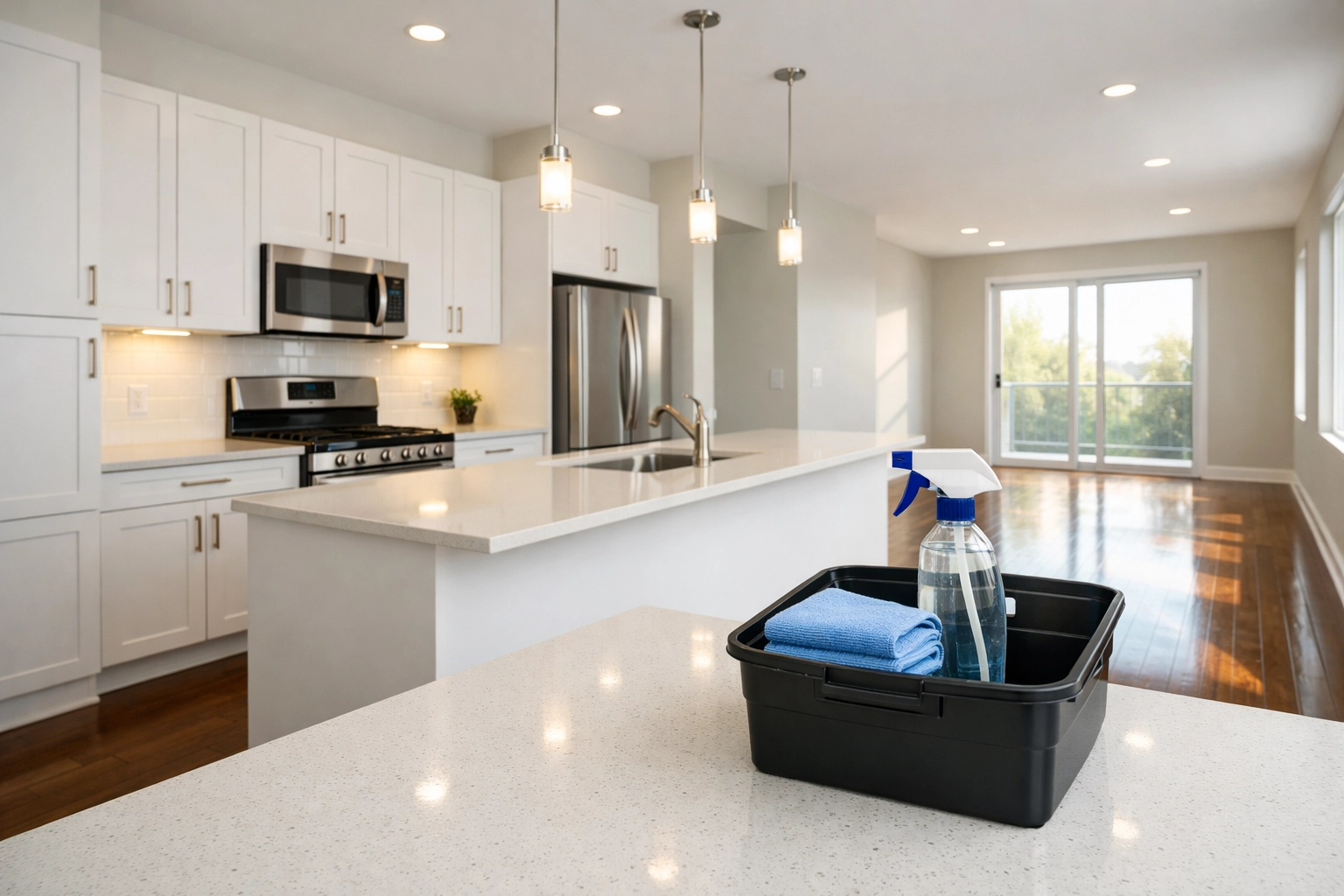
Creative prompt: Wide-angle photo of a modern empty apartment kitchen and living area during a professional turnover clean, natural daylight, cleaning caddy and microfiber cloths on a counter, spotless floors, no people, no faces, no text, realistic editorial style, metropolitan Midwest apartment aesthetic.